
Fearful-Avoidant (Disorganized) Attachment
Fearful-avoidant attachment, sometimes called disorganized attachment, is when you want closeness and fear it at the same time. You move toward people you care about, then pull back when things feel too vulnerable. It is not a flaw in you. It is usually a learned response to early relationships where the people meant to be safe were also a source of stress, and it can soften with time and practice.
What is fearful-avoidant attachment?
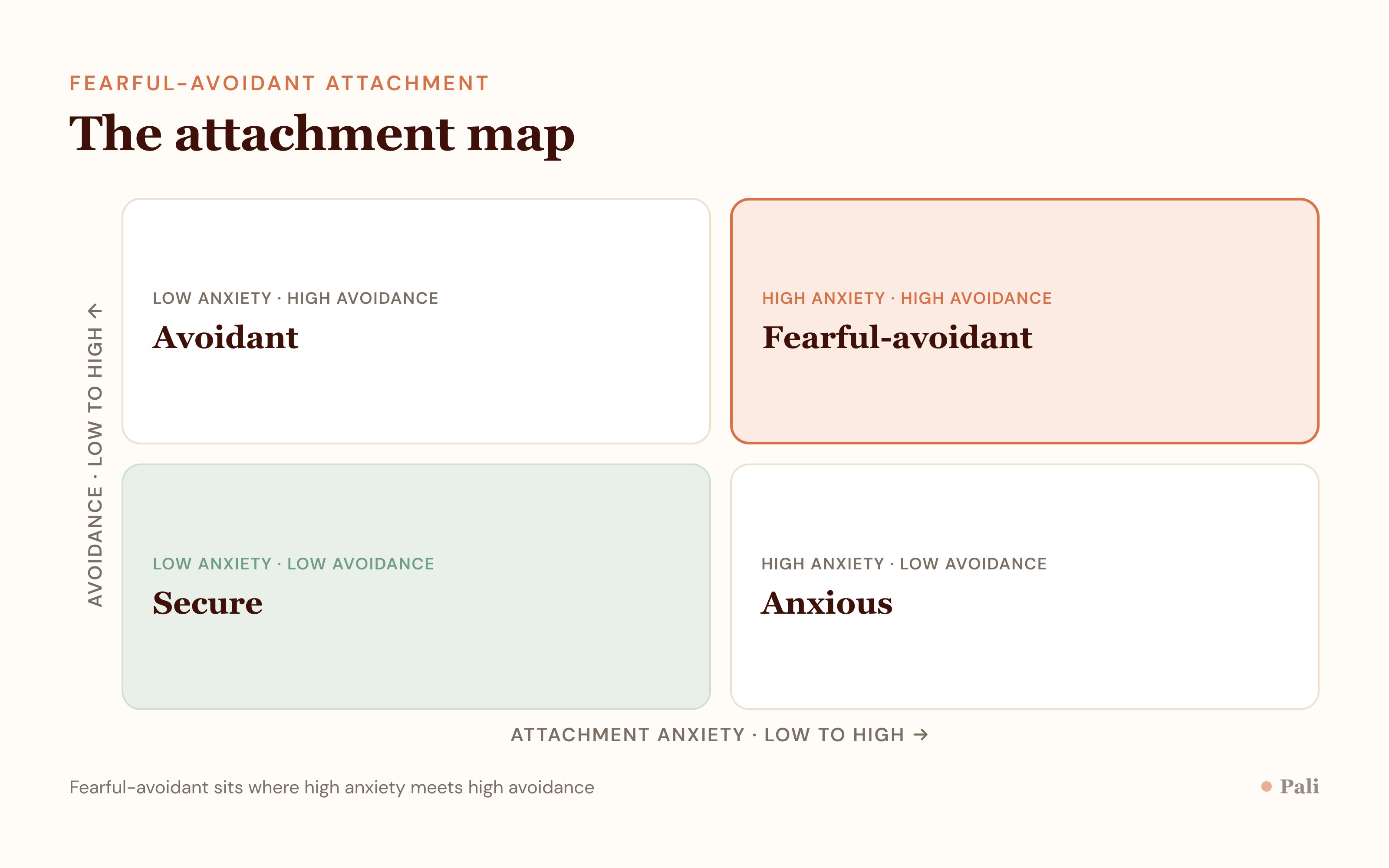
Most maps of adult attachment use two underlying dimensions: how much you worry about being abandoned, and how much you avoid depending on others. Anxious attachment is high on the first. Avoidant attachment is high on the second. Fearful-avoidant attachment sits high on both at once, which is why it can feel so contradictory from the inside.
The result is a kind of internal tug of war. Part of you longs to be held and known. Another part braces for the moment it goes wrong. You are not being dramatic or difficult. You are running two protective strategies that were never meant to work together.
If you are not sure where you land, it can help to start with the broader picture in our guide to attachment styles or to walk through what is your attachment style first.
What does fearful-avoidant attachment look like in relationships?
The pattern often shows up as a push and pull that confuses both you and your partner. Common signs include:
- Craving deep connection, then feeling trapped or panicky once you have it.
- Testing people, or expecting them to leave, even when nothing is wrong.
- Strong reactions to small ruptures, followed by withdrawal or shutting down.
- Difficulty trusting that someone can be both close and safe.
- Sabotaging good relationships and feeling relief and grief at the same time.
You may recognise the anxious side from anxious attachment and the distancing side from avoidant attachment. Fearful-avoidant is not a third separate thing so much as both of those running in turn.
Why do I pull away from the people I want most?
The pull away usually fires hardest with the people who matter most, because they are the ones who can actually reach you. When early closeness came bundled with unpredictability, your nervous system learned that intimacy and threat arrive together. So as a relationship deepens, the same closeness that you wanted starts to read as danger, and the protective part takes over.
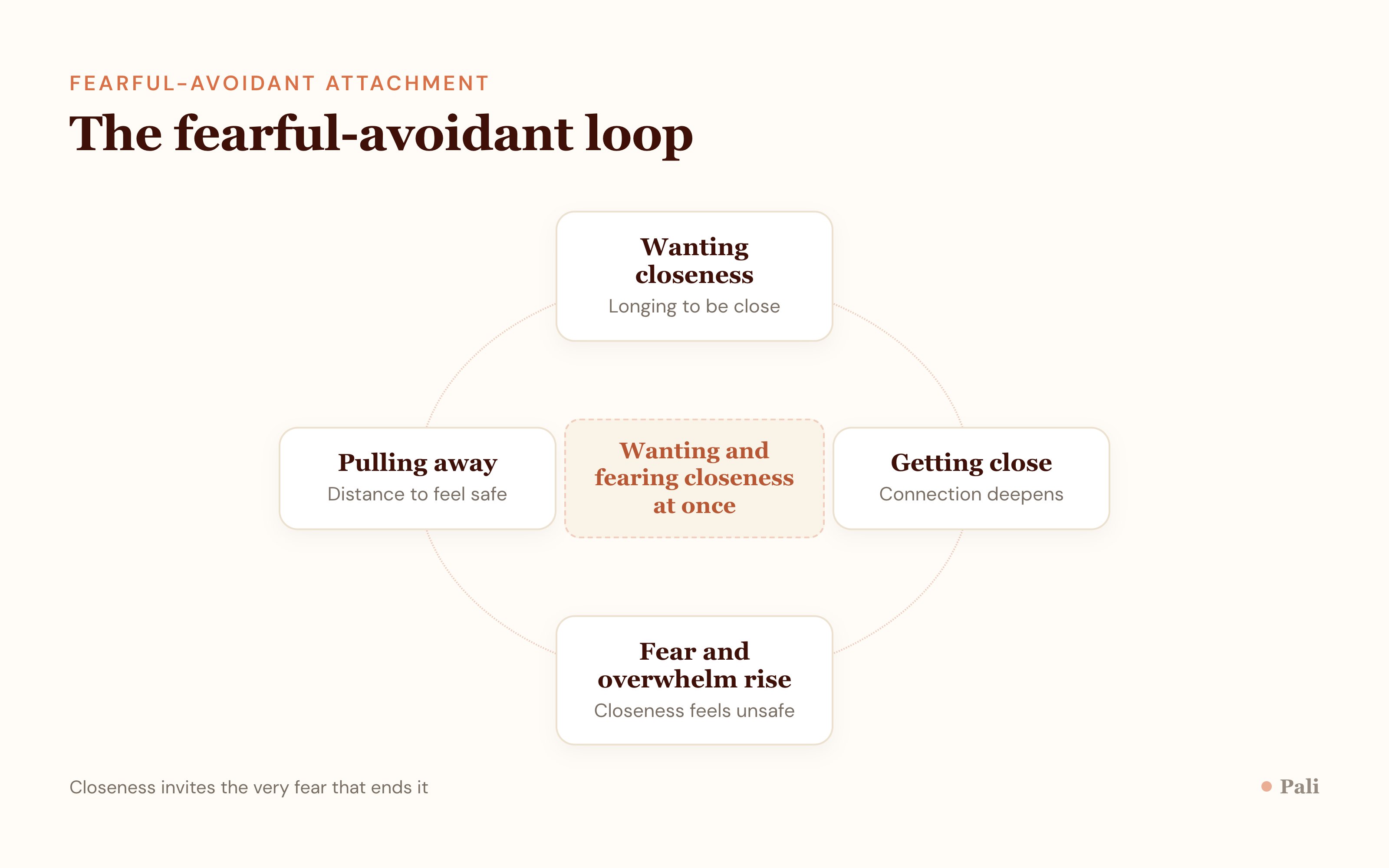
Seeing the loop on paper helps, because it moves the experience from “something is wrong with me” to “this is a pattern, and patterns can change.”
How do you heal fearful-avoidant attachment?
Healing is less about forcing yourself to stay close and more about slowly teaching your body that closeness can be safe. A few starting points:
- Name the moment the fear spikes, out loud or in a journal, before you act on it.
- Slow the pull away. A short pause is different from a full exit.
- Practise small, repairable risks rather than all-or-nothing intimacy.
- Notice the story your fear is telling and check it against what is actually happening.
- Look for relationships and routines that are steady and predictable over time.
This is patient work, and you do not have to do all of it at once. Pali is built to start with yourself, one small step at a time, so the change feels workable rather than overwhelming.
Frequently asked questions
Is fearful-avoidant attachment the same as disorganized attachment? Yes. Disorganized is the term used more often for children, and fearful-avoidant is the common label for the same pattern in adults.
Is fearful-avoidant the rarest attachment style? It is generally described as the least common of the insecure styles, but it is far from unusual, and the exact split varies between studies.
Can a fearful-avoidant person have a healthy relationship? Yes. Attachment patterns are learned and can shift toward security with awareness, steady relationships, and practice over time.
Can two fearful-avoidant people be together? They can, though it often takes extra honesty about the push and pull, since both partners may withdraw at the same moments.
Pali is designed for self-improvement and educational support. It is not therapy and is not a substitute for professional mental health care.