
Avoidant Attachment Explained
Avoidant attachment is a pattern where independence feels safe and closeness feels like pressure, so you tend to pull back, downplay needs, and value self-reliance over depending on others. Like every attachment style, it is a learned response to early relationships rather than a character flaw, and it can shift toward security with practice.
If you, or someone you love, goes quiet and distant exactly when things get close, this explains why.
What are the signs of avoidant attachment?
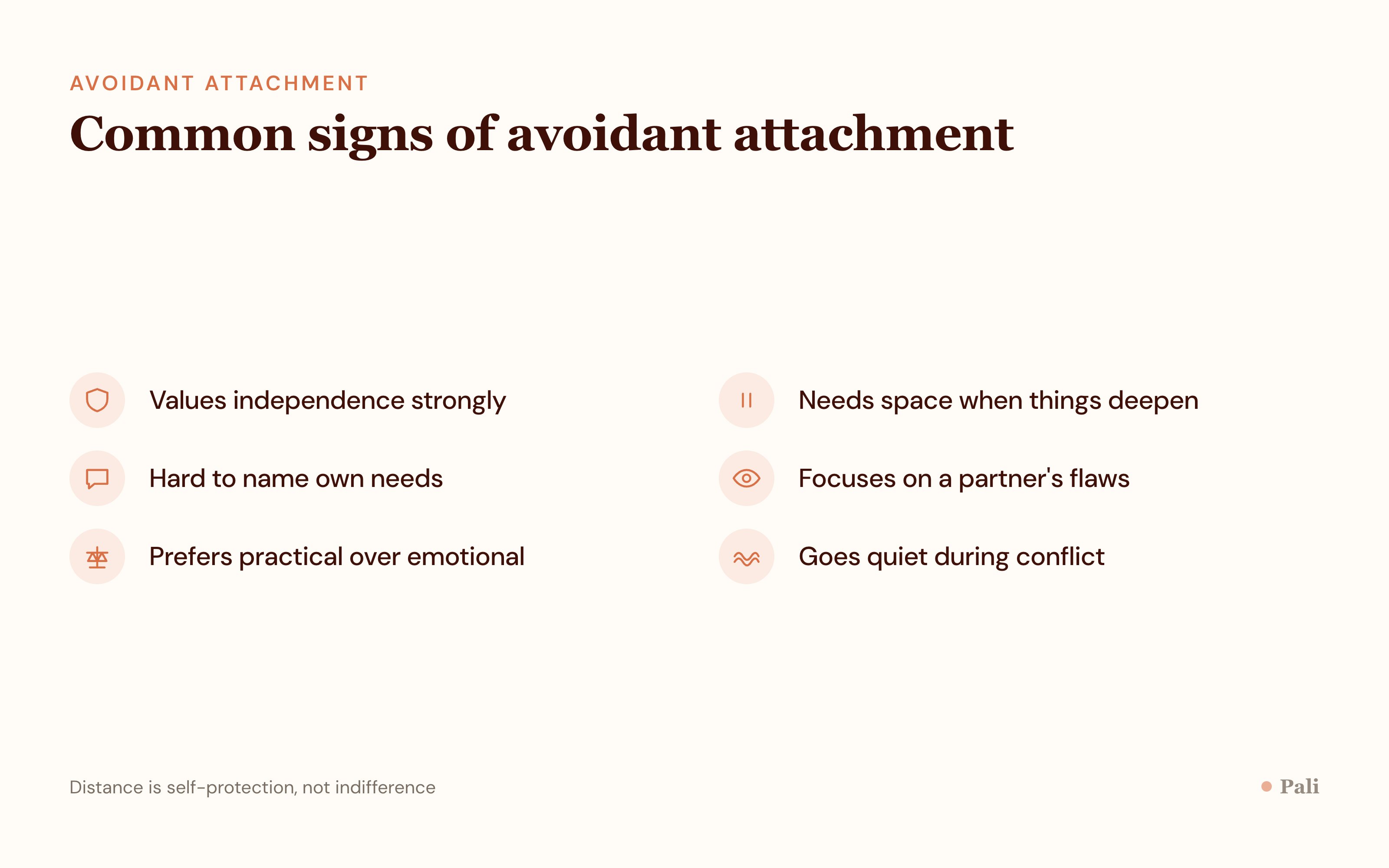
Avoidant attachment is often mistaken for not caring. Usually the opposite is true: closeness feels intense, so the system protects itself with distance. Common signs include:
- Valuing independence strongly and feeling uneasy when a partner needs a lot of closeness.
- Pulling away or needing space when a relationship deepens.
- Finding it hard to ask for help or to name your own emotional needs.
- A tendency to focus on a partner’s flaws when things get serious.
- Feeling more comfortable with practical support than emotional vulnerability.
- Shutting down or going quiet during conflict rather than leaning in.
In the original adult attachment research by Hazan and Shaver in 1987, about 20 percent of adults described themselves in avoidant terms. If this is you, the goal is not to become dependent, it is to let closeness feel safe enough that distance becomes a choice rather than a reflex. People who seem emotionally unavailable often share this pattern.
Avoidant vs anxious attachment: what is the difference?
Anxious and avoidant styles look opposite but share a root: uncertainty about whether closeness is safe. The anxious system moves toward to feel safe. The avoidant system moves away.
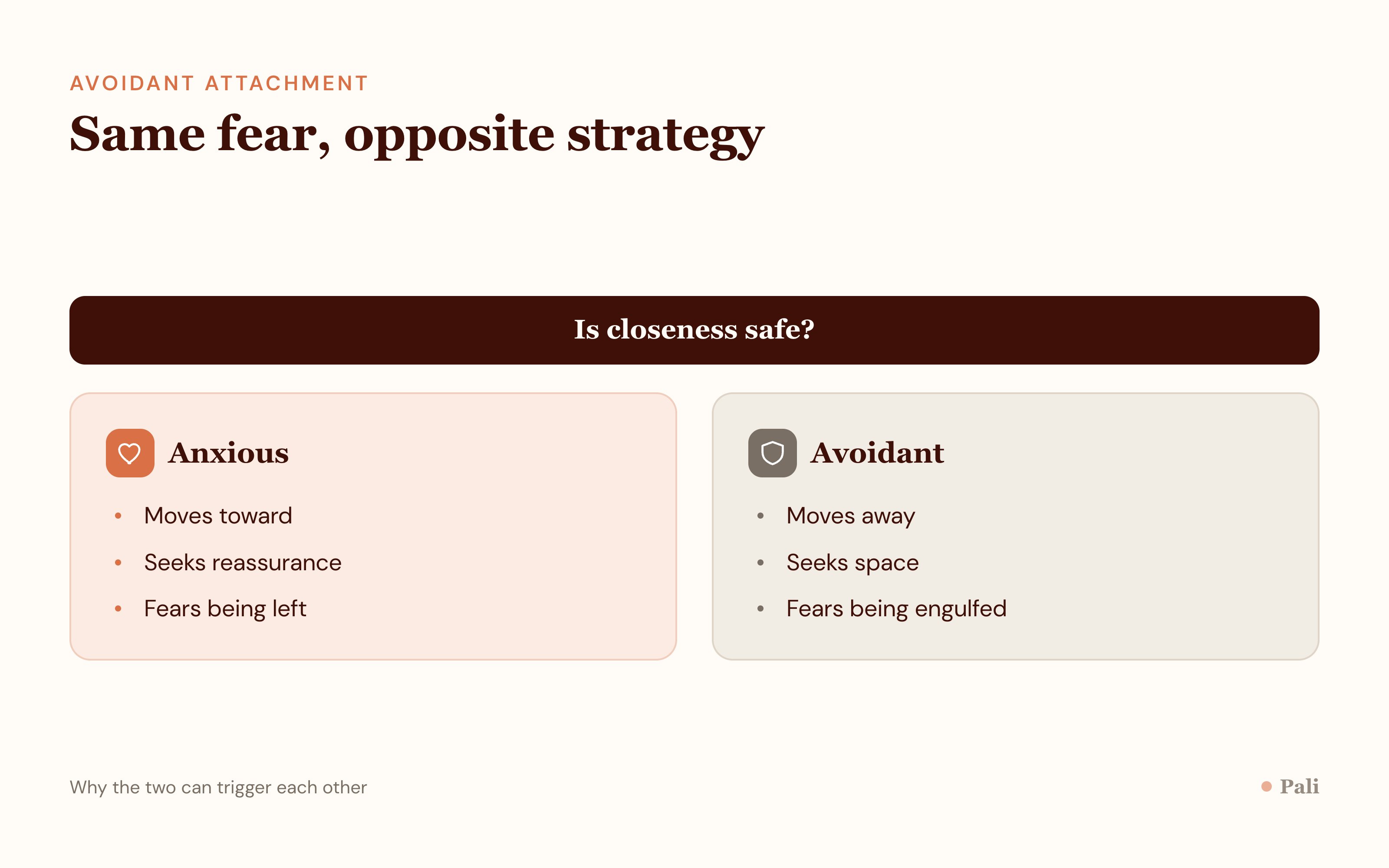
When an anxious person and an avoidant person pair up, each one’s coping can accidentally confirm the other’s fear, creating a push and pull cycle. You can see the contrast in detail in our guide to anxious attachment, or start with the broad picture in the complete guide to attachment styles.
How do you heal avoidant attachment?
Movement toward security is gradual and gentle. The aim is to expand your tolerance for closeness without overriding your real need for autonomy.
- Notice the urge to withdraw, and name it. “I want space right now” is information, not a verdict on the relationship.
- Stay in contact through small steps. Instead of disappearing, try a short, honest message about needing time.
- Practise naming one need at a time. Start small and low stakes so vulnerability feels survivable.
- Reframe needs as normal. Depending on someone is not weakness, it is part of how secure bonds work.
- Let people in slowly. Security grows from repeated experiences of closeness that did not cost you yourself.
In Pali, the Earned Security course is designed for exactly this, with short reflections and real-life experiments paced so they never feel like too much. To see where you fall overall, try our guide to what your attachment style is.
Frequently asked questions
Can avoidant attachment change? Yes. With awareness and practice, avoidant patterns can soften toward earned security. It tends to be gradual, since the style is built on a deep reflex to protect independence.
Are avoidants aware they are pulling away? Sometimes, but often the withdrawal feels automatic and reasonable in the moment. Many avoidant people only see the pattern clearly once they learn the framework.
Do avoidants actually want relationships? Most do. The difficulty is not the desire for connection, it is that closeness can feel overwhelming, so the system creates distance to manage it.
How do you support an avoidant partner? Offer steadiness without pressure, respect their need for space while staying warm, and avoid chasing. Pressure usually increases withdrawal, while calm consistency tends to build safety.
Pali is designed for self-improvement and educational support. It is not therapy and is not a substitute for professional mental health care.