
What Is Your Attachment Style?
And how it affects your relationships.
Have you ever wondered why you get anxious when someone pulls away? Why your partner struggles to open up? Or why some relationships feel safe while others feel like emotional chaos?
The answer often comes down to your attachment style. Understanding this one concept can genuinely shift how you experience dating, relationships, and even breakups.
What Are Attachment Styles?
Attachment styles are the patterns of how you connect, trust, and respond emotionally in relationships. They come from early experiences and continue to influence your adult relationships.
Psychologists identify four main styles: secure, anxious, avoidant, and disorganised.
These styles shape:
- How you handle conflict
- How close or distant you feel in relationships
- How you react to intimacy, rejection, and emotional needs
The 4 Attachment Styles Explained
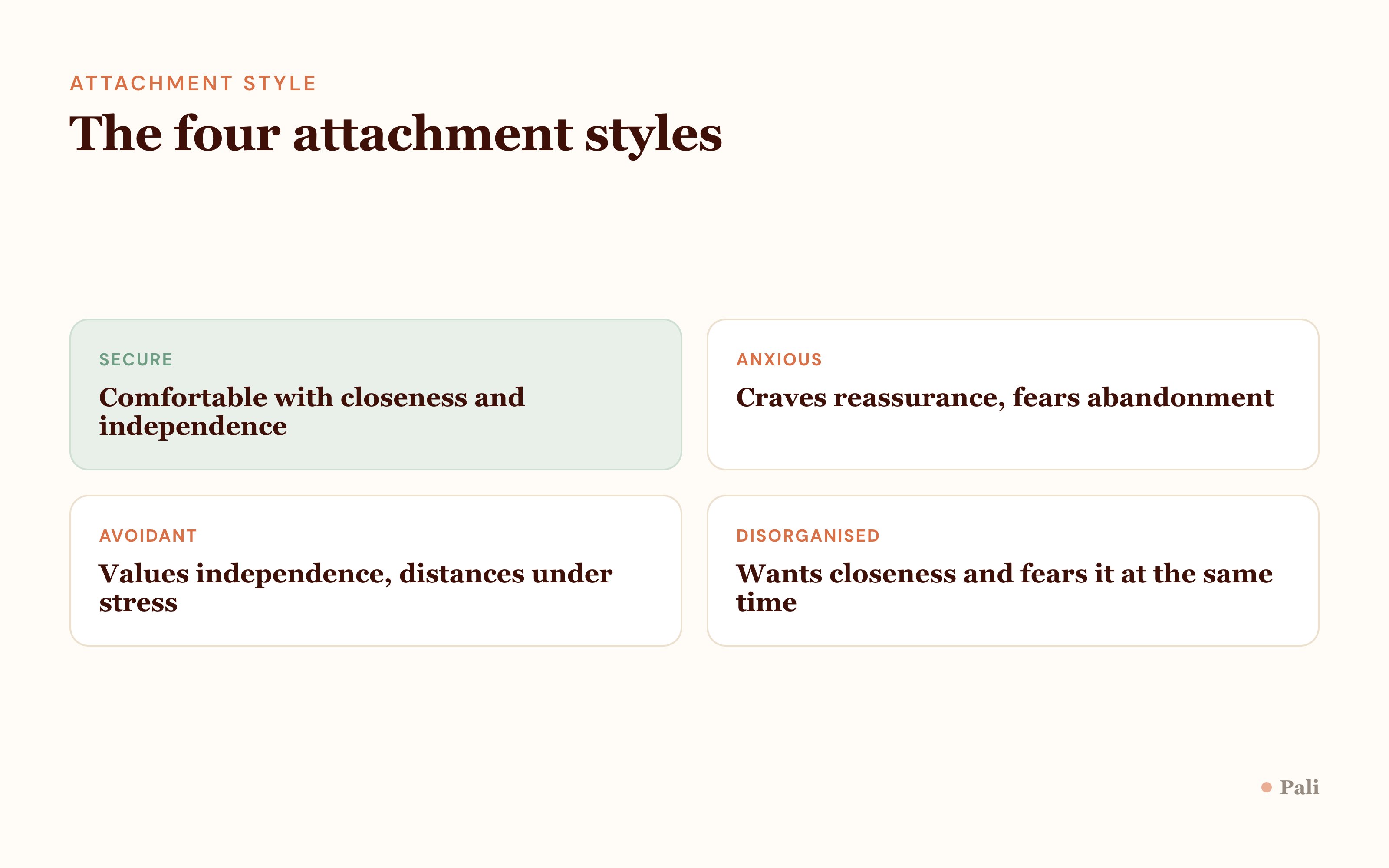
1. Secure Attachment
People with secure attachment feel comfortable with both closeness and independence. They trust others easily and communicate openly.
Research suggests roughly 50 to 60 percent of the population leans toward secure attachment.
2. Anxious Attachment
Core fear: What if they leave me?
If you find yourself overthinking texts, needing constant reassurance, or riding emotional highs and lows, you may lean anxious.
You crave closeness, but it often feels unstable. The good news? People with anxious attachment are often deeply empathetic and committed.
3. Avoidant Attachment
Core fear: What if I lose myself?
Difficulty opening up, pulling away when things get serious, and valuing independence over intimacy are hallmarks of avoidant attachment.
You want connection, but too much closeness feels like pressure. Learning to let others in does not mean losing your independence.
4. Disorganised Attachment
- Core conflict: I want love, but I do not feel safe in it.
Mixed signals, fear of both closeness and rejection, and intense, confusing relationship dynamics.
Programmes like Pali’s Earned Security course can help you develop a coherent attachment narrative.
Why Your Attachment Style Matters
Your attachment style is not just a label. It is a relationship blueprint that affects who you are attracted to and why certain patterns keep repeating.
For example:
- Anxious + Avoidant creates the classic push-pull dynamic
- Avoidant + Avoidant leads to emotional distance
- Secure + any style has a stabilising influence
This is why you might feel like you are dating the same person in different bodies.
Can Your Attachment Style Change?
Yes. And this is the most important part.
Attachment styles are not fixed. They can evolve with self-awareness, emotional skills, and healthier relationship experiences.
You are not stuck. You are just patterned.
How to Start Becoming More Secure
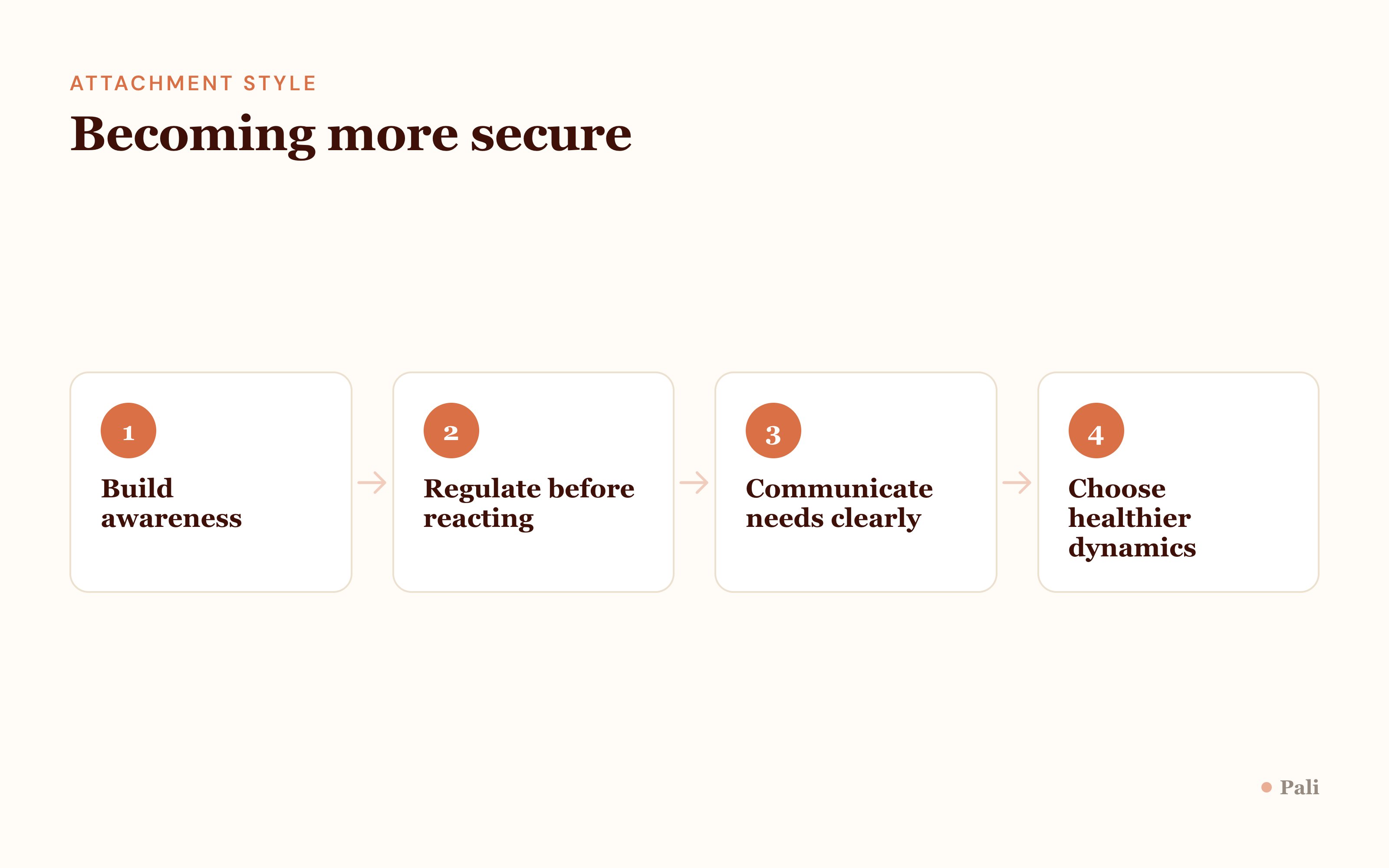
Build Awareness
Notice your triggers. Do you chase? Withdraw? Overthink? Simply observing your patterns without judgment is the most powerful first step.
Regulate Before Reacting
Instead of reacting emotionally, try pausing, breathing, and responding intentionally.
Communicate Your Needs Clearly
Secure people express: I need reassurance right now or I need some space. Naming what you need is a skill, not a weakness.
Choose Healthier Dynamics
Growth is not just internal. It is relational. Secure people help you become more secure.
How Pali Helps You Shift Your Attachment Style
Pali helps you actively shift it through guided courses like Your Attachment Style
and
- Earned Security , CBT-based tools to reshape thought patterns, and support when emotions spike.
Because insight alone does not change patterns. Practice does.
Your attachment style explains a lot, but it does not define you. The goal is not to label yourself. It is to understand your patterns and build something better.
Pali is designed for self-improvement and educational support. It is not therapy and is not a substitute for professional mental health care.