
Why Breakups Hurt So Much: The Psychology
Breakups hurt so much because your brain treats the loss of a close attachment like a kind of withdrawal, not just a sad event. The same systems tied to reward, craving, and bonding stay switched on after a relationship ends, so you keep reaching for someone who is no longer there. The pain is real, it is normal, and it does ease with time even when it does not feel like it will.
Why does a breakup feel like physical pain?
Researchers who have studied people going through romantic rejection, including the anthropologist Helen Fisher and her colleagues, have found that intense longing for a former partner activates brain regions linked to reward and craving, similar to the patterns seen in other forms of withdrawal. Your brain built a habit of expecting comfort, closeness, and reassurance from this one person. When that source suddenly disappears, the wanting does not switch off on schedule.
That is why missing an ex can feel less like a choice and more like a pull. You are not weak. You are experiencing the unwinding of a bond your body had come to rely on.
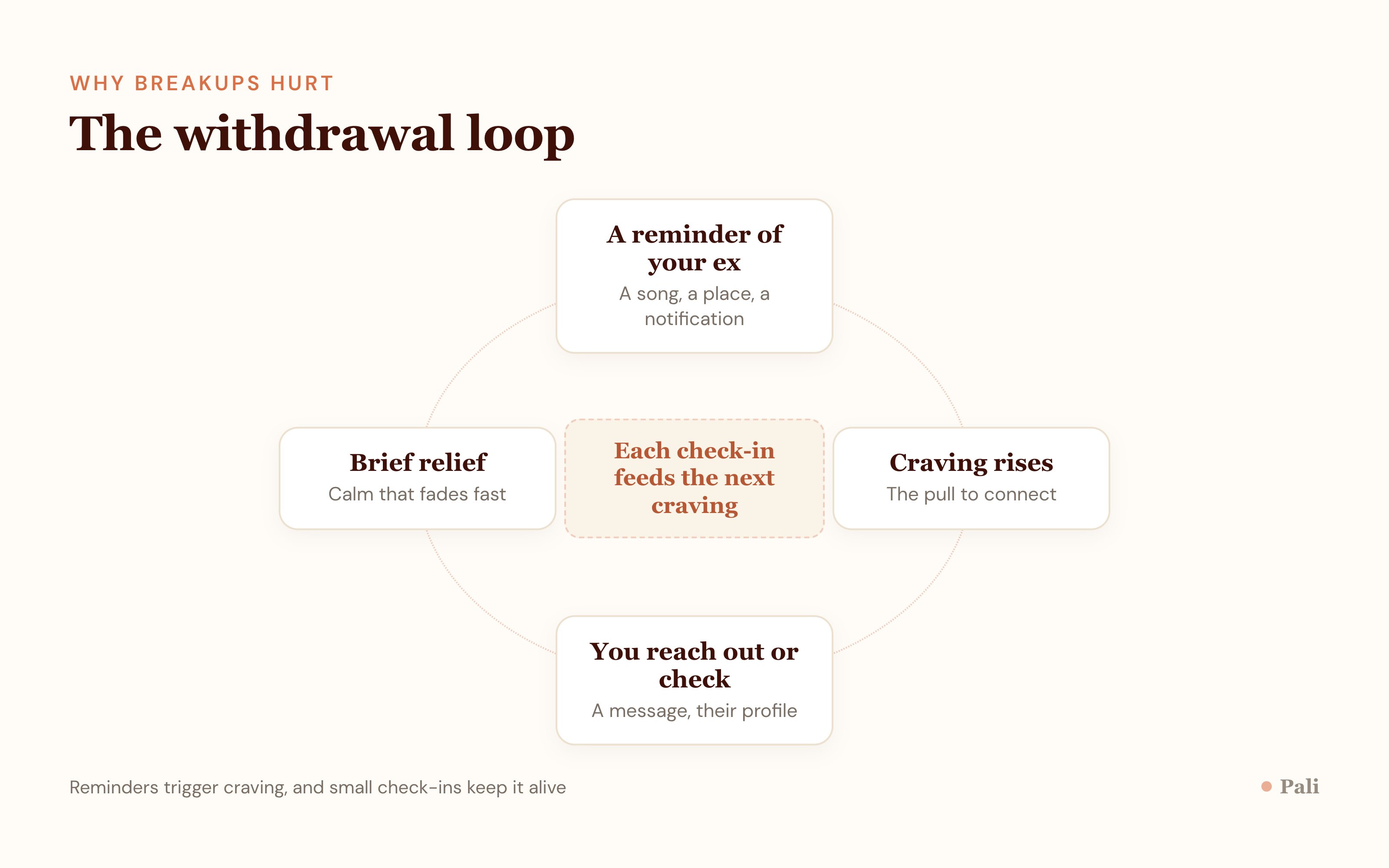
Understanding this loop is also why the no contact rule can help. Every check-in tops up the craving, while distance gives the bond room to fade.
Why does it hurt even if I wanted the breakup?
Wanting the breakup and grieving it are not in conflict. You can be sure a relationship was wrong for you and still mourn the future you imagined, the routines you shared, and the version of yourself you were inside it. Grief is about loss, not about whether the decision was correct.
It is also common to miss the comfort of the familiar rather than the person themselves. If you keep wondering why the missing lingers, how to stop missing your ex goes deeper into that specific ache.
How long does breakup pain last?
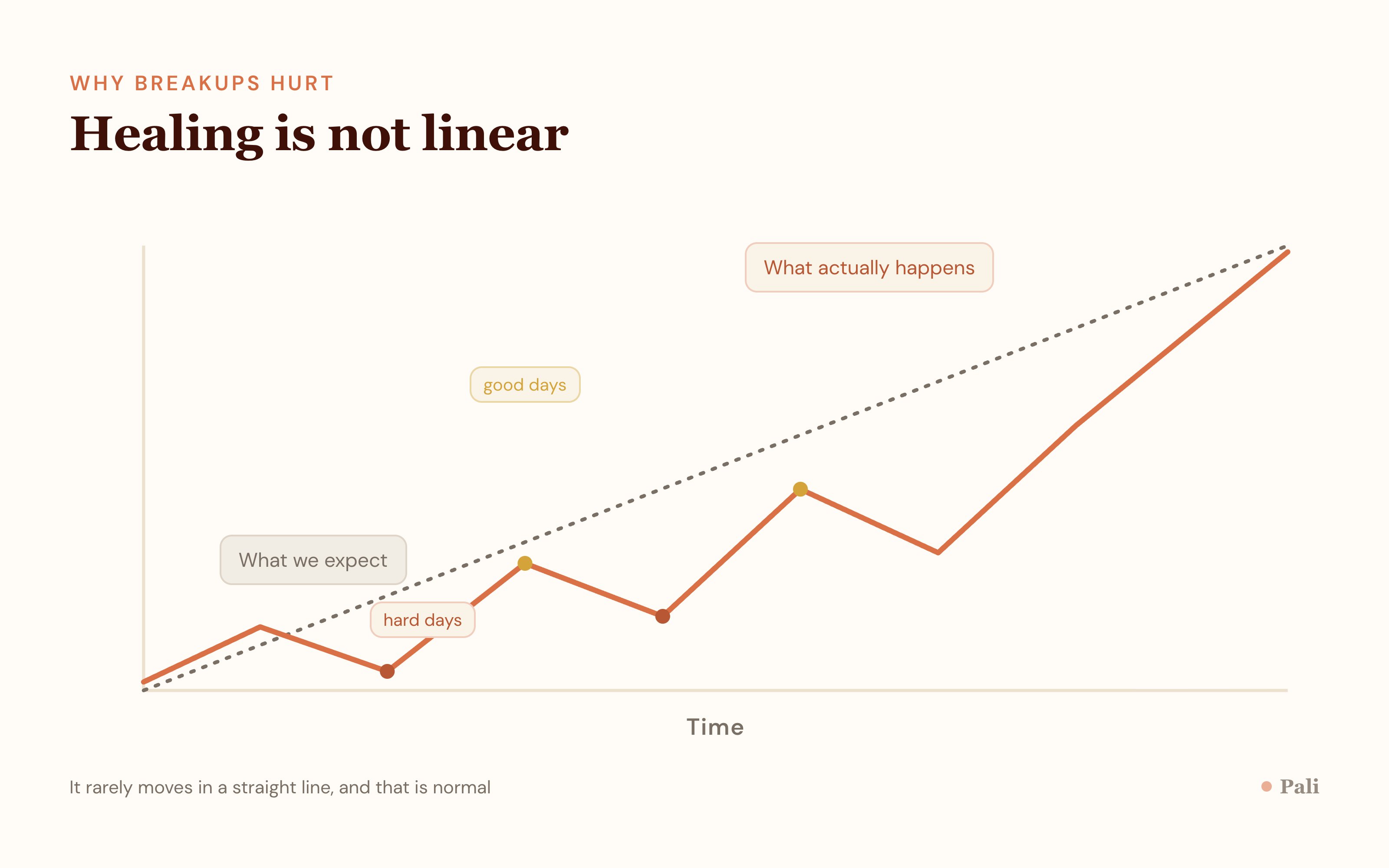
There is no fixed timeline, and anyone who promises an exact number is guessing. What research and lived experience both suggest is that the sharp, daily pain usually softens in waves rather than in a straight line. You can have a good week followed by a hard day, and that is not a setback, it is how grief actually moves.
What actually helps a breakup heal?
The things that help are usually unglamorous and repeatable:
- Reduce contact and reminders so the craving loop has room to quiet.
- Keep your body steady with sleep, movement, food, and daylight.
- Let yourself feel the grief in waves instead of fighting it.
- Lean on people who care about you rather than carrying it alone.
- Slowly rebuild a sense of who you are outside the relationship.
That last point matters more than it sounds, and how to rebuild self-worth after a breakup walks through it gently. For the wider arc of recovery, our guide on how to get over a breakup ties these pieces together. Pali can sit with you through the reset, one steady day at a time.
Frequently asked questions
Why do breakups hurt more than I expect? Because your brain responds to losing a close bond like a form of withdrawal, not just disappointment. The craving systems stay active for a while after the relationship ends.
Is it normal to feel breakup pain physically? Yes. Many people feel it in the chest, stomach, or sleep. Emotional pain and physical sensation share overlapping pathways in the brain.
Why does the pain come back in waves? Grief is not linear. Reminders, anniversaries, and quiet moments can reopen it, even after good stretches. That does not mean you are starting over.
Does staying friends make it hurt longer? Often, yes, especially early on. Ongoing contact tends to keep the attachment bond active, which can slow the fading of the craving.
Pali is designed for self-improvement and educational support. It is not therapy and is not a substitute for professional mental health care.