
How to Stop Missing Your Ex
You stop missing your ex less by force and more by understanding what the missing is made of, then slowly giving your nervous system new things to attach to. Missing someone is not proof you should be together. It is mostly your brain adjusting to the loss of a familiar source of comfort, and that adjustment eases with time and a few deliberate habits.
Be patient with yourself. Longing is normal, and it fades in waves rather than all at once.
Why do I still miss my ex?
Missing an ex is partly chemical and partly habit. A close relationship becomes woven into your daily routine and your sense of safety, so losing it registers like withdrawal. Anthropologist Helen Fisher’s brain imaging research found that romantic rejection activates the same reward and craving systems involved in addiction, which is why the pull to reach out can feel so physical. You are not weak. You are wired to seek a person who used to soothe you.
It also helps to separate two different things you might be missing.
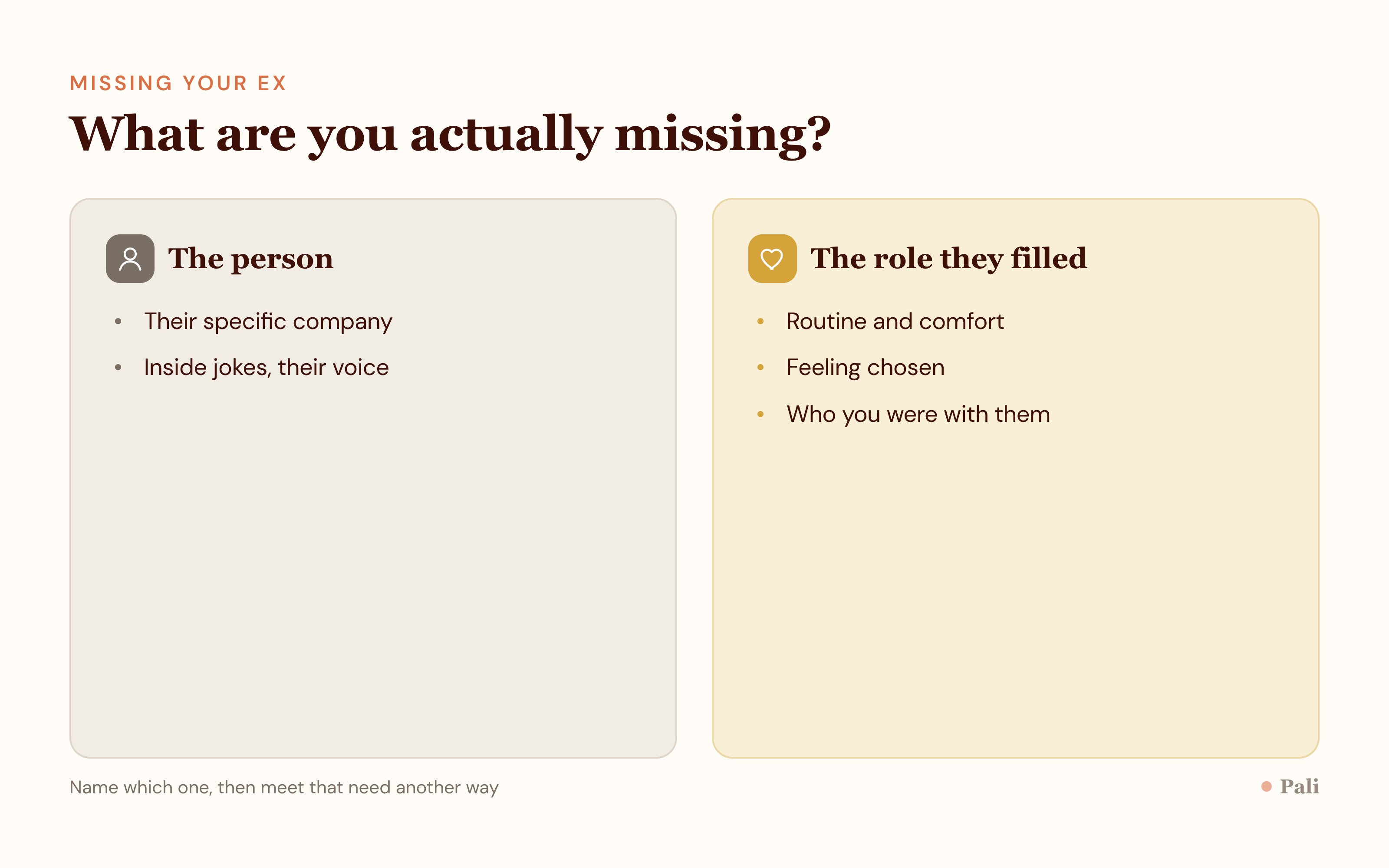
When you notice you are missing the comfort, the routine, or the version of yourself you were in the relationship, you can meet those needs in other ways. When you are missing the specific person, you can let the feeling pass without acting on it.
How do I stop the urge to text my ex?
The urge to reach out tends to spike, peak, and fall, usually within twenty minutes or so if you do not feed it. The skill is to ride that wave instead of acting in it. This is also the core of the no contact rule, which gives your nervous system the quiet it needs to recalibrate.
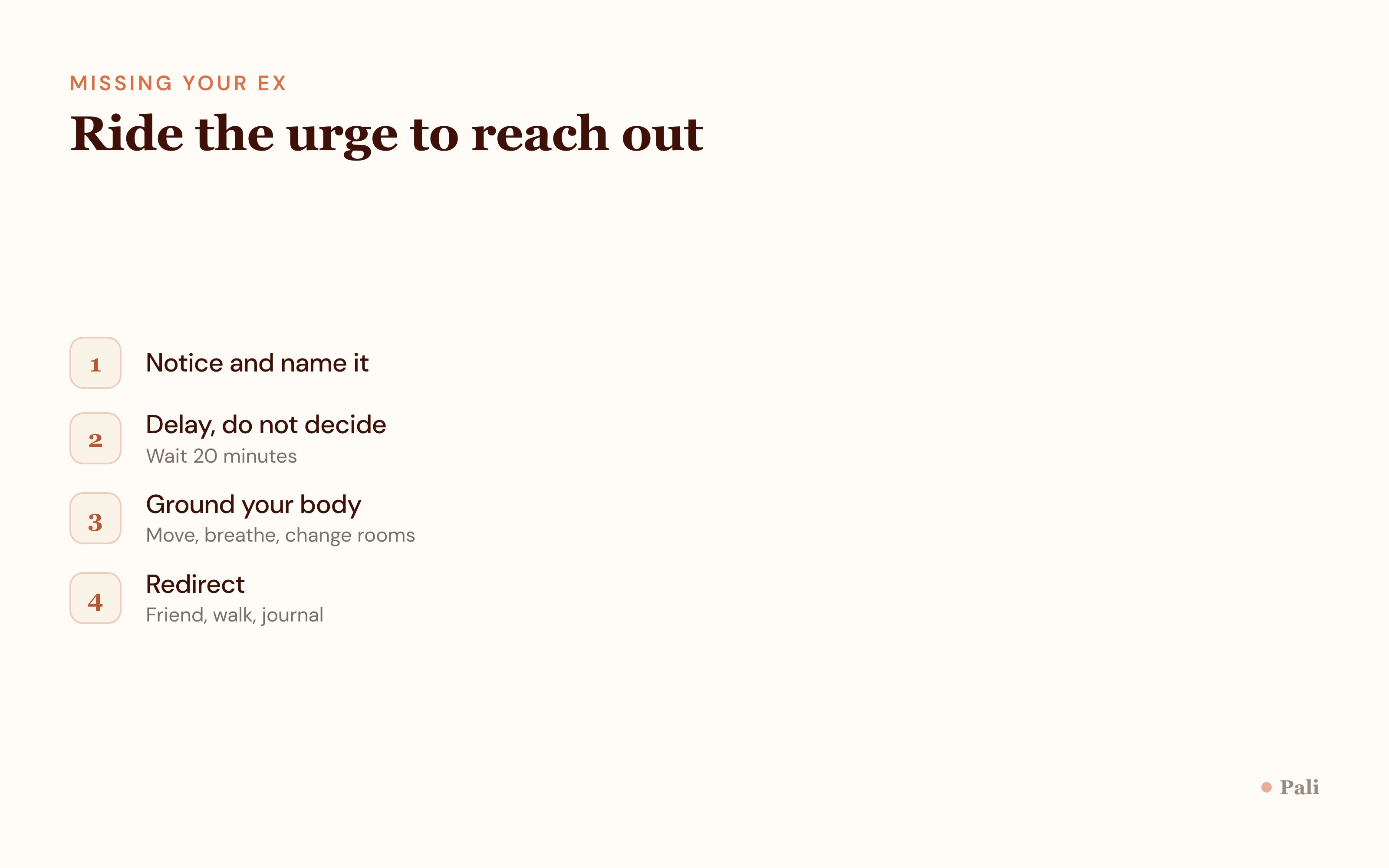
- Notice and name it. “I have an urge to text him.” Naming creates a small gap between feeling and action.
- Delay, do not decide. Tell yourself you can text in twenty minutes. Most urges shrink in that window.
- Ground your body. Move, breathe, or change rooms. The urge lives in your nervous system as much as your mind.
- Redirect to a planned action. Have a short list ready: message a friend, walk, write in a journal.
What helps the missing fade over time?
- Reduce the reminders. Mute or unfollow for now. Constant updates keep the wound open and feed the craving.
- Rebuild routine. Predictable days give your nervous system a new anchor and a new secure base.
- Let yourself grieve in doses. Suppressing the feeling tends to prolong it. Feeling it on purpose, in small amounts, helps it move through.
- Reinvest in yourself. This is where you start rebuilding self-worth after a breakup rather than waiting to feel ready.
In Pali, the Reset and Stabilise track is built for exactly this stretch, with short daily steps that keep you steady. For the full picture of recovery, see our pillar on how to get over a breakup. If the thoughts loop endlessly, our guide to how to stop overthinking everything can help too.
Frequently asked questions
Why do I miss my ex if the relationship was bad? Missing is about familiarity and comfort, not about whether the relationship was good for you. Your brain misses the routine and the soothing, even when your judgement knows it was unhealthy.
Is it normal to miss your ex months later? Yes. Missing comes in waves and can return around anniversaries, songs, or stress, long after the worst has passed. It tends to grow shorter and less intense over time.
Will I ever stop missing them completely? Often the sharp ache fades into a quiet, occasional fondness. Most people find the missing becomes background rather than the centre of their day.
Does no contact help with missing an ex? For most people, yes. Ongoing contact keeps reactivating the craving, while a period of no contact gives your nervous system the space to settle.
Pali is designed for self-improvement and educational support. It is not therapy and is not a substitute for professional mental health care.