
The No Contact Rule, Explained
The no contact rule means deliberately cutting off communication with an ex for a set period so your nervous system can settle and you can think clearly again. It works because contact keeps reactivating the craving and the hope, which stalls healing. No contact is not a punishment or a game to win them back. It is a recovery tool for you.
Here is how it works and how to hold it without white-knuckling.
What is the no contact rule?
No contact means no calls, texts, social media interaction, or checking their profiles, for a chosen window, often around thirty to sixty days, sometimes longer. The point is to break the loop where every message or update reopens the wound. Anthropologist Helen Fisher’s research on romantic rejection found it activates the brain’s reward and craving circuits much like a withdrawal state, which is why small contact can set you back so far. Removing the trigger lets the craving fade.
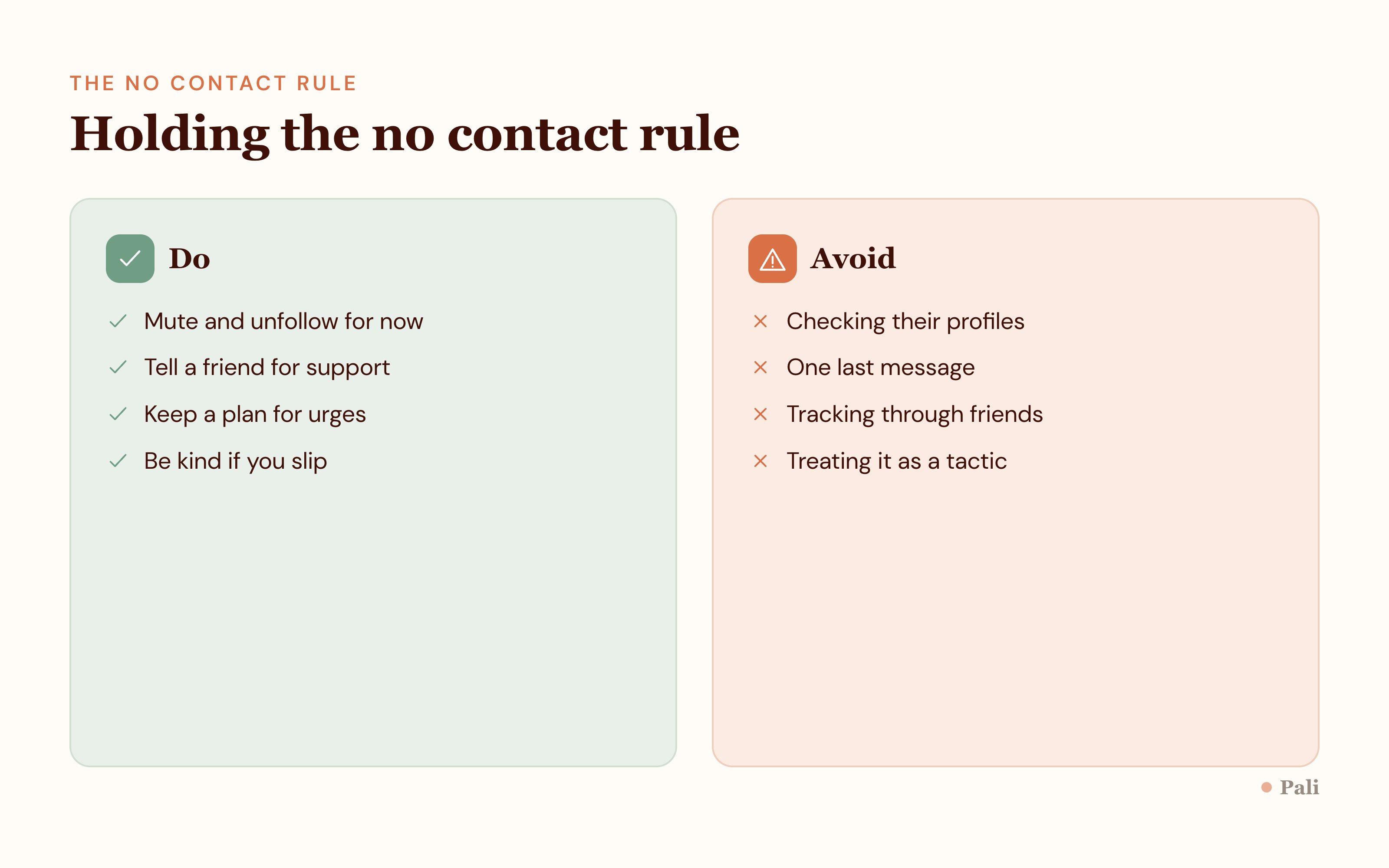
A few honest caveats. No contact is for healing, not for manipulating someone back. If you share children, a home, or work, you set low-contact boundaries instead, keeping exchanges brief and practical. And if there is any safety risk, prioritise your safety and seek appropriate support.
Does the no contact rule actually work?
For most people, yes, because it interrupts the cycle that keeps the longing alive. It gives the craving time to settle and gives you space to rebuild routine and perspective. Research on breakup recovery is encouraging: in a 2007 study in the Journal of Positive Psychology, most people reported feeling meaningfully better, and even some personal growth, by around eleven weeks. No contact helps that natural curve happen without constant reopening.
It pairs naturally with learning how to stop missing your ex, since the urge to reach out is the main thing no contact protects you from.
How long does no contact take, and what should I expect?
There is no perfect number, but it helps to know the rough shape so the hard early days do not feel like failure.
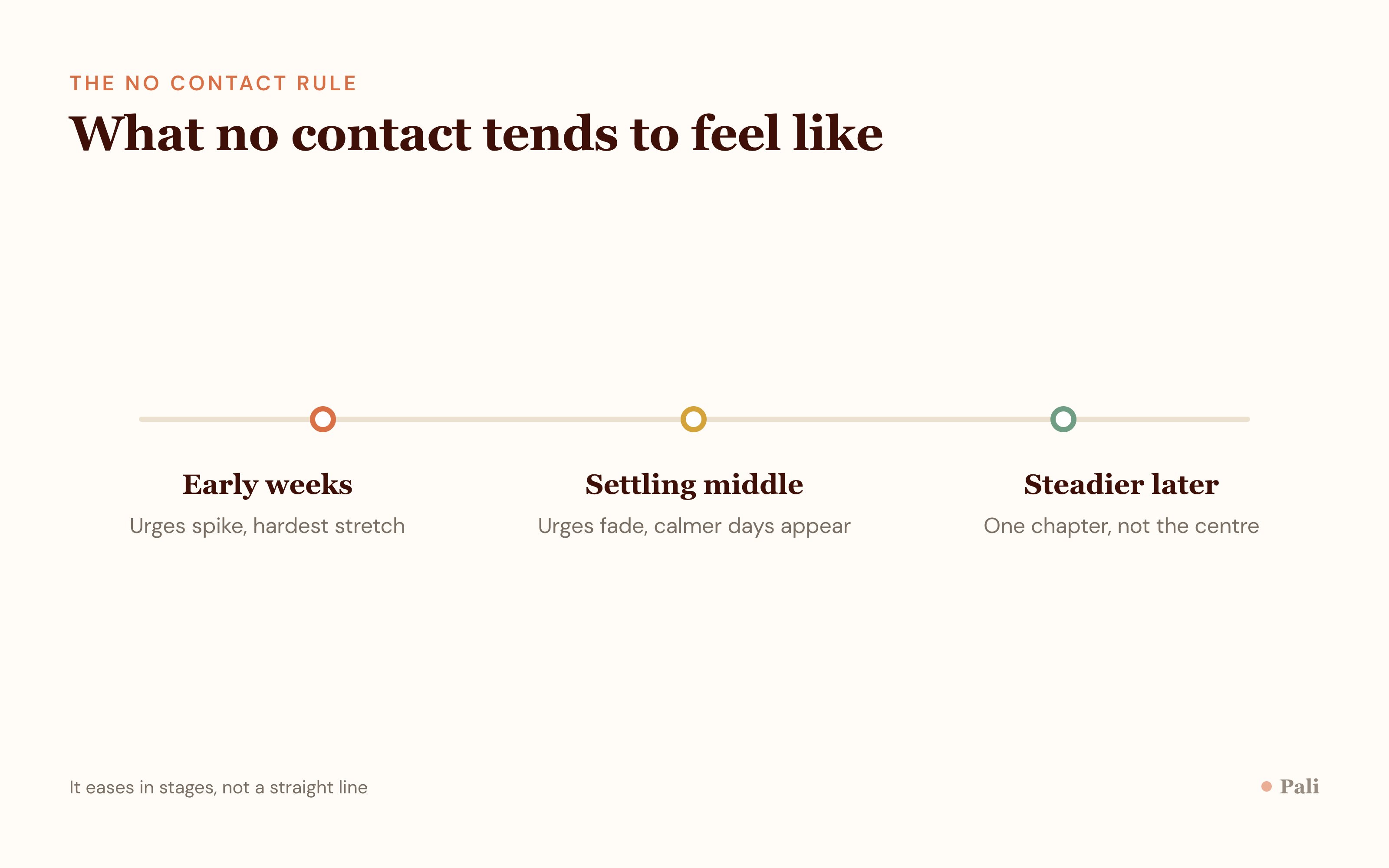
- Early weeks. The hardest stretch. Urges spike, sleep may suffer, and reaching out feels urgent. Lean on routine and grounding.
- Settling middle. Urges come less often and pass faster. You start having days where you barely think of them.
- Steadier later phase. The relationship becomes one chapter rather than the centre of your mind, and you feel more like yourself.
To hold it: remove reminders and mute their accounts, tell a friend so you have accountability, prepare a short list of what to do when an urge hits, and be kind to yourself if you slip. A slip is a data point, not a reason to give up. This is also the season to begin rebuilding self-worth after a breakup.
In Pali, the Reset and Stabilise track supports the no contact window with daily steps, and the wider arc is covered in our pillar on how to get over a breakup.
Frequently asked questions
How long should the no contact rule last? A common window is thirty to sixty days, but the right length is however long it takes you to feel steady. Longer relationships often need longer, and the goal is your recovery, not a fixed number.
Does no contact work to get an ex back? That is not what it is for. Its purpose is your healing. Some people do reconnect later, but treating no contact as a tactic to win someone back tends to keep you stuck in hope rather than recovery.
What if we have to stay in contact? If you share children, a home, or work, switch to low contact: keep exchanges short, factual, and limited to what is necessary, and avoid emotional or personal topics.
Is it normal to feel worse at first during no contact? Yes. The early days can feel harder because you are no longer getting the brief relief of contact. This usually eases within the first few weeks as the craving settles.
Pali is designed for self-improvement and educational support. It is not therapy and is not a substitute for professional mental health care.