
Relationship Coaching vs Therapy: The Difference
Therapy treats mental health conditions and works with the past, usually delivered by a licensed clinician. Relationship coaching is forward looking and skills focused, helping you set goals and change habits, and it is not a medical service. Self-guided apps sit alongside both, giving you structured practice between or instead of sessions. None is better than the others. They do different jobs, and many people use more than one.
Here is how to tell them apart and choose well.
What is the difference between coaching and therapy?
The clearest way to see it is side by side. Therapy is regulated and clinical. Coaching is unregulated in most places and developmental. That difference shapes what each can safely help with.
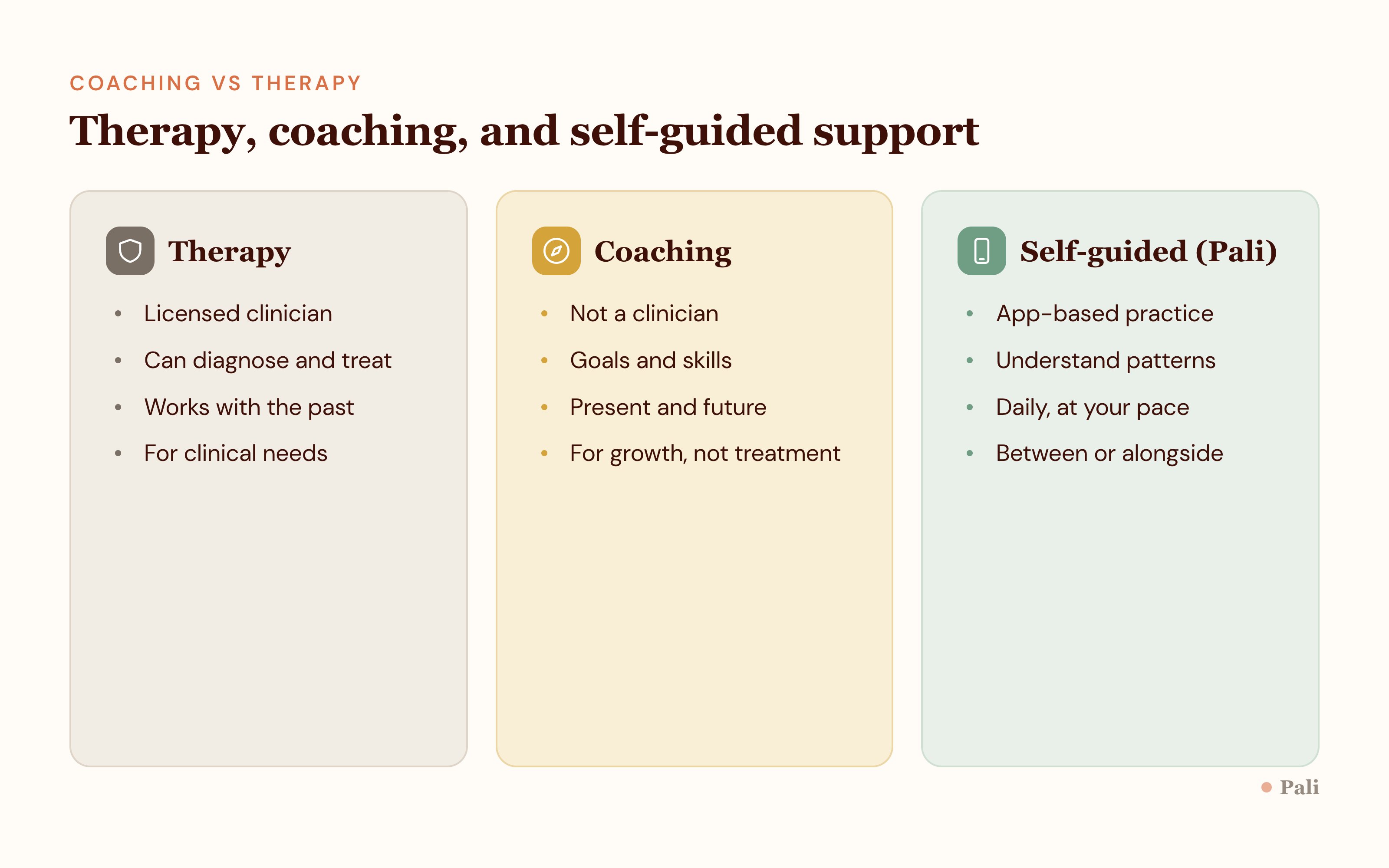
- Therapy is delivered by a licensed professional, can diagnose and treat conditions such as depression, trauma, or anxiety, and often explores how your history shapes the present. It is the right choice for clinical needs.
- Relationship coaching focuses on present and future goals, communication skills, and accountability. A coach is not a clinician and should not treat mental health conditions.
- Self-guided support such as Pali gives you psychology backed lessons and reflection you can do at your own pace, helpful for building habits and understanding your patterns between or outside sessions.
How do you know which one you need?
A useful rule of thumb is to match the support to the depth of what you are carrying. The more your daily functioning is affected, the more you want a licensed professional involved.
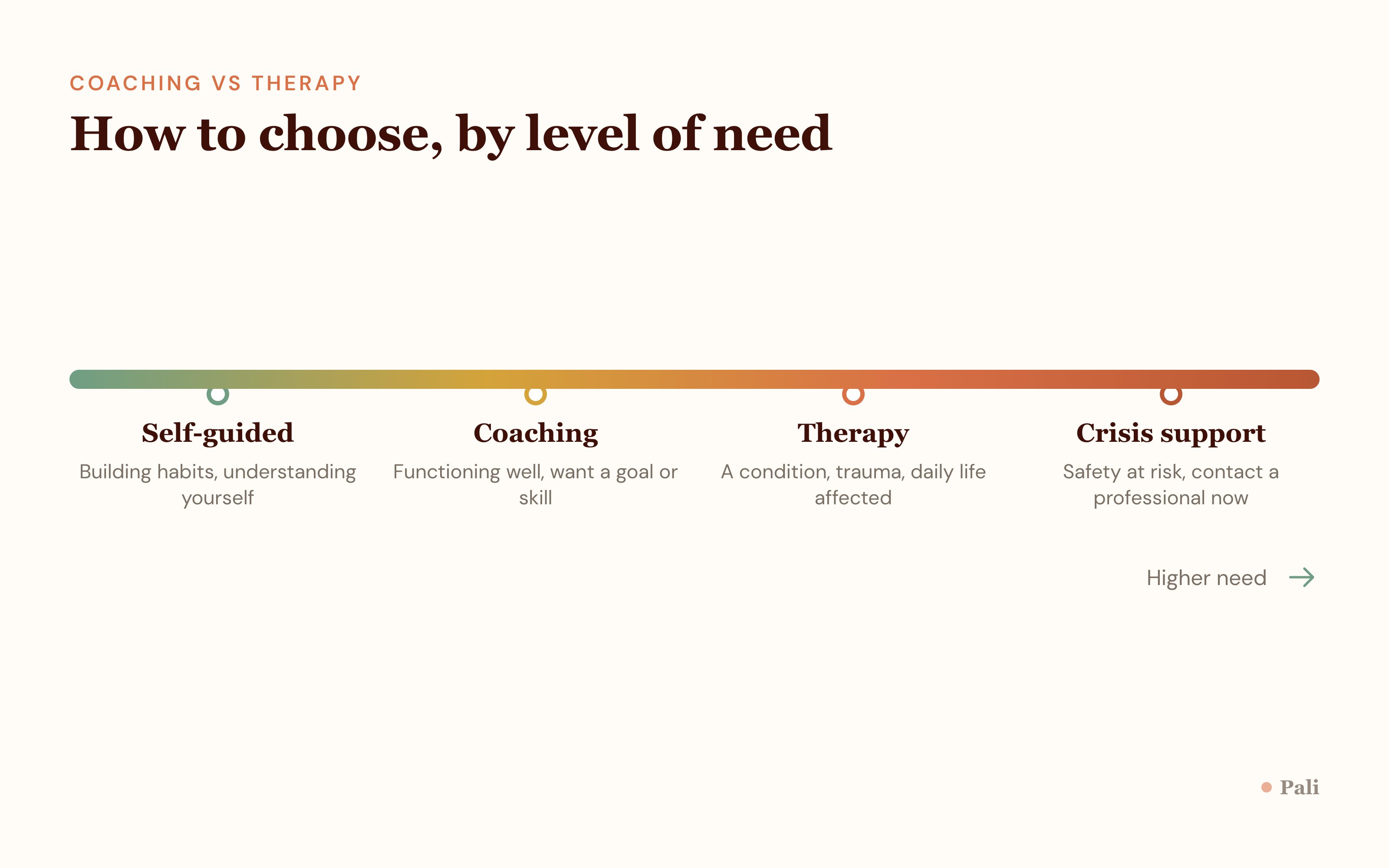
- Choose therapy if you are dealing with a possible mental health condition, trauma, or distress that affects sleep, work, or safety.
- Choose coaching if you are functioning well and want to improve specific relationship skills or reach a goal with accountability.
- Choose a self-guided app if you want low-cost, private, everyday practice to understand your patterns and build healthier habits, on its own or alongside the above.
If you are in crisis or thinking about harming yourself, please contact a doctor or a local crisis line now. No app or coach is a substitute for emergency care.
Where does Pali fit?
Pali is firmly in the self-guided category. It is a psychology backed companion, not therapy, not a coach, and not a medical service. It helps you understand your patterns, practise healthier communication, and work through your attachment style at your own pace. Many people use it between therapy sessions or while deciding what kind of support they want. If you are comparing tools more broadly, see our roundup of the best apps for anxious attachment.
A note on safety and trust: responsible self-guided tools should be clear about what they are not, keep crisis resources visible, and protect your data. That boundary is a feature, not a limitation.
Frequently asked questions
Is relationship coaching the same as therapy? No. Therapy is a regulated clinical service that can diagnose and treat conditions. Coaching is a developmental, goal-focused service that is not clinical and should not treat mental health conditions.
Do I need therapy or coaching? If your concern is a possible condition, trauma, or distress affecting daily life, therapy is the safer choice. If you are well and want to build skills or reach a goal, coaching may fit. The two can also be used together.
Can an app replace therapy? No. A self-guided app like Pali can support learning, reflection, and habits, but it cannot diagnose or treat mental health conditions and is not a substitute for professional care.
Is coaching regulated? In most places, no. Therapy is licensed and regulated, while coaching generally is not, so it helps to check a coach’s training and to keep clinical issues with a clinician.
Pali is designed for self-improvement and educational support. It is not therapy and is not a substitute for professional mental health care.