
Phone and Digital Boundaries for Couples
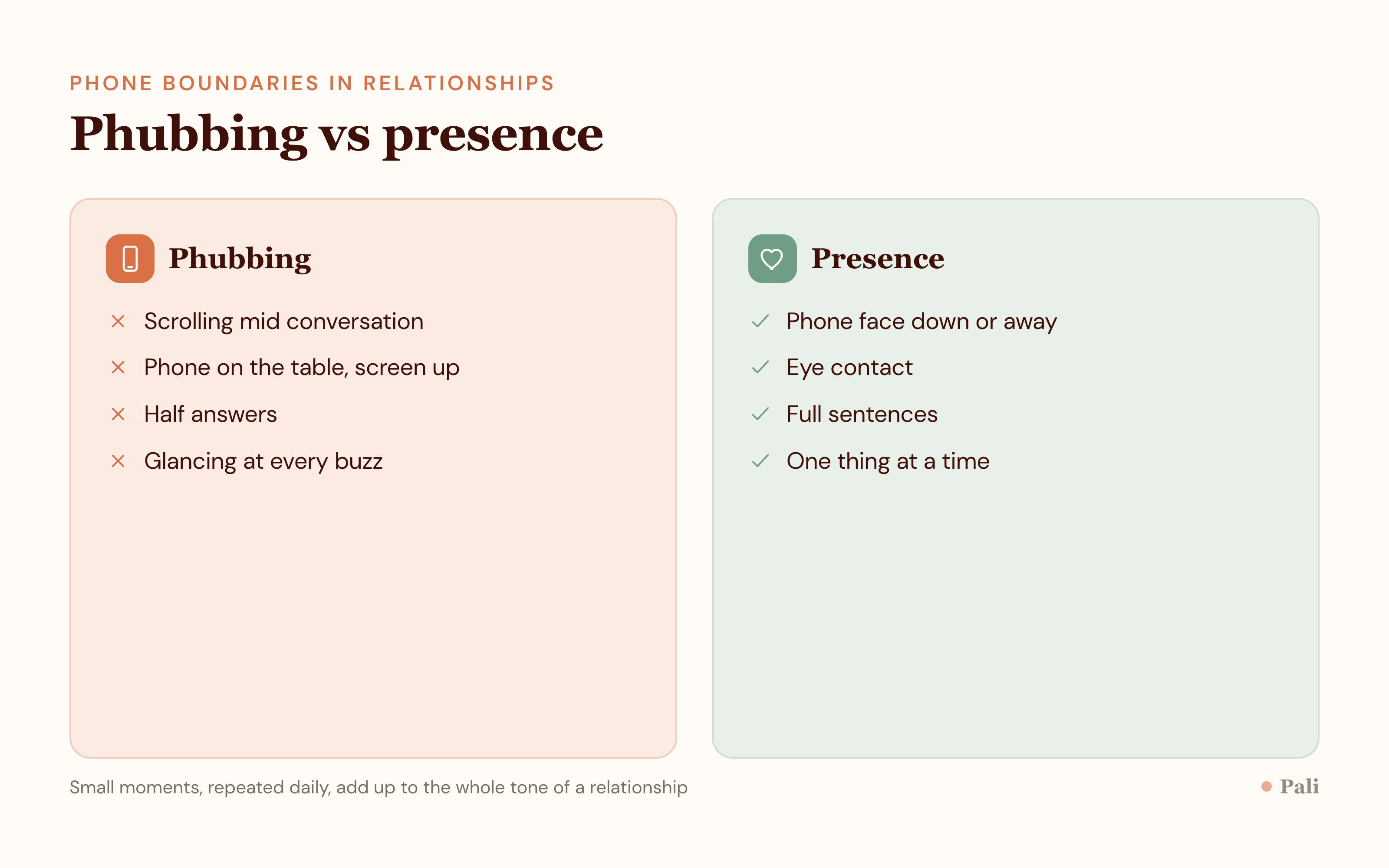
Phones strain relationships less through big betrayals and more through small, repeated moments of half attention. Being on your phone while your partner is talking, often called phubbing, chips away at closeness even when nothing is wrong. The fix is not throwing your phones away, it is agreeing on a few clear digital boundaries that protect your time together.
Does phone use really hurt relationships?
The research suggests it does. In a widely cited 2016 study in Computers in Human Behavior, researchers James Roberts and Meredith David examined “partner phubbing,” the experience of being snubbed by a partner’s phone. They found that more phubbing was linked to more conflict over phone use and lower relationship satisfaction. Later studies have repeated the basic finding across different countries.
The mechanism is simple and a little sad. When your partner reaches for the phone mid conversation, some part of them registers as mentally absent. Do that often enough and the message, however unintended, becomes “this screen matters more than you.”
Why do small phone habits cause big friction?
Because they accumulate. A single glance at a notification is nothing. The same glance a hundred times becomes a pattern your partner starts to expect, resent, and eventually mention. Like most recurring tension, the phone is often the doorway to a deeper feeling of not being prioritised, which is the same shape described in why you fight about the same things.
It is also worth noticing that phone conflict and money conflict tend to share a root, a sense of unfairness or of not being chosen. If both show up in your relationship, the calm conversation approach in money conflict in relationships transfers directly.
How do you set healthy phone boundaries as a couple?
Make the boundaries shared agreements, not rules one person polices. A short checklist you both sign off on works better than nagging.
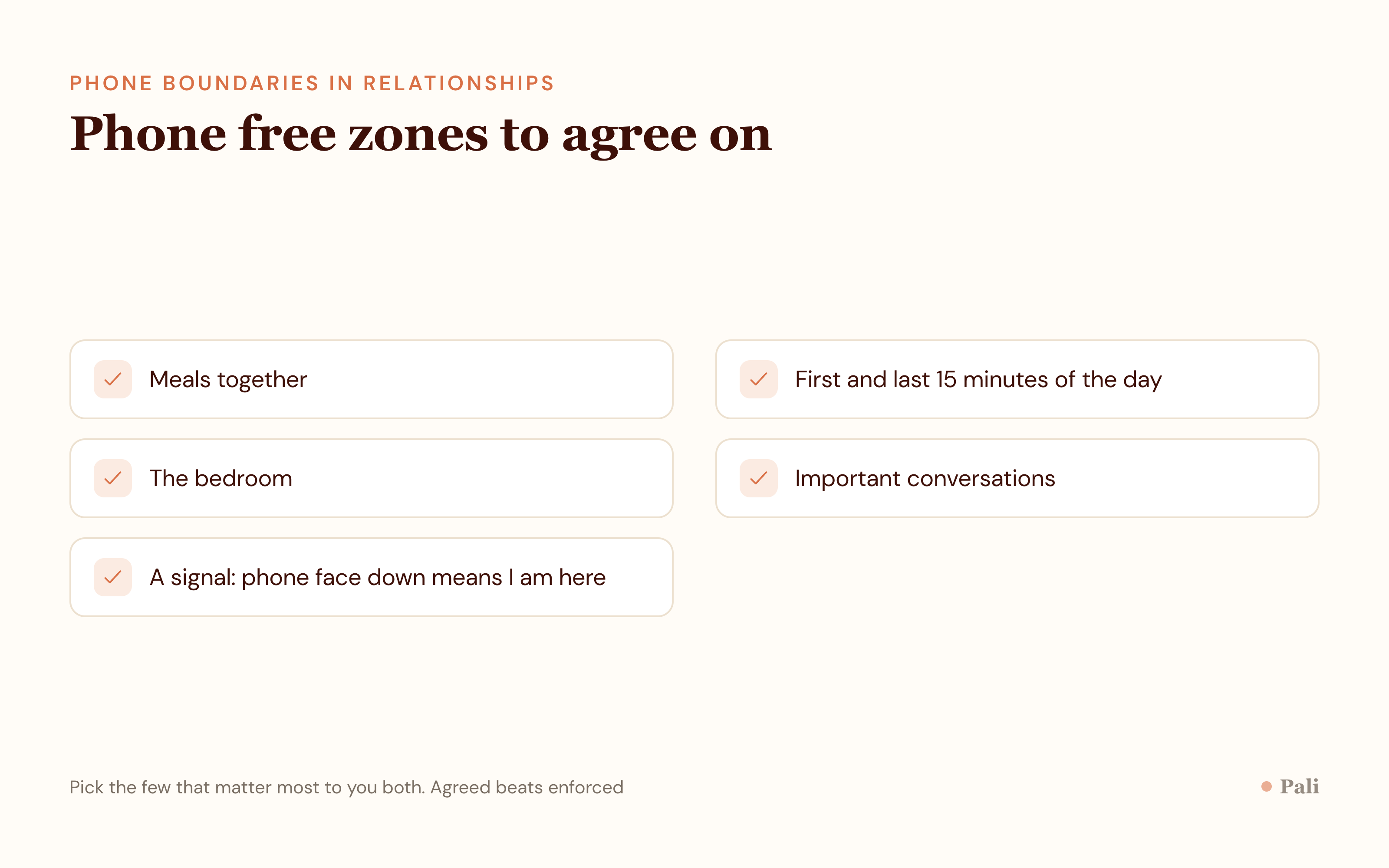
- Choose a couple of phone free zones together, such as the dinner table or the bedroom.
- Protect the bookends of the day. The first and last fifteen minutes set the tone.
- Use a simple signal. Phone face down on the table means “I am here with you.”
- Name your own habit honestly. “I reach for my phone when I am bored or anxious” invites teamwork instead of blame.
Done well, this is not about restriction. It is about choosing presence on purpose, which is one of the most underrated forms of healthy communication there is.
Frequently asked questions
What is phubbing? Phubbing is a blend of phone and snubbing. It means ignoring the person you are with by paying attention to your phone instead. When it happens between partners it is called partner phubbing.
Is it controlling to ask my partner to put their phone away? Not when it is a shared, mutual agreement rather than a one sided rule. Asking for presence during meals or conversations is a reasonable boundary, especially if you offer the same in return.
How much phone use is too much in a relationship? There is no magic number. The signal to watch is whether either partner regularly feels less important than the screen. If so, it is worth a calm conversation, not a fight.
How do we break the habit of scrolling around each other? Start with one phone free window a day and a visible signal like phones face down. Small, consistent boundaries change the habit faster than sweeping bans.
Pali is designed for self-improvement and educational support. It is not therapy and is not a substitute for professional mental health care.