
Mindfulness for Anxiety: A Beginner Guide
Mindfulness helps with anxiety because it changes your relationship to anxious thoughts rather than trying to delete them. Instead of being swept along by worry, you learn to notice it, name it, and let it pass. You do not need to empty your mind or sit for an hour. A few minutes of steady attention is enough to start.
Does mindfulness actually help anxiety?
The evidence is encouraging without being a cure all. A Johns Hopkins review of 47 trials, published in JAMA Internal Medicine in 2014 by Madhav Goyal and colleagues, found moderate evidence that mindfulness meditation programmes reduce anxiety, along with depression and pain. Moderate is honest language. Mindfulness is a reliable tool, not a magic switch, and it tends to work best with regular, low pressure practice.
Part of why it helps is simple. Anxiety lives in the future, rehearsing what might go wrong. Mindfulness keeps gently returning you to the present, where the feared thing usually is not happening yet.
How do you use mindfulness when anxiety hits?
When anxiety spikes, you do not need a long sit. You need a quick way back into your body. This three step practice takes about a minute.
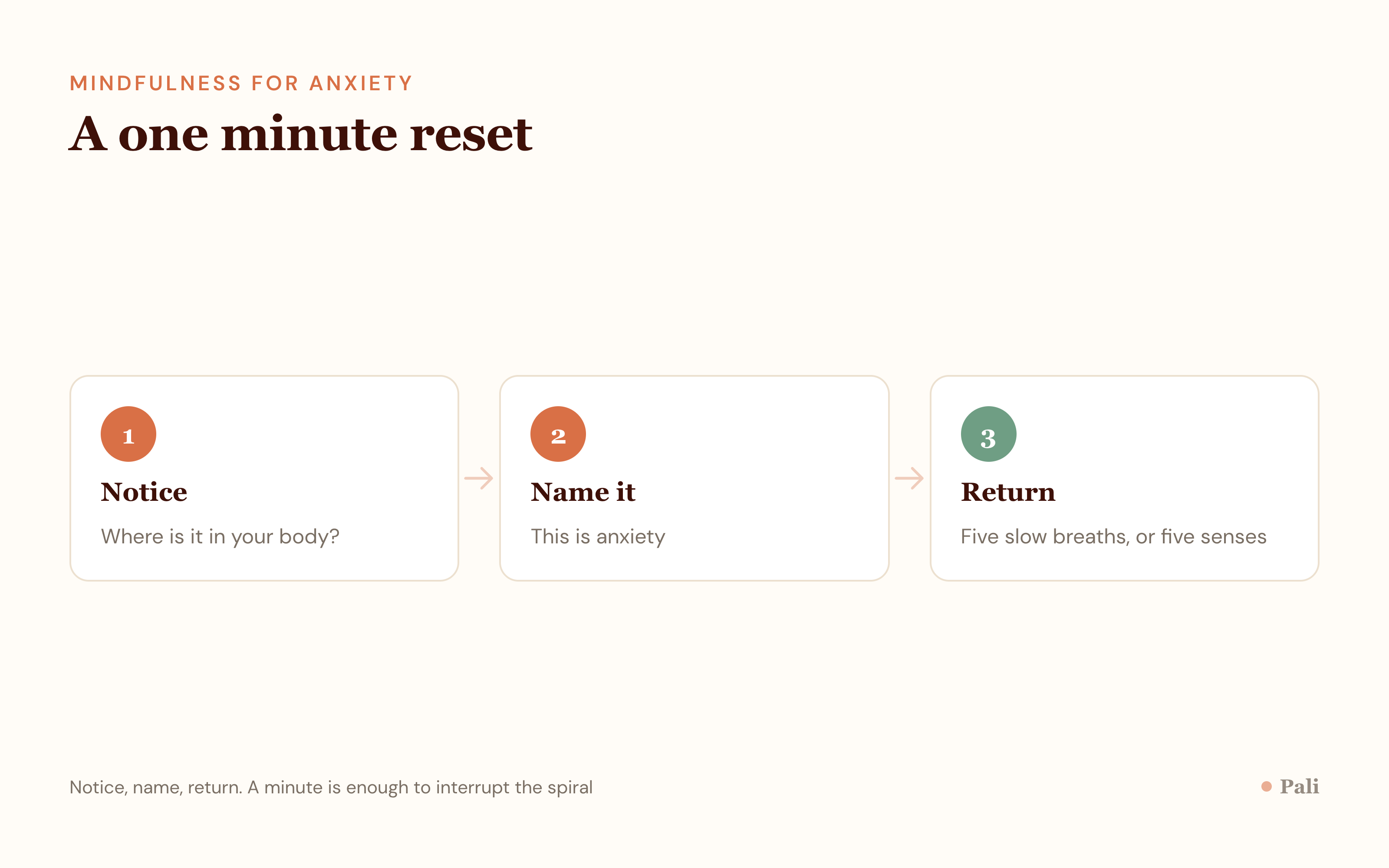
- Notice. Where is the anxiety in your body? A tight chest, a buzzing stomach, a clenched jaw. Just locate it.
- Name. Say quietly, “this is anxiety.” Naming a feeling reduces its grip, because it shifts you from inside the wave to observing it.
- Return. Bring your attention to one anchor. Five slow breaths, or five things you can see, hear, and feel right now.
Repeat as needed. You are not failing if the anxiety returns. Returning your attention, again and again, is the practice.
What are some simple mindfulness practices for anxiety?
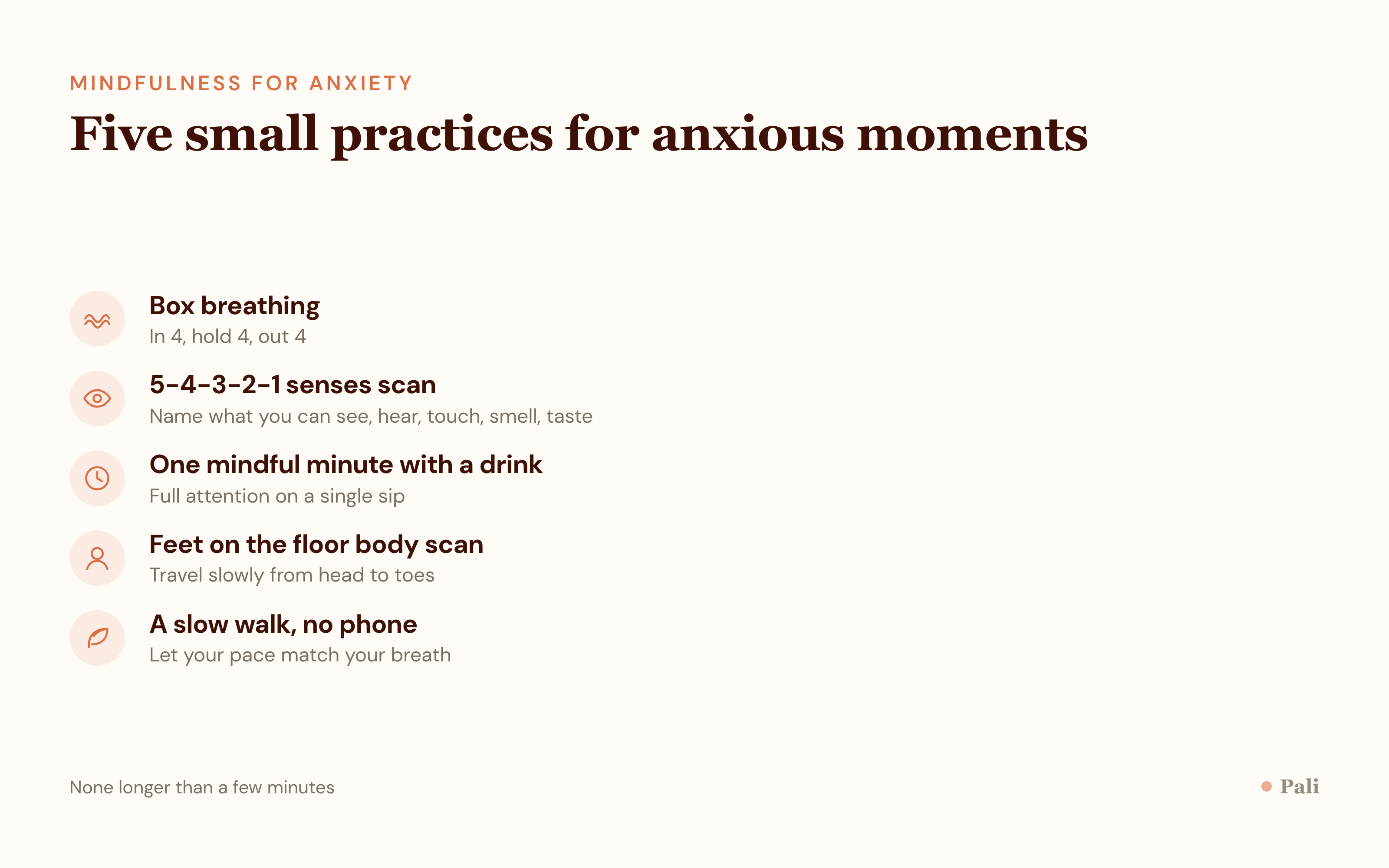
Short and consistent beats long and occasional. Pick one or two and use them daily.
If you tend to feel anxious specifically in relationships, it helps to understand the deeper pattern underneath, since your attachment style shapes how quickly your system reads uncertainty as threat. Getting clear on your attachment style can turn vague dread into something you can actually work with. And when the anxious thoughts are really old stories about yourself, gentle shadow work can be a useful companion to mindfulness.
A note on limits. Mindfulness is a wonderful daily skill, but if anxiety is frequently overwhelming or stopping you living your life, please reach out to a doctor or qualified therapist. Mindfulness works alongside that kind of support, not instead of it.
Frequently asked questions
How long should a beginner meditate for anxiety? Start with two to five minutes a day. Consistency matters far more than length, and a short daily habit is easier to keep than an ambitious one you abandon.
Can mindfulness make anxiety worse? For some people, sitting in silence briefly amplifies anxious thoughts at first. If that happens, choose movement based or sensory practices, keep sessions short, and consider guidance from a professional.
What is the difference between mindfulness and meditation? Mindfulness is the skill of paying attention to the present without judging it. Meditation is one way to train that skill. You can also be mindful while walking, eating, or washing dishes.
How quickly does mindfulness reduce anxiety? Many people feel calmer within a single practice, but lasting change builds over weeks of regular use, much like physical exercise.
Pali is designed for self-improvement and educational support. It is not therapy and is not a substitute for professional mental health care.