
Shadow Work, Explained
Shadow work is the practice of getting to know the parts of yourself you have learned to hide, deny, or judge. The idea is that what we push out of sight does not disappear, it just runs quietly in the background and shapes how we react. By turning toward those parts with curiosity instead of shame, you reduce their grip and become more whole.
What is shadow work?
The term comes from the psychiatrist Carl Jung, who used “the shadow” to describe the disowned parts of the personality, the traits and feelings we decide are not acceptable and tuck away. Jung’s point was not that the shadow is evil. It is that the things we refuse to look at end up running us.
Shadow work, then, is simply paying honest attention to those hidden parts. The jealousy you are ashamed of. The anger you swallow. The need you call needy. None of these are flaws to delete. They are signals worth understanding.
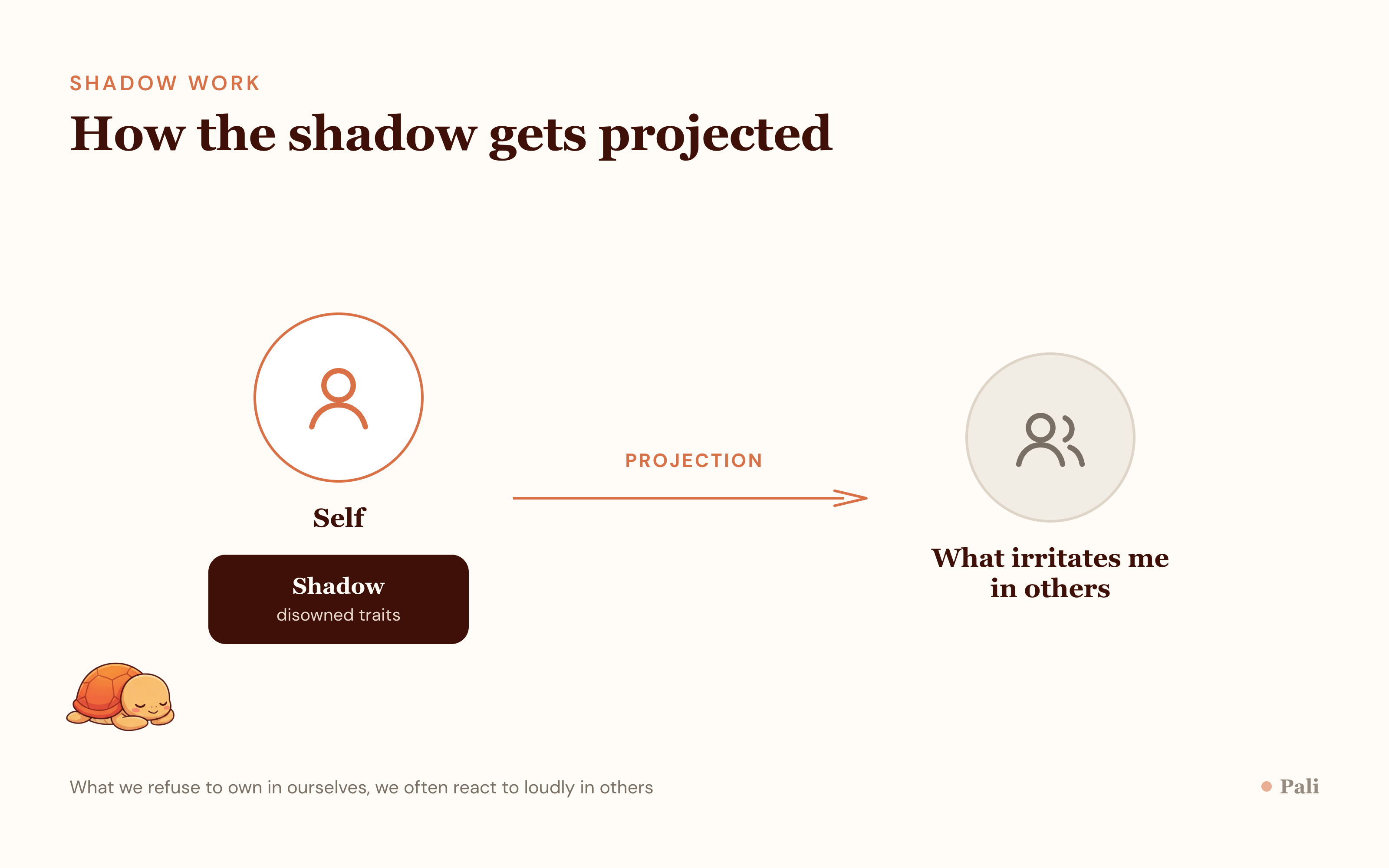
Why does shadow work matter for relationships?
Because the shadow tends to show up in the people closest to us. A trait you cannot accept in yourself often becomes the exact thing that infuriates you in a partner. That is projection, and it quietly fuels a lot of conflict.
Shadow work also explains some of why we choose who we choose. If you keep ending up with the same kind of unavailable or critical partner, there may be an old pattern asking to be seen. That is the same territory covered in why you keep attracting the wrong partners, and it connects closely to your attachment style, which is itself a map of what you learned to expect and to hide.
How do you start shadow work safely?
Gently, and in small doses. Shadow work is reflective, not punishing. If a prompt brings up something heavy, slow down, and consider doing the deeper pieces with a therapist.

A few ways in:
- Notice your triggers. When someone irritates you out of proportion, ask what they are reflecting back.
- Follow the judgement. The traits you criticise hardest in others are often clues to your own shadow.
- Write without editing. Give yourself ten minutes and let the page hear what you usually silence.
- Pair it with grounding. Shadow work can stir anxiety, so a short mindfulness for anxiety practice afterwards helps you stay steady.
The aim is not to fix yourself. It is to stop fighting yourself, so the hidden parts no longer have to act out to be heard.
Frequently asked questions
Is shadow work safe to do alone? Light, reflective shadow work is generally fine to do alone with a journal. If it surfaces trauma or distress that feels too big, that is a sign to involve a qualified therapist.
What is an example of a shadow trait? Anything you have decided is not allowed in you. Common ones include anger, neediness, envy, ambition, or selfishness, depending on what you were taught to suppress.
How is shadow work different from positive thinking? Positive thinking focuses on the light. Shadow work turns toward the parts you would rather not see. Both have a place, but only one helps you stop being run by what you avoid.
How long does shadow work take? It is ongoing rather than a task to finish. Most people return to it in seasons, as new patterns surface in new relationships.
Pali is designed for self-improvement and educational support. It is not therapy and is not a substitute for professional mental health care.