
How to Stop Overthinking Everything
You stop overthinking by treating the spiral as a habit your mind uses to manage uncertainty, then practising a different response, rather than trying to think your way to a final answer. Overthinking promises clarity and delivers more loops. The way out is not more analysis, it is learning to notice the spiral early and gently bring yourself back to the present.
This is a common, workable pattern. Here is what is happening and what helps.
Why do I overthink everything?
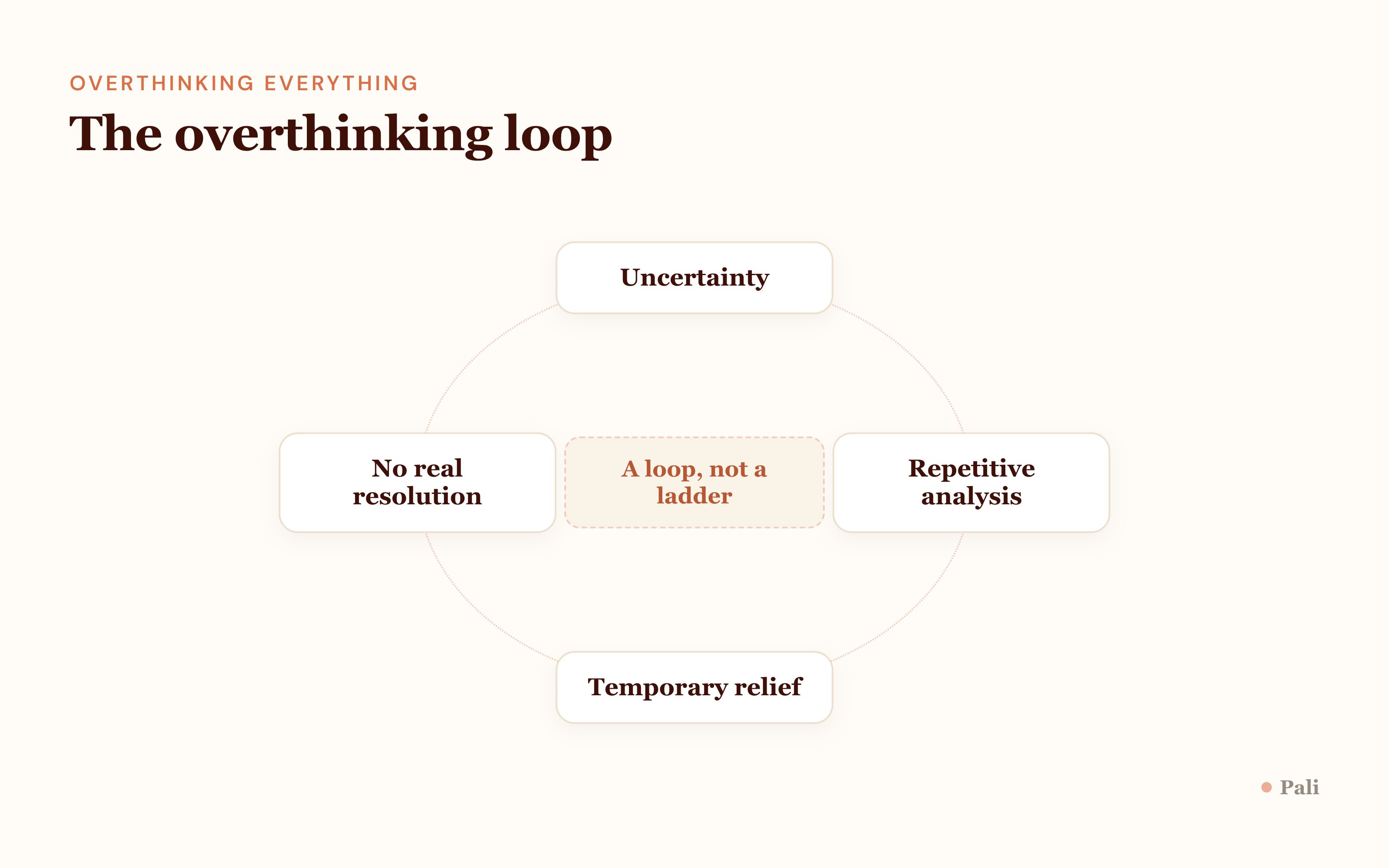
Overthinking is your mind trying to resolve uncertainty by replaying it. When something feels unresolved, the brain keeps the loop open, hoping that one more pass will make it safe. The trouble is that rumination, the repetitive churning over the same worries, rarely produces solutions. Psychologist Susan Nolen-Hoeksema’s research found that this kind of rumination tends to deepen and prolong low mood rather than relieve it. In other words, the thinking feels productive while quietly making things worse.
If the spiral often centres on relationships, your attachment style may be turning up the volume, since uncertainty about closeness can feel especially threatening.
How do you stop the overthinking spiral?
The most reliable exit is a short, repeatable sequence drawn from cognitive behavioural therapy. The aim is not to silence thoughts, it is to change your relationship to them.
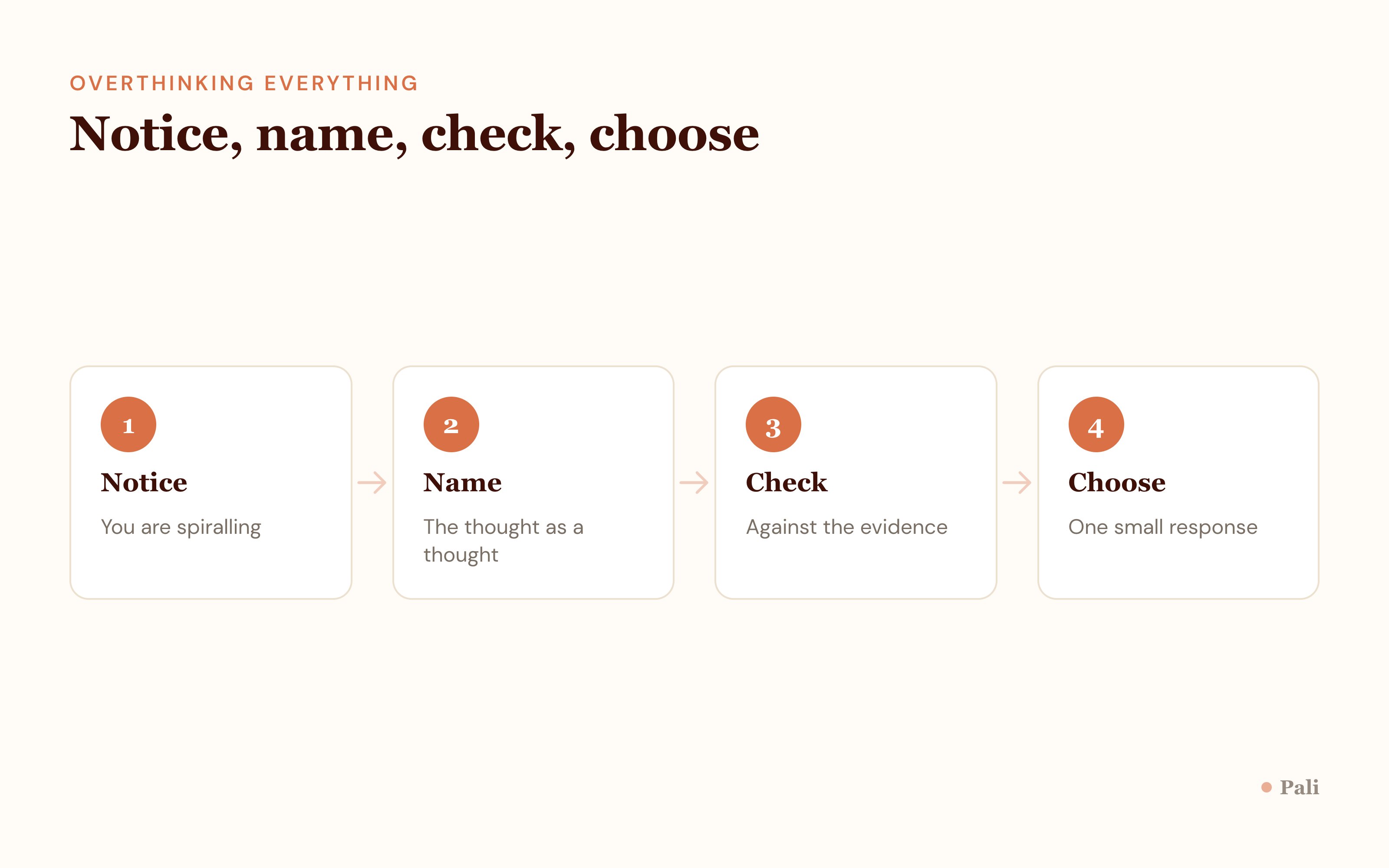
- Notice you are spiralling. Catching it early is most of the work. A physical cue, like tension or a racing mind, can be your signal.
- Name the thought as a thought. “I am having the thought that I said something wrong” creates distance from it.
- Check it against evidence. Is this a fact, or a feeling dressed as one? Look for what you actually know.
- Choose a response. Decide one small action or a deliberate shift of attention, then let the loop go for now.
What else helps quiet an overthinking mind?
- Set a worry window. Give worries a contained ten minutes rather than all day. Outside the window, postpone them to it.
- Move your body. Walking or any movement helps discharge the physical charge that feeds the loop.
- Get it out of your head. Writing thoughts down externalises them so they stop circling. This is where journaling helps.
- Practise present-moment attention. Grounding and mindfulness train the muscle of returning to now, which is where overthinking cannot follow.
- Lower the stakes of being uncertain. Much overthinking is an attempt to feel certain. Letting some questions stay open is a skill worth building, and it shows up clearly in overthinking texts while dating.
In Pali, the CBT Toolkit and Nervous System Reset courses turn these into short daily practices. If the spiral keeps returning to the same relationships, you may also recognise it in why you keep attracting the wrong partners.
Frequently asked questions
Why can I not stop overthinking? Because the loop feels useful. Each pass promises an answer, so your mind keeps going. Stopping comes from changing your response to the thoughts, not from finally resolving them.
Is overthinking a sign of anxiety? It often overlaps with anxious patterns, but on its own it is a common, workable habit rather than a diagnosis. If it is constant and affecting your life, a professional can help.
Does overthinking get better with practice? Yes. Like any habit, the more you practise noticing and redirecting, the weaker the loop becomes. Many people see a real difference within a few weeks of consistent practice.
What is the difference between thinking and overthinking? Useful thinking moves toward a decision or insight. Overthinking circles the same ground without resolution, often raising anxiety rather than lowering it.
Pali is designed for self-improvement and educational support. It is not therapy and is not a substitute for professional mental health care.