
How to Stop a Fight From Escalating
To stop a fight from escalating, you interrupt the spiral before it takes over, not after. The moment you notice your heart racing and your thinking narrowing, name it, slow down, and take a short break with a clear promise to return. Most arguments get worse not because of the topic, but because both people are too physically activated to hear each other.
Why do small arguments turn into big fights?
When conflict heats up, your body can move into what researchers describe as flooding, a state of high physiological arousal. Your heart rate climbs, stress hormones rise, and the part of your brain that handles nuance and empathy goes quiet. In that state you are not really arguing about the dishes anymore. You are reacting to feeling threatened.
This is why repeating your point louder rarely works. The other person is just as flooded as you are. The relationship researcher John Gottman has long described this cycle, and his work suggests it can take at least twenty minutes for an activated nervous system to settle back down.
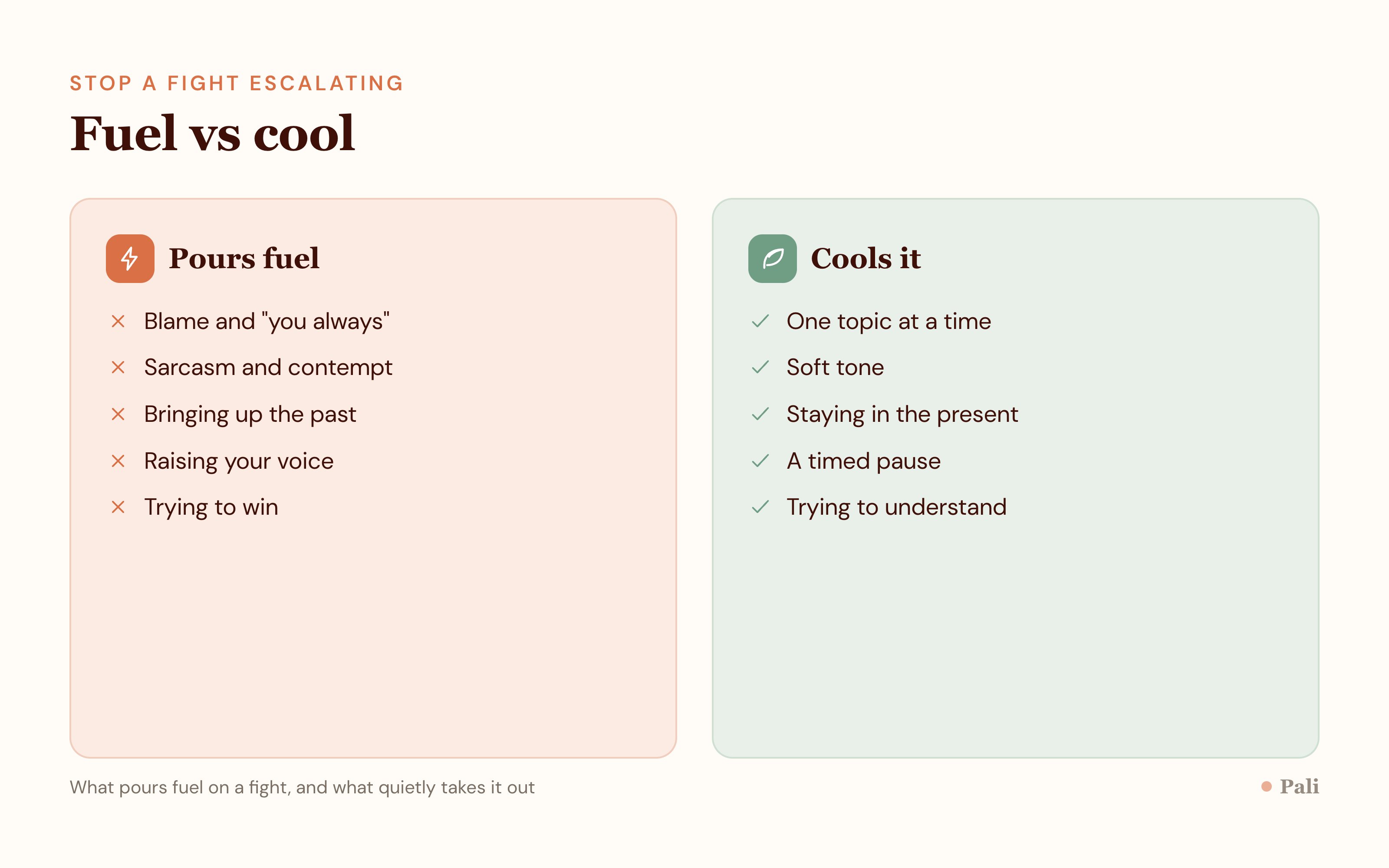
How do you de-escalate in the moment?
The goal is not to be perfectly calm. It is to slow things down enough that connection becomes possible again.
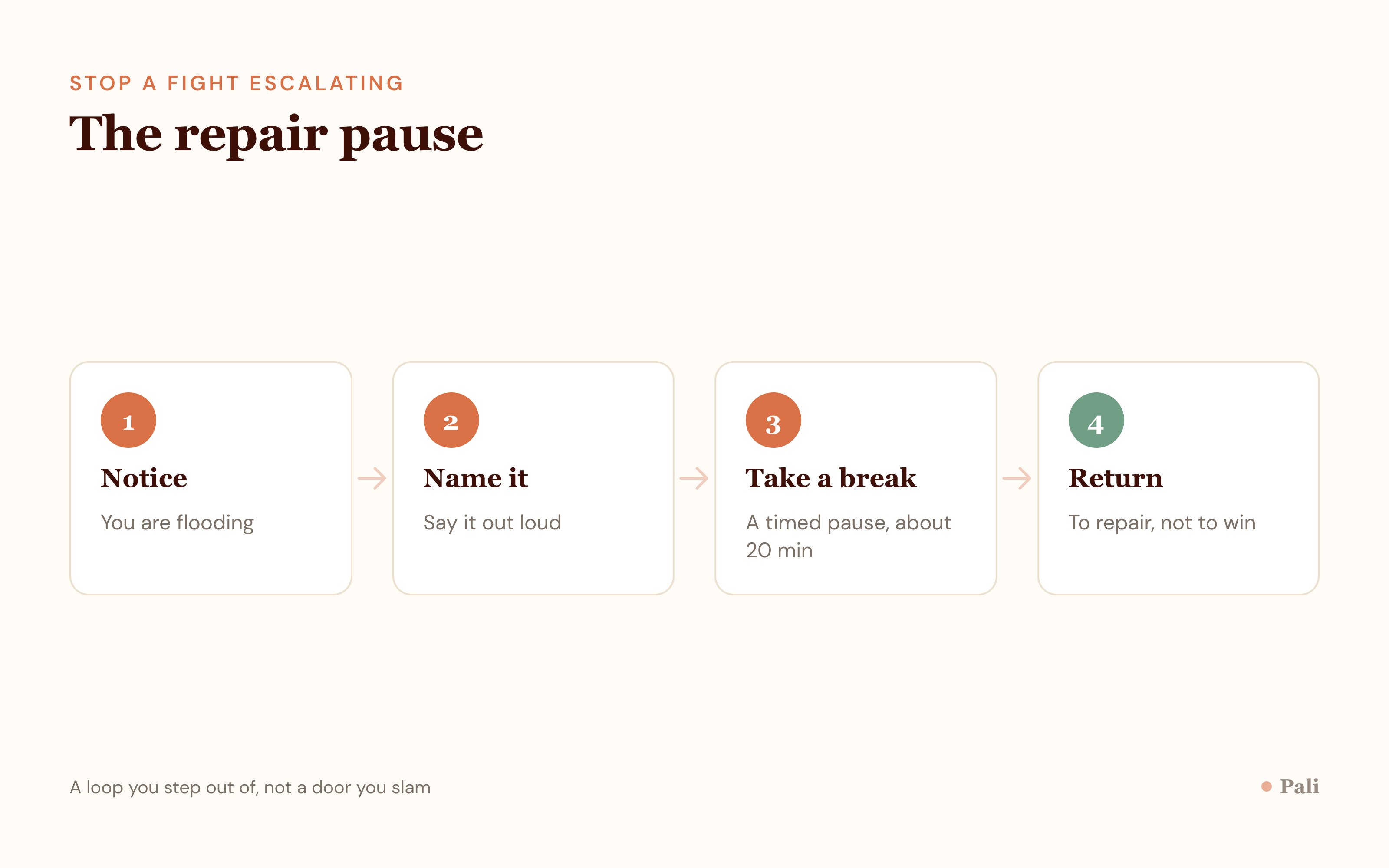
- Catch the early signs. A tight chest, a louder voice, the urge to win. That is your cue.
- Name it gently. Something like “I am getting too heated to do this well right now” works better than going silent.
- Take a real break. Step away, but say when you will come back so it does not feel like abandonment.
- Use the pause to settle, not to rehearse your comeback. Slow your breathing and let your body come down.
- Return to repair, not to relitigate. Lead with the bond, then the topic.
What do you say when you come back?
Coming back well matters as much as the break itself. A soft re-entry sounds like “I am sorry I snapped, I do want to understand you,” rather than “So, about what you said.” Leading with warmth tells the other person they are safe, which lowers their guard too.
Naming your own feelings clearly also helps. If you struggle with that part, our guide to emotional intelligence in relationships covers how to read and express what is going on underneath. And if the heat comes partly from spinning thoughts, how to stop overthinking everything can help you catch the spiral earlier.
How do you stop the same fight from coming back?
Recurring fights usually point to a deeper, unmet need rather than the surface topic. After things have cooled, it is worth asking what each of you actually needed in that moment. Often it is to feel respected, chosen, or simply heard. Naming that need calmly, outside the heat of the argument, is where real change happens.
This connects to the bigger picture of healthy communication in relationships, which is less about never fighting and more about repairing well when you do. Pali can help you practise that calm re-entry before you are in the middle of a hard conversation.
Frequently asked questions
Is taking a break during a fight just avoiding the issue? Not if you come back. A break with a clear promise to return is the opposite of avoidance, it is what makes a real conversation possible.
How long should a cool-off break be? Often around twenty minutes or more, since that is roughly how long a flooded nervous system needs to settle. Long enough to calm, not so long it feels like withdrawal.
What if my partner keeps escalating? You can still regulate yourself and name what you need. You cannot force calm on someone, but staying steady often lowers the temperature for both of you.
Is it normal to fight in a healthy relationship? Yes. Conflict is normal. What separates healthy couples is not the absence of fights but the ability to repair afterward.
Pali is designed for self-improvement and educational support. It is not therapy and is not a substitute for professional mental health care.