
How to Build Emotional Intelligence in Relationships
Why EQ matters more than chemistry, and how to develop it.
Why Some Relationships Feel Easy and Others Feel Exhausting
Some people handle conflict calmly. Others shut down, lash out, or overreact. The difference often comes down to emotional intelligence.
And the good news? It is a skill you can build.
What Is Emotional Intelligence?
Emotional intelligence is your ability to recognise your emotions, understand what they mean, manage them effectively, and respond to others with awareness.
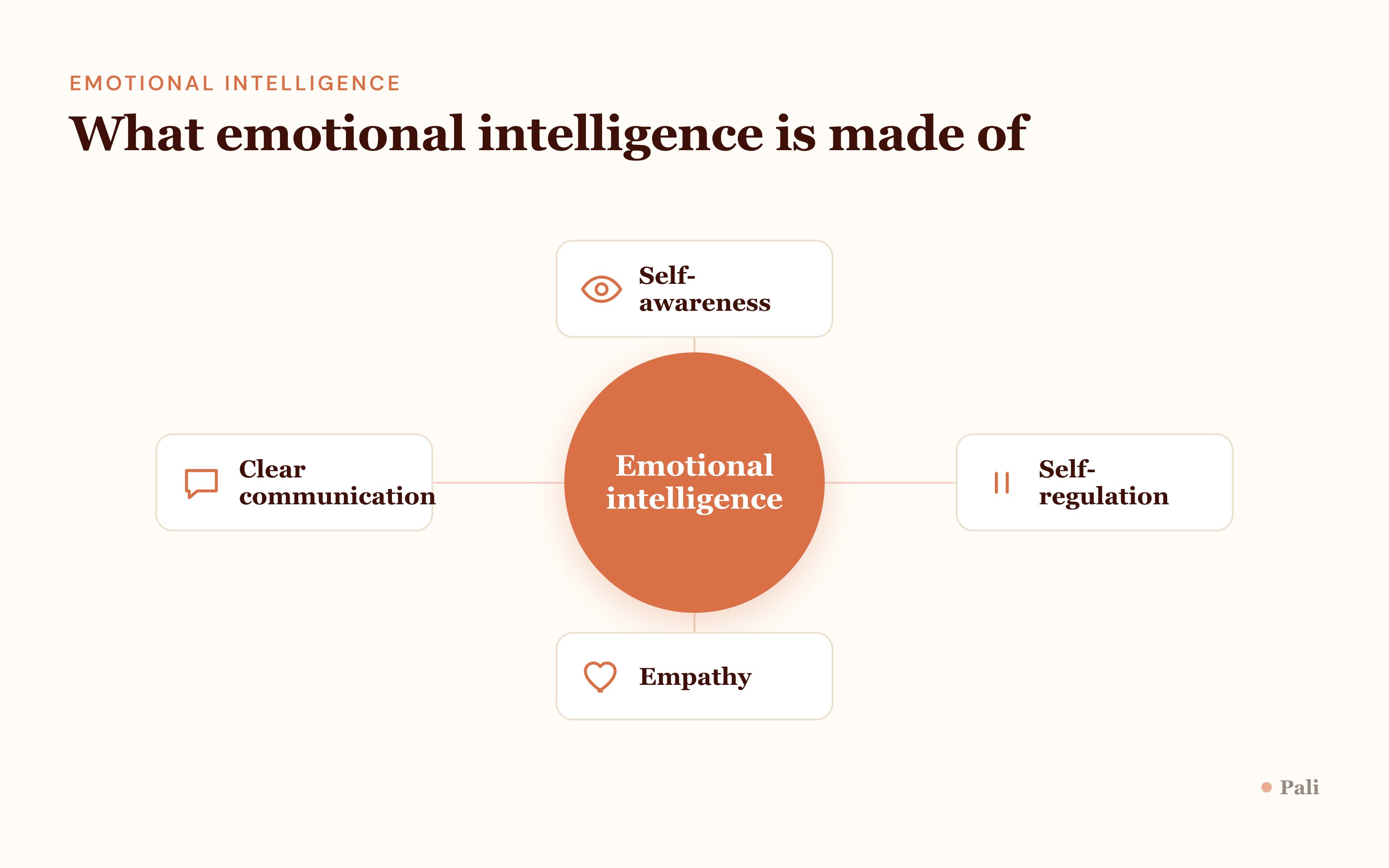
In relationships, EQ determines how you connect, communicate, and navigate challenges.
Why Emotional Intelligence Matters in Relationships
Low EQ leads to miscommunication, overreactions, avoidance, and repeating conflicts. High EQ creates emotional safety, better communication, and healthier conflict resolution.
Research consistently links emotional intelligence to relationship satisfaction and stability.
Signs You Might Struggle With Emotional Intelligence
- You react quickly, then regret it
- You struggle to express how you feel
- You shut down during conflict
- You take things personally
- You overthink interactions
- You find it hard to understand your partner’s perspective
These are not flaws. They are skills that have not been developed yet. Understanding your attachment style often reveals where these patterns come from.
How to Build Emotional Intelligence (Step by Step)
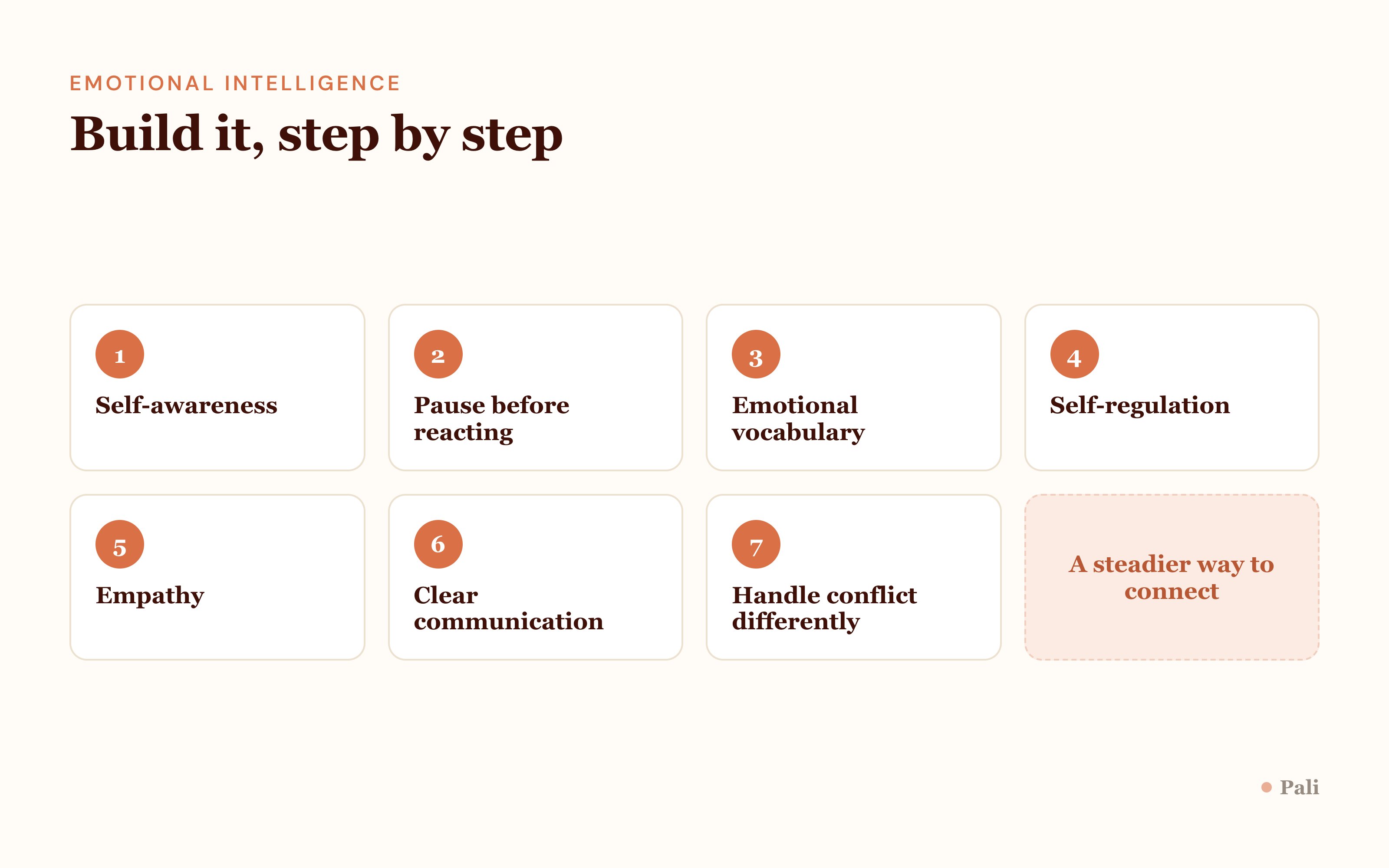
1. Build Self-Awareness
Start by noticing what you feel, when you feel it, and what triggered it. Instead of reacting automatically, practise observing your emotions first.
2. Learn to Pause Before Reacting
One of the most valuable EQ skills is the pause. Pali’s CBT Toolkit teaches you practical techniques for exactly this.
3. Improve Your Emotional Vocabulary
Most people only use I am fine, I am upset, or I am stressed. But emotions are more specific: frustrated, overwhelmed, insecure, disappointed.
4. Practise Self-Regulation
Self-regulation means feeling emotions without being controlled by them. Pali’s Emotional Intelligence course builds this skill through daily guided exercises.
5. Build Empathy
Empathy is understanding how someone else feels. Ask yourself: what might they be experiencing? Why might they react this way?
6. Communicate Clearly and Directly
High EQ communication sounds like: I felt hurt when that happened. No blame. Just clarity. Pali’s Communication Skills course walks you through this in practice.
7. Handle Conflict Differently
Low EQ conflict looks like blaming, defensiveness, and escalation. High EQ conflict looks like curiosity, calm discussion, and problem-solving.
Why Emotional Intelligence Is Hard to Build Alone
Because your reactions are automatic, pattern-based, and emotionally driven. That is why guided practice matters more than theory alone.
Emotional intelligence is not about being perfect. It is about being aware, being intentional, and responding instead of reacting. Pali turns that into a daily practice.
Pali is designed for self-improvement and educational support. It is not therapy and is not a substitute for professional mental health care.