
How to Communicate Your Needs in a Relationship
To communicate a need well, name what you feel, what you need, and what you are asking for, without blame attached. The reason most attempts go sideways is not the need itself, it is that it arrives wrapped in criticism, so the other person hears an attack and defends instead of listening. A clear, soft request is far easier to receive.
Why is it so hard to ask for what I need?
For a lot of people, asking directly feels risky. Maybe you learned that needs were too much, or that being low-maintenance kept the peace. So instead of asking, you hint, you go quiet, or you hope your partner will simply notice. When they do not, resentment quietly builds.
There is nothing wrong with having needs. Everyone has them. The work is learning to put words to them clearly enough that someone can actually meet them. If asking feels especially loaded, your anxious attachment patterns may be raising the stakes, which is worth knowing as you practise.
What is a simple way to express a need?
A reliable structure, drawn from approaches like nonviolent communication, has four parts. You describe the situation, name the feeling, state the need, then make a clear request.
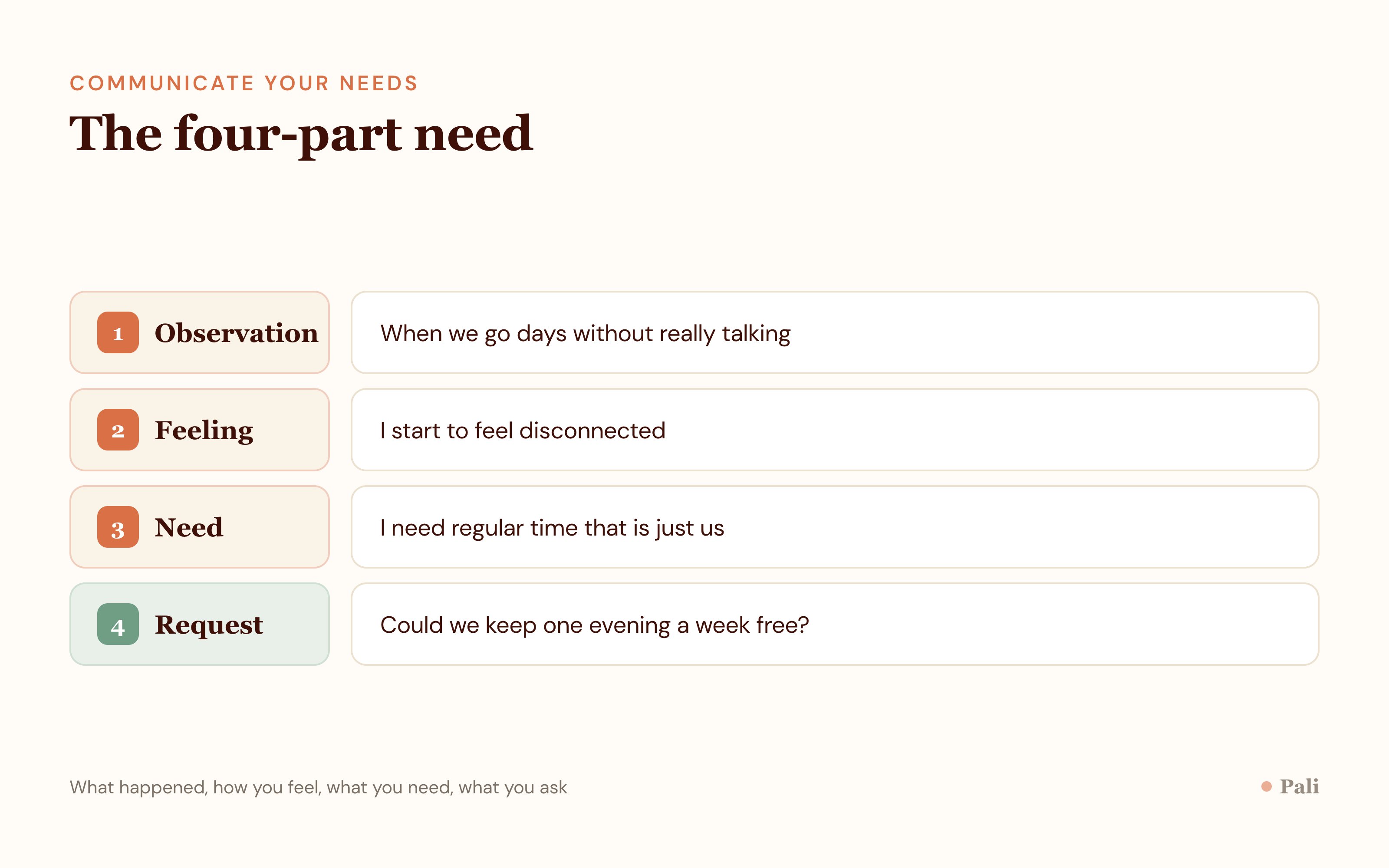
In practice it sounds like this. Instead of “You never make time for me,” you might say “When we go a few days without really talking, I start to feel disconnected. I need some regular time that is just us. Could we keep one evening a week free?” Same need, completely different reception.
How do you ask without starting a fight?
How you begin a conversation strongly shapes how it ends. A harsh start invites defence. A soft start invites listening. The relationship researcher John Gottman calls this the difference between a harsh and a soft startup, and the first sixty seconds often decide the whole exchange.
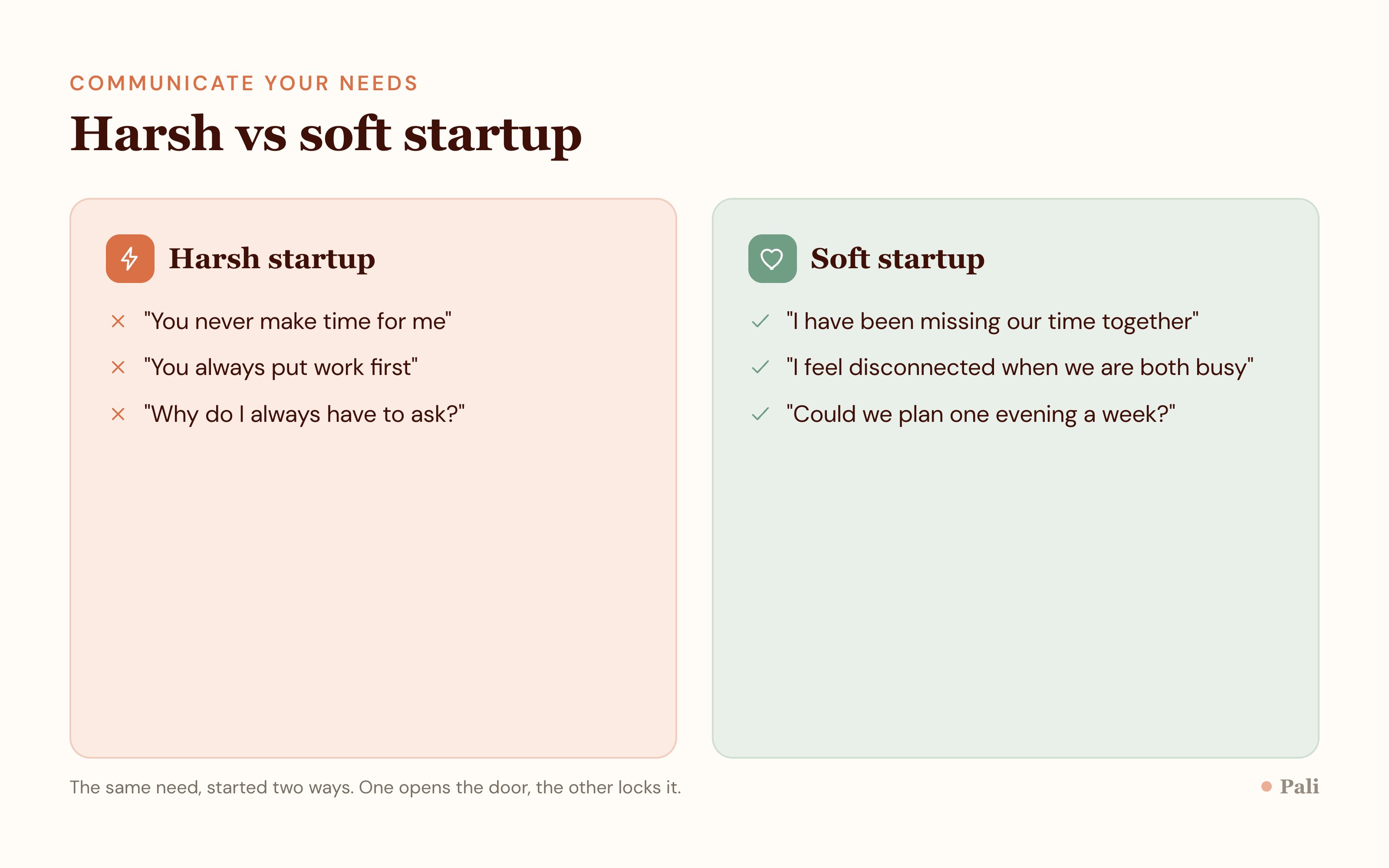
A few things that keep a request soft:
- Lead with “I” and your experience, not “you” and their failures.
- Ask for one thing at a time, not a list of grievances.
- Pick a calm moment, not the middle of a heated one.
- Make it a request, which can be declined, not a demand.
What if my partner cannot meet the need?
Sometimes a need is named clearly and still cannot be fully met, at least not right away. That is real, and it is worth sitting with together rather than treating it as failure. The aim is not to win. It is to understand each other and find something that works for both of you.
This sits inside the bigger skill of healthy communication in relationships, and being able to read the emotion underneath a need, covered in emotional intelligence in relationships, makes the whole thing easier. Pali can help you rehearse a hard ask before you have it, so you walk in steady.
Frequently asked questions
Why do my needs come out as criticism? Often because they have been held in too long. Unspoken needs tend to leak out as blame. Naming them earlier and more directly keeps the edge off.
Is it needy to ask for what I want in a relationship? No. Having needs is part of being human. What matters is expressing them clearly and kindly, rather than hinting and hoping or going silent.
What if I do not even know what I need? That is common. Start with the feeling. If you can name that you feel lonely or unseen, the underlying need usually becomes clearer with a little reflection.
How do I bring up a need without my partner getting defensive? Use a soft start. Describe the situation, share how you feel, state the need, and make a specific request, all without blame in the opening line.
Pali is designed for self-improvement and educational support. It is not therapy and is not a substitute for professional mental health care.