
How to Become Securely Attached
You can become securely attached, even if you did not start that way. Attachment patterns are learned, which means they can be relearned through awareness, steadier relationships, and repeated experiences of closeness feeling safe. Researchers call this earned security, and it develops gradually rather than overnight.
Can your attachment style actually change?
Yes. Your attachment style is not fixed at birth or locked in by your childhood. It is a set of expectations your nervous system formed about what closeness is like, and expectations can update when reality gives them new evidence.
People who grew up insecure but later developed secure patterns are described in attachment research as having earned security. They did not erase their history. They built new, reliable experiences on top of it, often through safe relationships and honest reflection. If you want to find your starting point first, our guide to attachment styles lays out the full map.
What does secure attachment actually look like?
Security is not being calm all the time or never needing anyone. It looks more like:
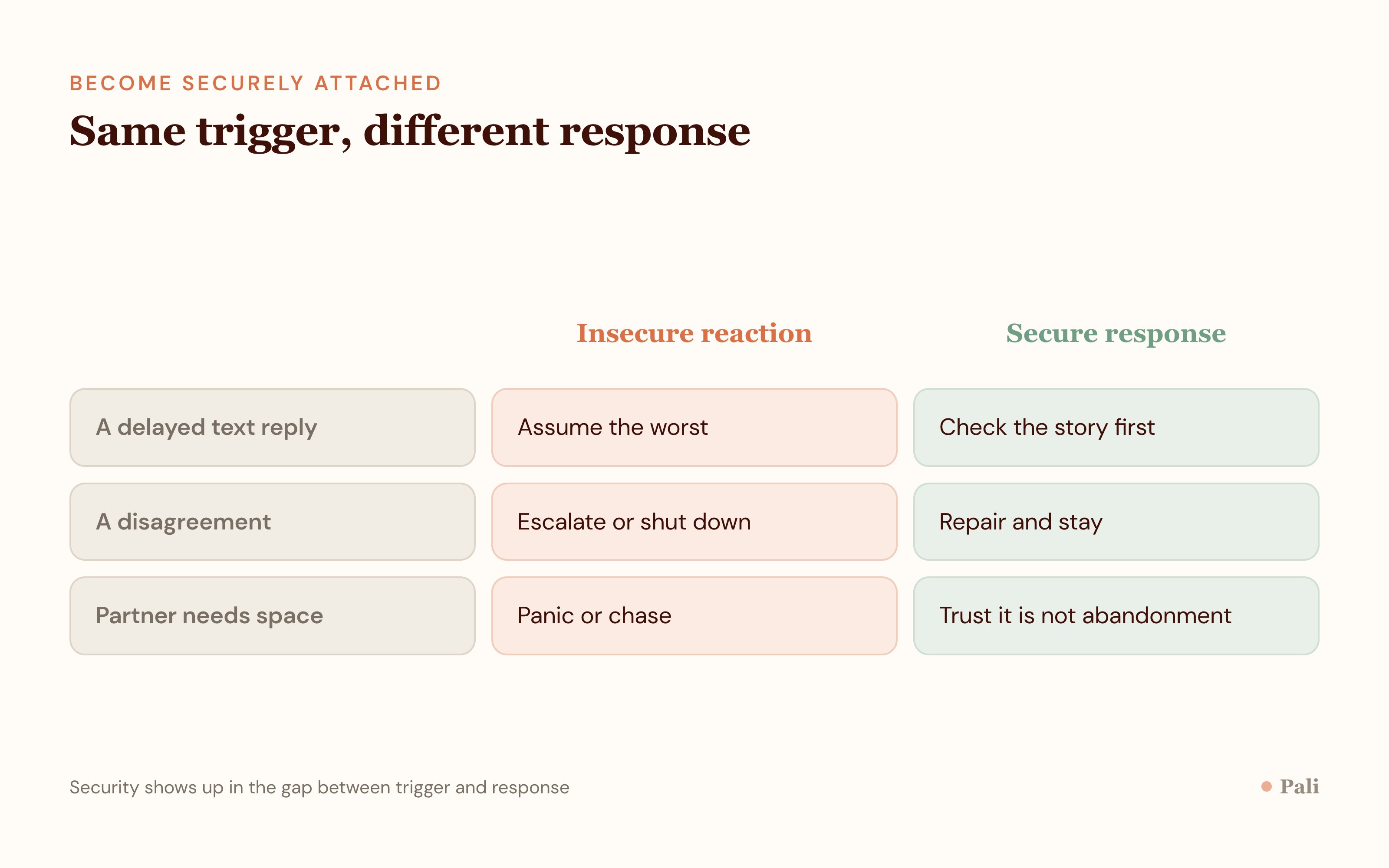
- Being able to ask for closeness without panic, and to give space without fear.
- Trusting that a conflict does not mean the relationship is ending.
- Repairing after a rupture instead of withdrawing or escalating.
- Holding a steady sense of your own worth that does not collapse when someone is distant.
How do you build earned secure attachment?
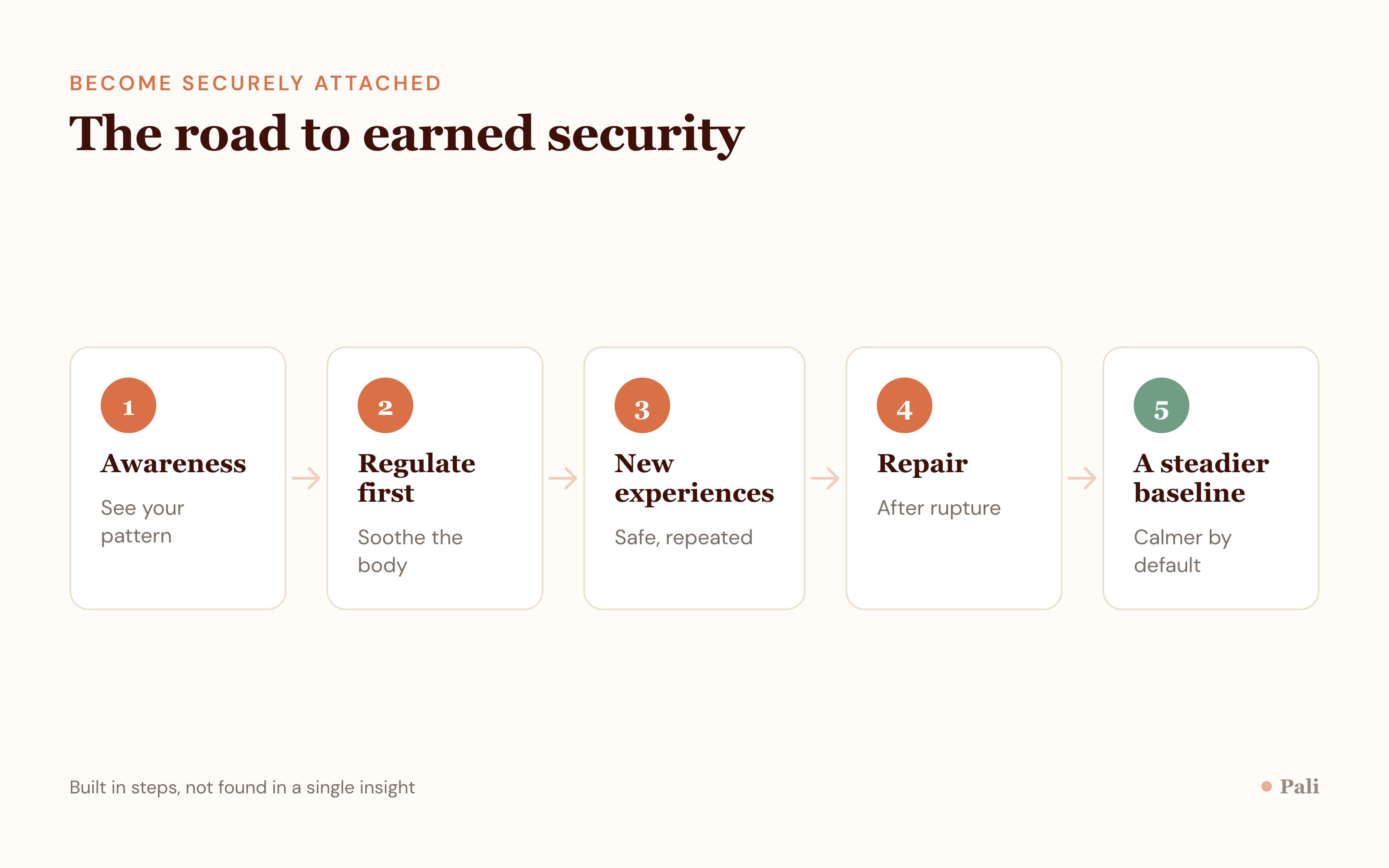
This is patient work, and it stacks rather than sprints. A practical roadmap:
- Build awareness. Notice your pattern as it happens. If you tend to chase, you may lean anxious. If you tend to retreat, you may lean avoidant.
- Regulate first, respond second. When activation rises, settle your body before you act, so the old reflex does not drive.
- Seek corrective experiences. Spend time around people who are consistent and safe, where closeness is not punished and distance is not abandonment.
- Practise repair. Security grows fastest in the repair after a small rupture, not in the absence of ruptures.
- Reparent the baseline. Offer yourself the steadiness you may not have received, through reliable routines and kinder self-talk.
How long does it take to become securely attached?
There is no honest fixed timeline, and progress is rarely linear. What tends to be true is that small, repeated experiences matter more than big breakthroughs. A hundred ordinary moments where closeness felt safe will reshape your expectations more than one dramatic realisation.
The most useful mindset is to start with yourself rather than waiting for the perfect partner to make you secure. Pali is designed around exactly that, helping you understand your patterns and build healthier relationship habits in small, repeatable steps.
Frequently asked questions
Can you become secure on your own, without a partner? Largely, yes. A steady relationship helps, but much of earned security comes from self-awareness, regulation, and reliable, safe connections of any kind, including friendships.
Can a secure person become insecure again? Attachment can shift with circumstances. A painful relationship or major stress can temporarily activate insecure patterns, which is normal and usually recoverable.
Is earned security as strong as secure attachment from childhood? Research suggests earned-secure individuals can show relationship outcomes similar to those who were secure from the start, though the inner experience may carry more conscious effort.
What is the first step toward secure attachment? Awareness. You cannot change a pattern you cannot see, so noticing your reaction in the moment is where it begins.
Pali is designed for self-improvement and educational support. It is not therapy and is not a substitute for professional mental health care.