
Emotional Regulation Techniques That Work
Emotional regulation is the ability to feel a strong emotion without letting it run the show. The techniques that actually work do two things: they calm your body first, then they help you reframe the thought. You do not regulate by suppressing what you feel, you regulate by giving the emotion room while keeping enough steadiness to choose your response.
What is emotional regulation, really?
Emotional regulation is not about staying calm all the time or pushing feelings away. It is about staying connected to yourself when emotions rise, so you can respond on purpose rather than react on autopilot.
A helpful way to picture this is the window of tolerance, the zone where you feel activated enough to engage but not so overwhelmed that you shut down or blow up. Regulation is the skill of noticing when you are drifting out of that window and gently guiding yourself back.
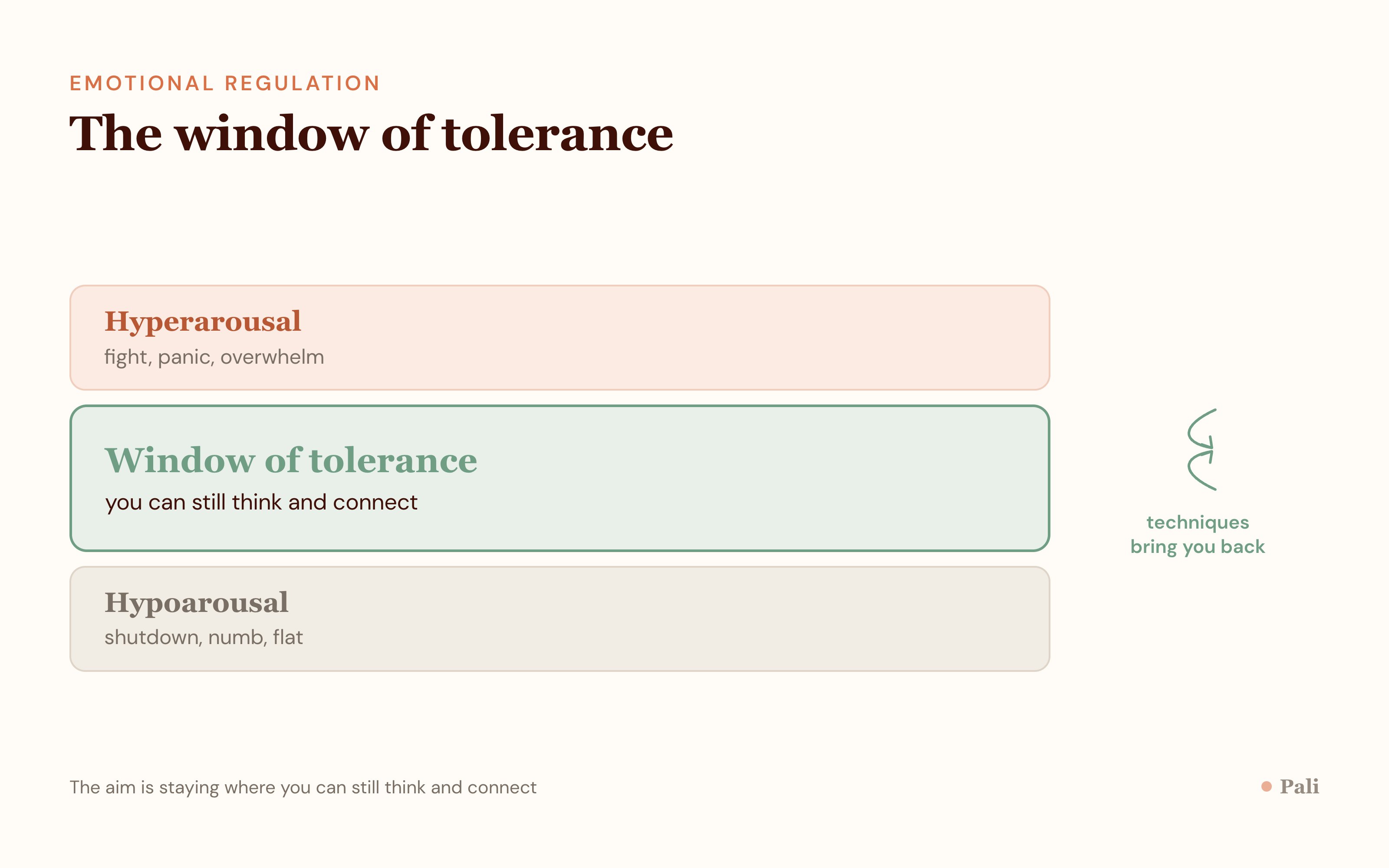
What are the most effective emotional regulation techniques?
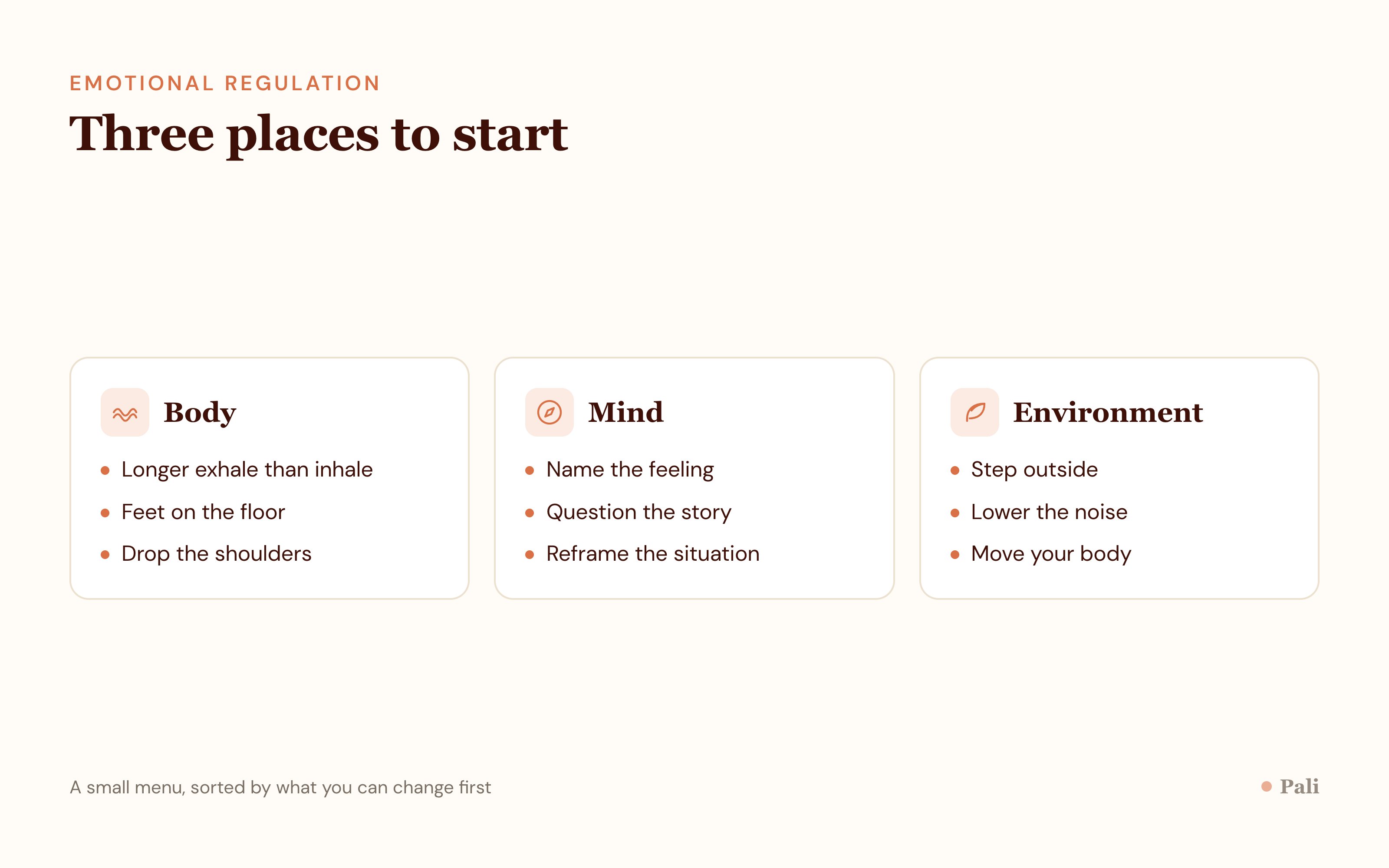
The strongest approaches tend to fall into three groups: settling the body, working with the thought, and shaping your environment. Different ones help in different moments.
- Body first. Slow your exhale so it is longer than your inhale, drop your shoulders, feel your feet on the floor. The breath is one of the few direct levers on your nervous system.
- Mind next. Once your body is steadier, name the feeling and question the story. Psychologists like James Gross have found that reframing a situation tends to work better over time than simply bottling the feeling up.
- Environment around it. Step outside, lower the lights, reduce noise, move your body. Sometimes changing the input is faster than changing the thought.
Why does this matter so much in relationships?
Most relationship ruptures happen in moments of dysregulation, not disagreement. When you are flooded, the part of you that can listen and stay kind goes offline, and old patterns take over. If you tend toward anxious attachment, regulation helps you pause before chasing reassurance. If your mind races, it pairs well with how to stop overthinking everything.
The same skill quiets dating nerves too, which is why it overlaps with how to stop overthinking texts. Settle the body, and the urge to react impulsively usually fades on its own.
How do you build regulation as a habit?
Regulation is a practice, not a personality trait. You build it the way you build any skill, by reps in low-stakes moments so it is available in high-stakes ones. A few ways to grow it:
- Practise a calming technique daily when you are already calm, so it is familiar under stress.
- Notice your early warning signs, the tight jaw or shallow breath, and treat them as cues.
- Be patient with yourself when you miss. Repairing after losing your cool is part of the skill.
- Track what works for you specifically, since regulation is personal.
This is at the heart of building secure attachment and steadier relationships. Pali can help you practise these tools in small, repeatable steps, so they are there when you need them most.
Frequently asked questions
Is emotional regulation the same as suppressing emotions? No. Suppression pushes feelings down and tends to backfire. Regulation lets you feel the emotion while staying steady enough to choose how you respond.
What is the fastest way to calm down in the moment? Work with your breath, making your exhale longer than your inhale, and ground through your body. Calming the nervous system first makes clearer thinking possible.
Why do I lose control of my emotions in arguments? Because conflict can flood your nervous system, which quiets the thinking, empathetic part of the brain. Regulating your body first is what brings that capacity back.
Can you actually learn emotional regulation as an adult? Yes. It is a skill built through repetition, especially practising in calm moments so the tools are accessible when emotions run high.
Pali is designed for self-improvement and educational support. It is not therapy and is not a substitute for professional mental health care.