
6-Week Plan to Build Secure Attachment
Secure attachment can be built, not just inherited. Researchers call it earned security, and while it is a lifelong practice rather than a six week fix, six focused weeks are enough to lay a real foundation. This plan moves you through awareness, regulation, and new relationship habits, one focus per week, with small daily actions that compound.
Can you actually develop secure attachment?
Yes. Attachment styles are patterns learned in relationships, and patterns can be relearned in relationships, including the relationship you have with yourself. Most research since Hazan and Shaver’s foundational work in 1987 estimates that a bit over half of adults are securely attached, with the rest spread across anxious and avoidant patterns. The encouraging part is that security is not a fixed trait. People move toward it with practice, support, and time.
If you are not sure where you are starting from, it helps to first identify your attachment style, since the work looks a little different depending on whether your pattern leans anxious or avoidant. The broader map lives in our guide to attachment styles.
What does the 6-week plan look like?
Each week has one focus. Do not rush ahead. The point is to let each layer settle before adding the next.
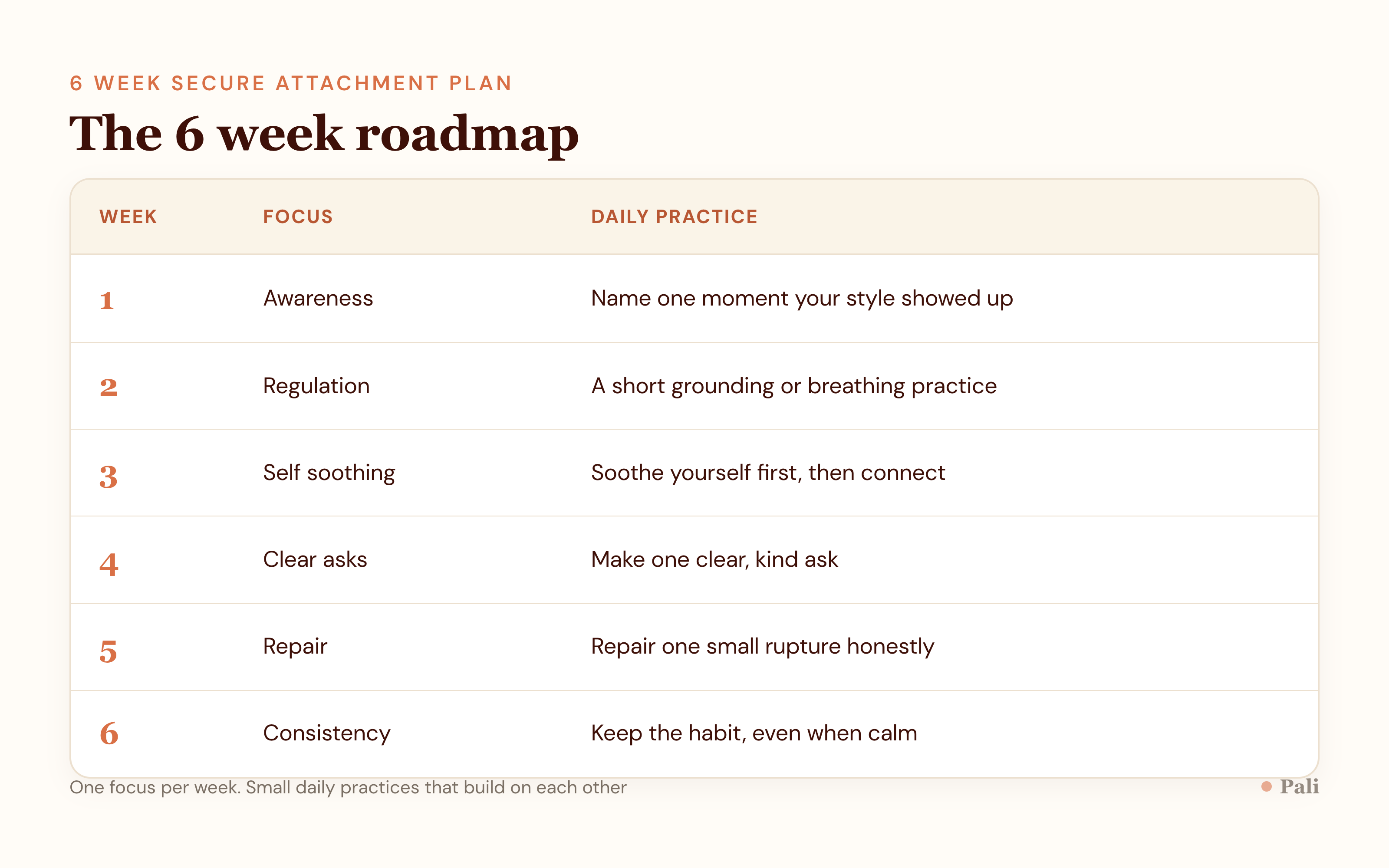
- Week 1, Awareness. Learn your pattern and notice it without judgement. Daily: name one moment your style showed up.
- Week 2, Regulation. Build a calmer nervous system so you react less. Daily: a short grounding or breathing practice.
- Week 3, Self soothing. Meet your own reassurance needs before outsourcing them. Daily: soothe yourself first, then connect.
- Week 4, Clear asks. Replace hints, protest, or withdrawal with direct requests. Daily: make one clear, kind ask.
- Week 5, Repair. Practise reconnecting after friction instead of avoiding it. Daily: repair one small rupture honestly.
- Week 6, Consistency. Turn the new moves into defaults. Daily: keep the habit, even when calm.
What does secure attachment look like in practice?
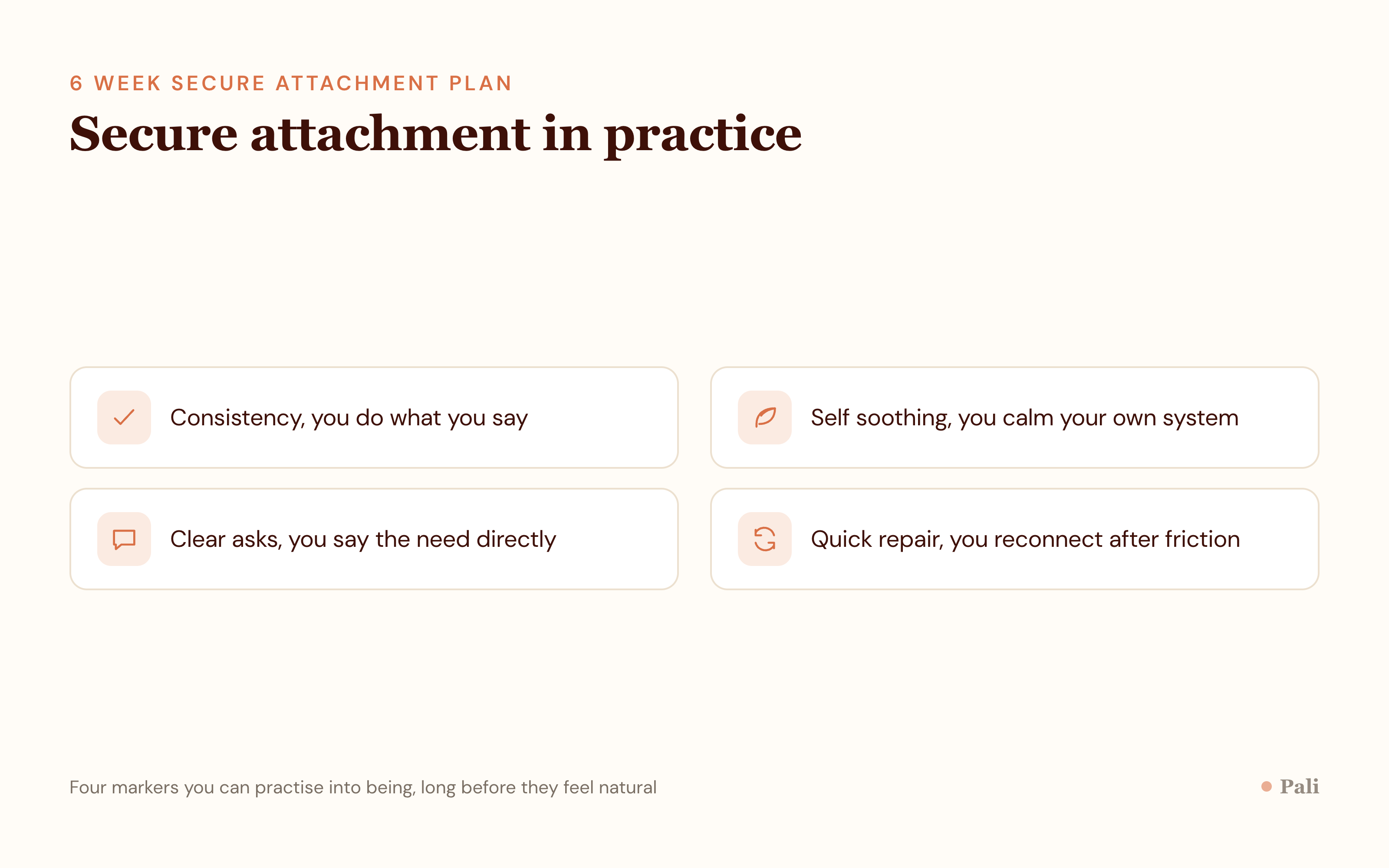
Security is less a feeling and more a set of steady behaviours. You can recognise it by what people do, not just how they feel.
Week two leans heavily on calming the body, so it pairs well with a daily mindfulness for anxiety practice. Across all six weeks, expect uneven progress. Old patterns resurface under stress, and that is not failure, it is the work. Each time you choose the new move over the old reflex, you are casting a vote for the more secure version of you.
Frequently asked questions
How long does it take to become securely attached? There is no fixed timeline, and security is an ongoing practice rather than a destination. Six weeks is enough to build a solid foundation. Deeper change usually unfolds over months and across real relationships.
Can you build secure attachment while single? Yes, and it is often easier to start solo. Much of the work, self awareness, regulation, and self soothing, happens in your relationship with yourself before it shows up with a partner.
What is earned secure attachment? It is the secure attachment a person develops later in life through reflection, supportive relationships, or therapy, despite not having had it in childhood. It is well documented and very achievable.
Do I need therapy to change my attachment style? Not always, but therapy can speed and deepen the work, especially if early experiences were painful. A structured plan and self practice help many people make real progress on their own.
Pali is designed for self-improvement and educational support. It is not therapy and is not a substitute for professional mental health care.