
30-Day Breakup Recovery Plan
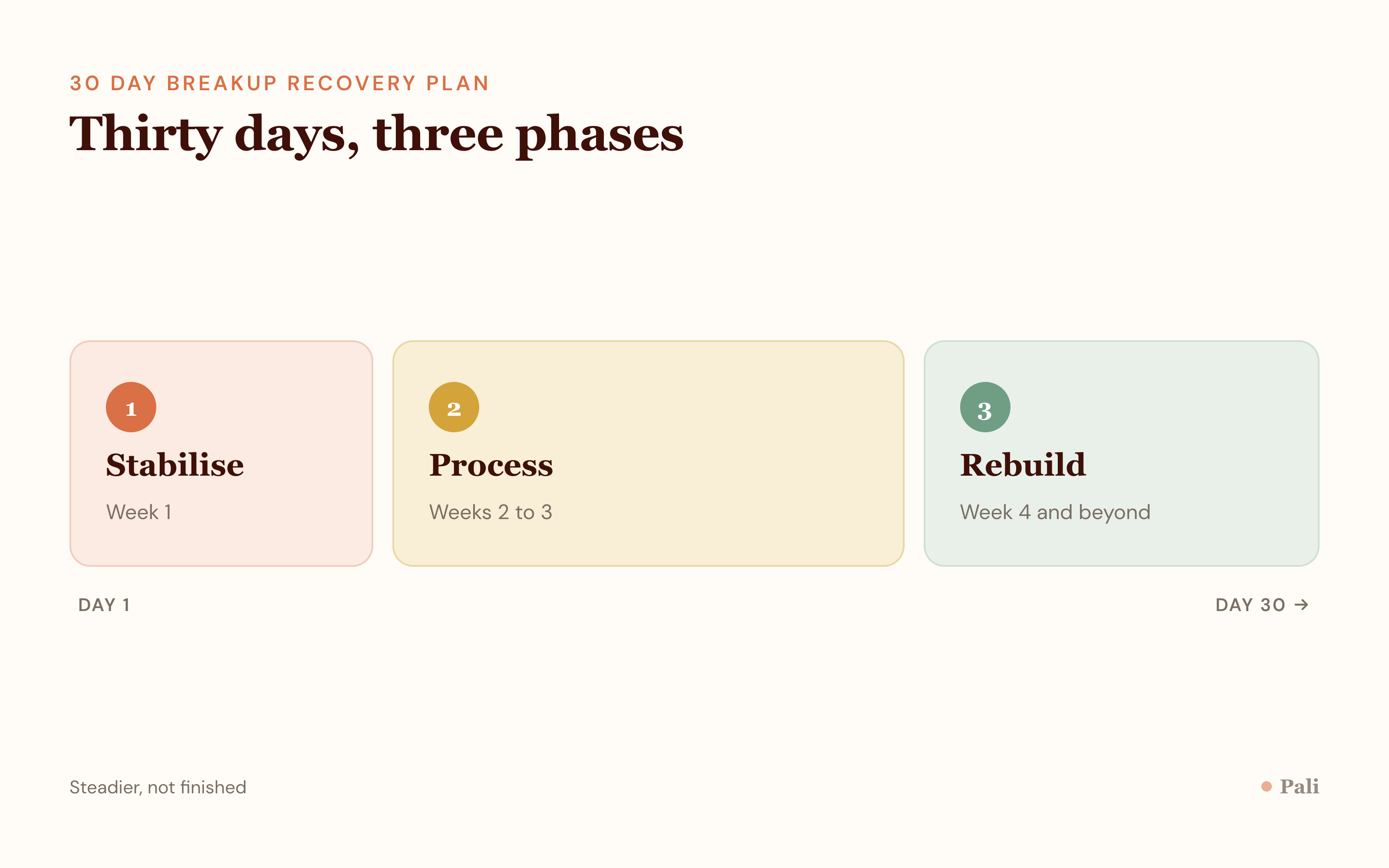
There is no fixed timeline for healing a breakup, and anyone promising you will be over it in thirty days is selling something. What a 30 day plan can do is give the early, disorienting weeks some structure, so you are not facing each day from scratch. This plan moves through three phases, stabilise, process, and rebuild, with a clear focus for each week.
Can you really recover from a breakup in 30 days?
Not completely, and that is okay. Grief after a breakup follows its own pace, and deep losses take longer than a month. What thirty days can realistically do is move you from raw and reactive to steadier and more able to function. Think of it as the foundation of recovery, not the finish line.
The early ache is partly physical. Losing an attachment figure sets off a genuine withdrawal response, which is why it can feel like your body is grieving, not just your mind. Understanding that, and how your attachment style shapes the intensity, takes some of the fear out of the feeling.
What is the 30-day plan, week by week?
One focus per week. Go gently, and do not skip the stabilising before the processing.
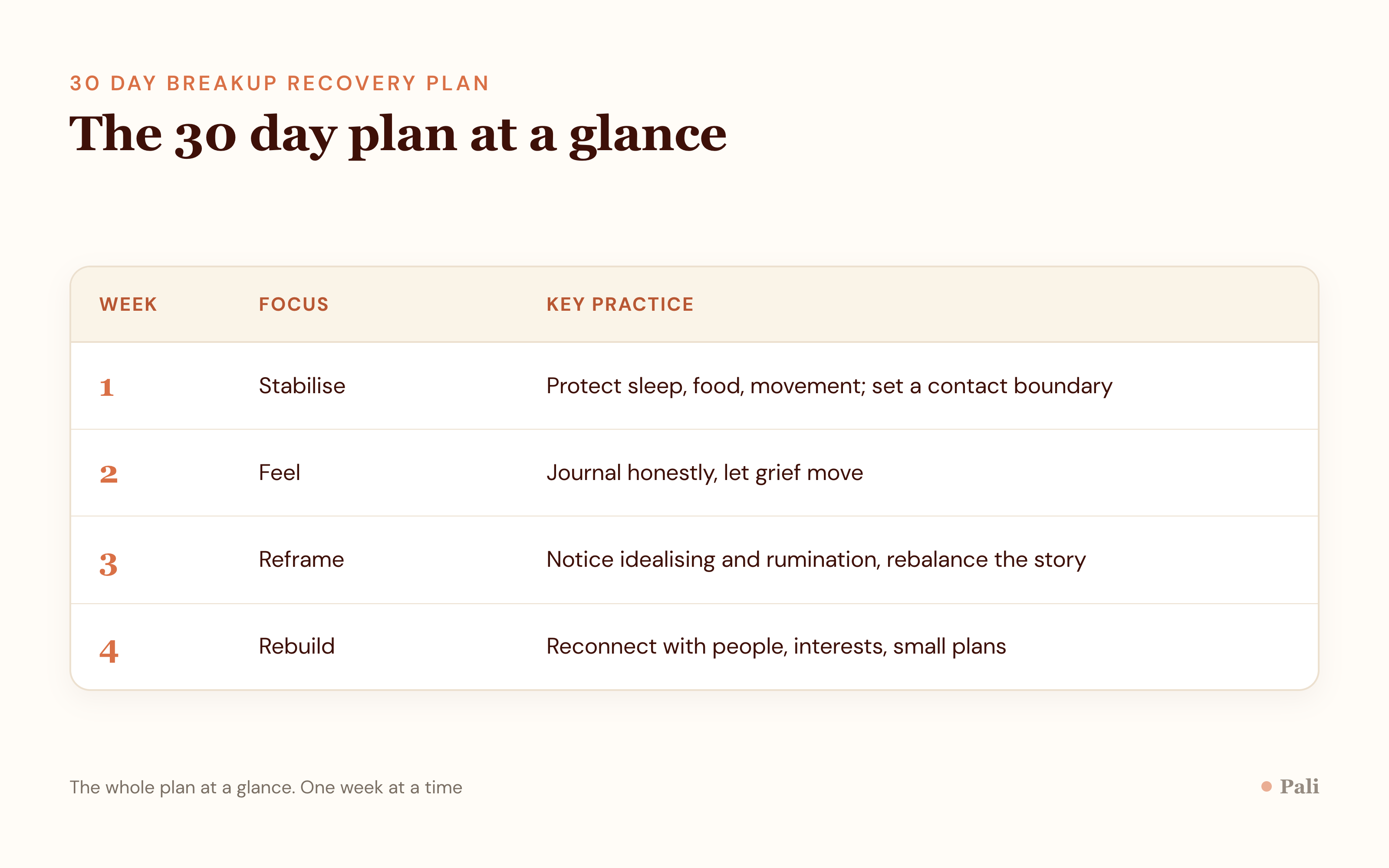
- Week 1, Stabilise. Protect the basics. Sleep, food, water, and movement. Decide your contact boundary and structure your days so the hours have shape.
- Week 2, Feel. Let the grief move instead of fighting it. Journal honestly, let yourself cry, and stop forcing positivity. Feelings that are allowed to move tend to pass faster.
- Week 3, Reframe. Gently untangle the story. Notice idealising (“they were perfect”) and rumination, and bring the memory back to something truer and more balanced.
- Week 4, Rebuild. Turn toward your own life. Reconnect with people and interests, and let small future plans back in.
For the deeper psychology behind each phase, our pillar guide on how to get over a breakup goes further. And if your breakup involved being ghosted or left without closure, the psychology of ghosting explains why that particular ending is so hard to process.
How do you stop the relapses and bad days?
Expect them. Recovery is not a straight line, and a hard day in week three is not a sign you are back at the start. A few anchors help:
- Keep the structure even when motivation drops. Routine carries you when feelings will not.
- Limit contact and reminders. Checking their profile reopens the wound each time.
- Name the day for what it is. “This is a grief wave, and waves pass” is truer than “I am broken.”
- Reach out. Tell one trusted person you are having a low day rather than carrying it alone.
A gentle but important note. Breakups can stir up real despair. If you ever feel unsafe, hopeless, or unable to cope, please reach out to a doctor, a crisis line, or someone you trust. You do not have to get through the hardest moments by yourself, and asking for support is a strong, healthy move.
Frequently asked questions
How long does it really take to get over a breakup? It varies widely with the length and depth of the relationship. Many people feel meaningfully better within a few months, though there is no single correct timeline, and comparing yours to anyone else’s rarely helps.
Does no contact help you heal? For most people, yes. Reducing contact gives your nervous system room to settle and stops you reopening the wound. The exception is where shared responsibilities make some contact necessary.
Why do breakups feel like physical pain? Because losing a close attachment triggers a withdrawal style response in the brain and body. The pain is real, not an overreaction, and it tends to ease as your system adjusts.
Is it normal to still hurt after 30 days? Completely normal. Thirty days builds a foundation, it does not finish the grief. Healing continues well beyond a month, usually in waves that gradually grow further apart.
Pali is designed for self-improvement and educational support. It is not therapy and is not a substitute for professional mental health care.