
The Psychology of Ghosting
Why it hurts so much, and how to move through it.
What Is Ghosting?
Ghosting is when someone suddenly cuts off communication, disappears without explanation, and ignores messages completely. No closure. No clarity. Just silence.
In modern dating, it has become incredibly common. But the real question is not why it happens. It is why it hurts so much.
Why Ghosting Feels So Painful
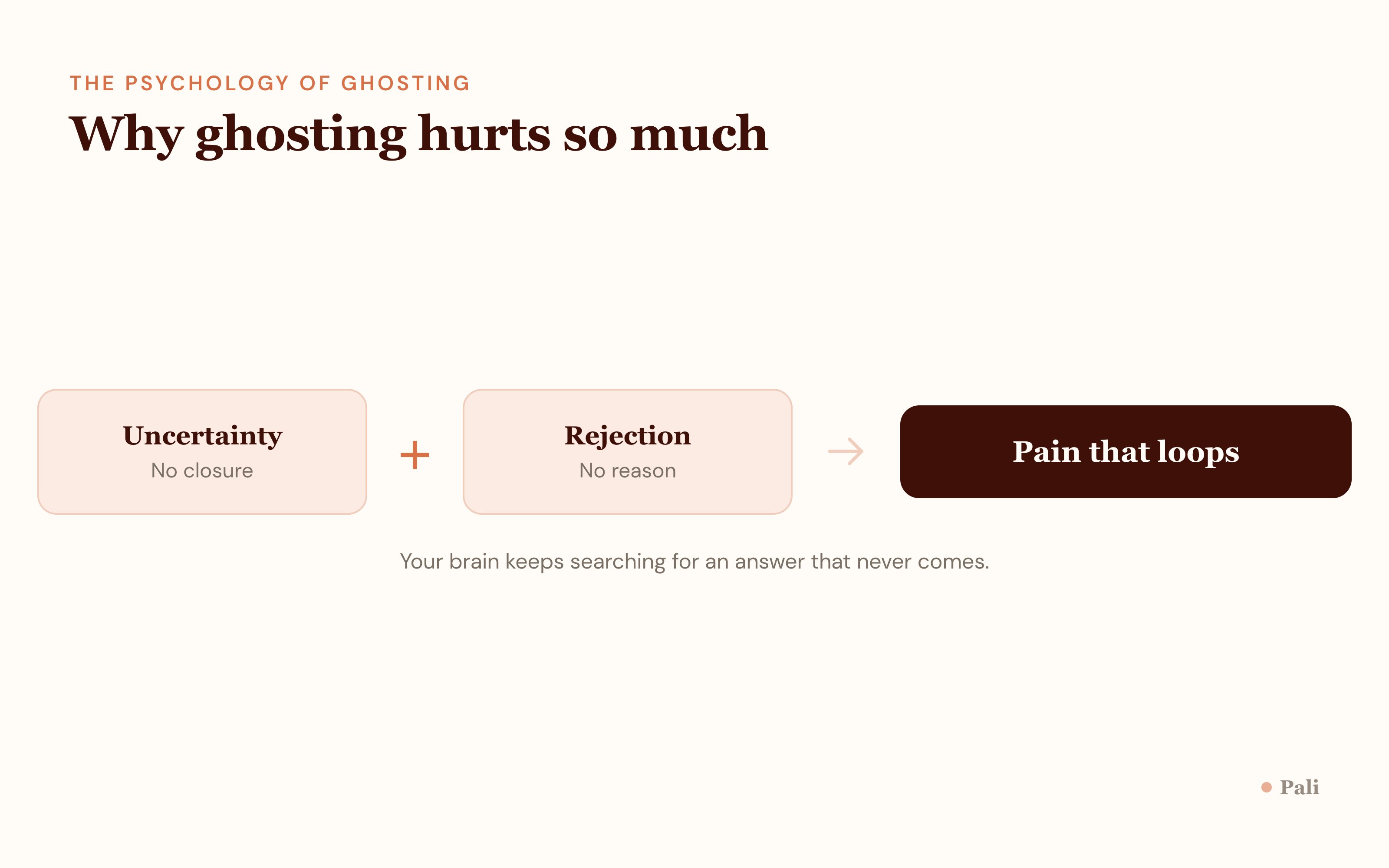
Ghosting is not just rejection. It is uncertainty and rejection combined. And that combination makes it uniquely difficult to process.
1. Your Brain Hates Uncertainty
When someone disappears, your brain starts searching for answers. Did I do something wrong? Are they coming back? Was it even real? This lack of closure keeps your mind stuck in a loop.
Research shows that uncertainty can be more stressful than clear negative outcomes, because your brain cannot resolve the situation.
2. It Triggers Rejection Pain
Ghosting activates the same brain regions as physical pain. That is why it can feel sharp, personal, and hard to shake.
3. It Attacks Your Self-Worth
Without answers, your mind fills in the gaps. This creates a self-blame loop. Understanding your attachment style helps explain why some people are hit harder than others.
4. It Reopens Old Emotional Patterns
Ghosting often hits deeper than the situation itself. It can trigger fear of abandonment and past experiences of being ignored. Pali’s Your Attachment Style course can help you understand where that intensity comes from.
Why Do People Ghost?
Understanding this part is important: ghosting is usually about them, not you.
Avoiding Discomfort
Many people ghost because they do not want to have an awkward conversation, they feel guilty ending things, or they simply lack the communication skills.
Emotional Immaturity
Ghosting often reflects low emotional intelligence, difficulty handling conflict, and fear of accountability. It is not strength. It is avoidance.
Overwhelmed by Dating Options
Modern dating creates endless choices, low commitment, and disposable connections. Pali’s Digital Dating with Discernment course helps you approach online dating with more clarity.
Fear of Confrontation
Some people genuinely do not know how to say I am not interested. They fear hurting your feelings and avoid emotional responsibility.
The Hidden Truth About Ghosting
Ghosting says more about someone’s emotional capacity, their communication skills, and their ability to handle discomfort than it does about your worth.
How to Deal With Being Ghosted
1. Don’t Chase Closure
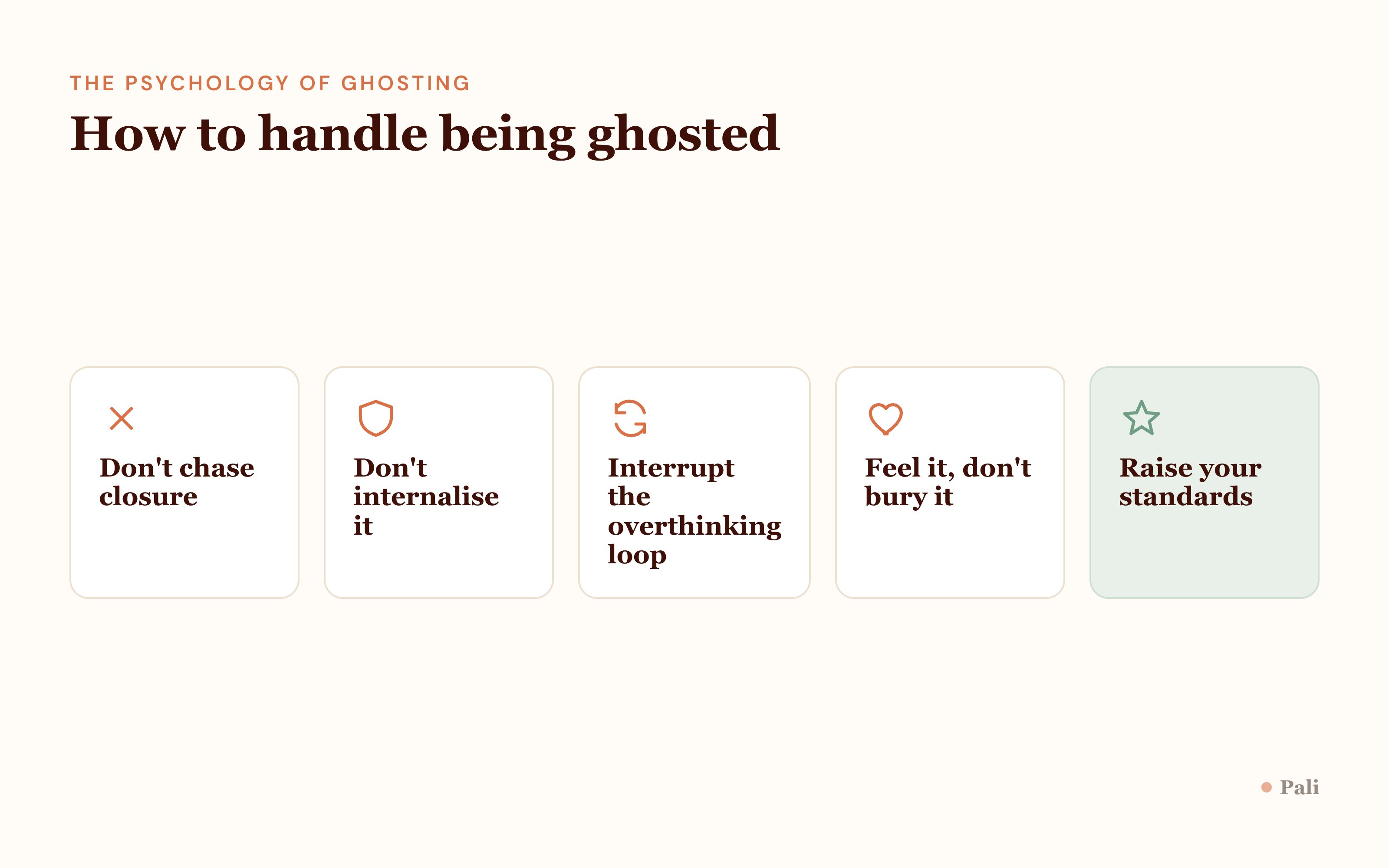
You may want answers, but you probably will not get them. Closure is something you create, not something they give you.
2. Don’t Internalise It
Remind yourself: this was not about your value. It was about their inability to communicate. Not I was not enough, but They could not show up.
3. Interrupt the Overthinking Loop
When your mind spirals, bring yourself back to facts. Pali’s CBT Toolkit gives you practical techniques for breaking rumination cycles.
4. Feel It
Ghosting hurts. Instead of avoiding it, acknowledge it, process it, and let it move through you. Pali’s Self-Support Toolkit helps you build emotional processing skills.
5. Raise Your Standards
Being ghosted is information. Learning to set healthy boundaries helps you filter for people who can actually show up.
The way someone leaves tells you everything you need to know about them. The way you respond shapes who you become next. Your growth, your way.
Pali is designed for self-improvement and educational support. It is not therapy and is not a substitute for professional mental health care.