
Is an AI Relationship Coach Safe?
An AI relationship coach can be safe and genuinely useful when it is designed with clear limits, strong privacy, and honest boundaries about what it is not. The risk is not the idea itself, it is poor design: an app that pretends to be a therapist, mishandles your data, or fails to respond well in a crisis. The right question is not “is AI safe” in the abstract, but “is this particular tool built responsibly.”
What makes an AI relationship coach safe or unsafe?
Safety in this space comes down to a few concrete things, not marketing language. A responsible tool is clear about being educational support rather than treatment, protects your data, and has real safeguards for hard moments. An unsafe one blurs those lines, harvests your information, or offers confident advice on things it has no business handling.
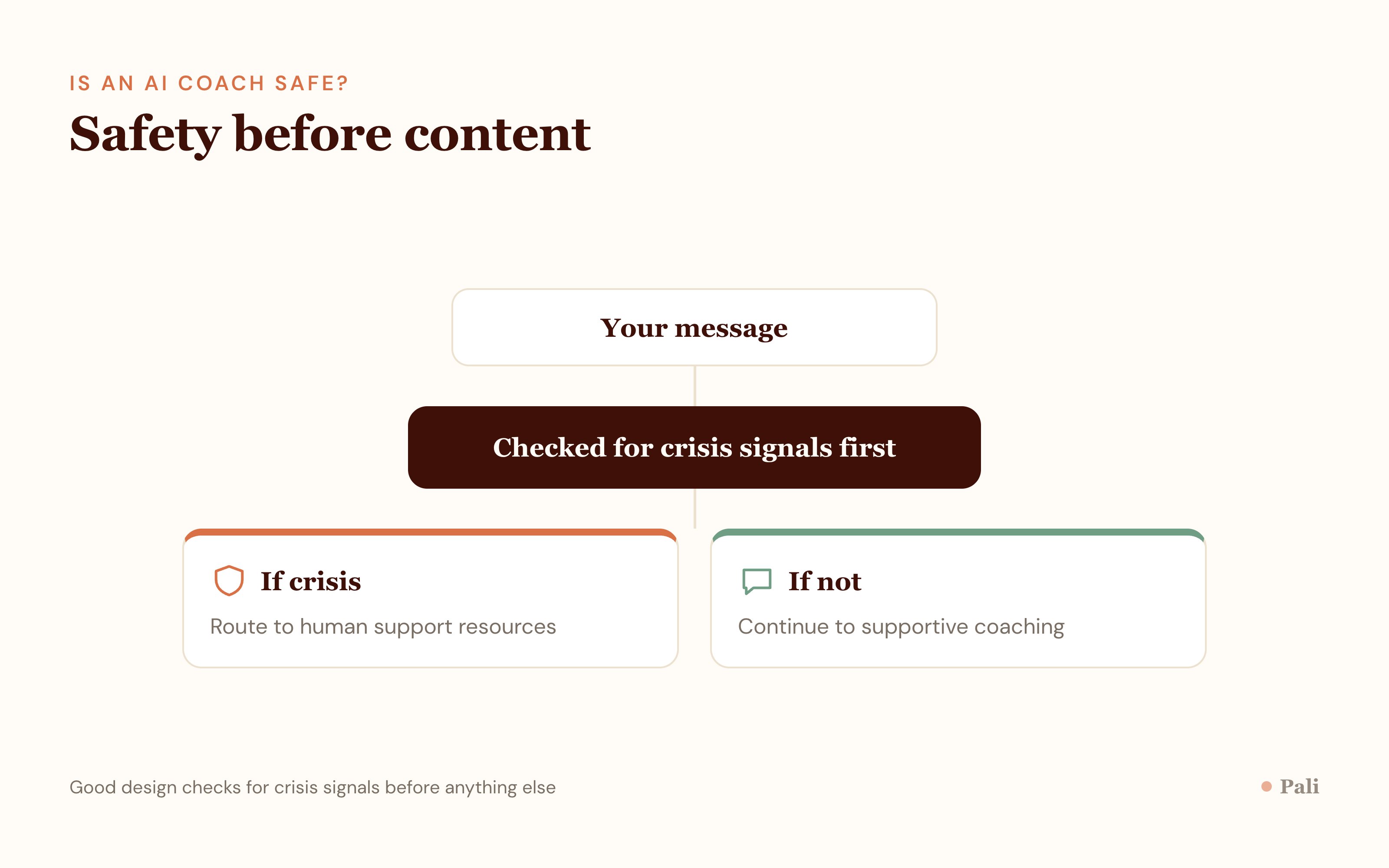
In Pali, for example, messages are screened for crisis language before any AI response is generated, and anything that signals acute distress routes the person toward real human resources rather than an automated reply. That ordering, safety first, matters.
Is an AI coach the same as therapy?
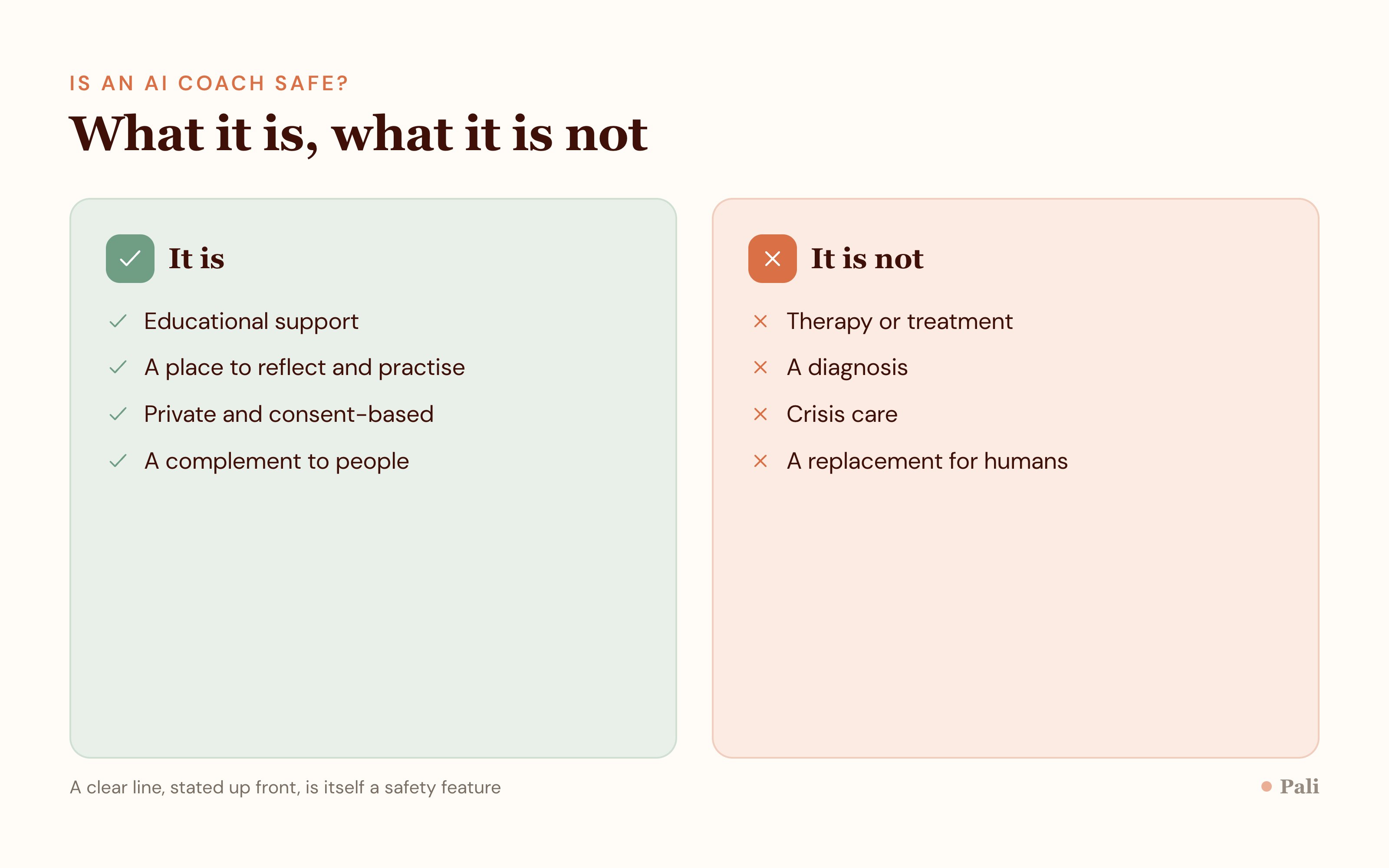
No, and any tool worth trusting will say so plainly. An AI coach is not a therapist, not a medical service, and not a substitute for professional care. It can help you understand your patterns, reflect, and practise healthier habits between or alongside other support. It cannot diagnose, treat a mental health condition, or replace a trained clinician.
This boundary is the whole point, and it is worth understanding properly. Our guide to relationship coaching vs therapy breaks down where each one fits and when you genuinely need a professional instead.
What about my privacy and data?
Privacy is half of safety, especially for something as personal as your relationships. Before trusting any app, it is fair to ask what it does with what you share. Responsible signals include clear consent before sensitive data is processed, the ability to export or delete your data, and not selling your information.
Pali is built around consent and data control, with options to export your data and to delete your account and its data entirely. Whatever tool you choose, look for that level of transparency, and be cautious of anything vague about where your words go.
How do you use an AI relationship coach safely?
A few practical habits keep the experience healthy:
- Treat it as support that helps you start with yourself, not as the only voice you listen to.
- Use it to reflect and practise, then take what you learn into real relationships.
- Keep human connection central. A tool should reduce isolation, not replace people.
- If you are in crisis or struggling with your mental health, reach out to a doctor, a trusted person, or a local crisis line. This is a sensitive area, and human support matters most here.
Used this way, an AI companion like Pali can be a calm, private place to understand your patterns and build healthier relationship habits, with the limits stated honestly rather than hidden.
Frequently asked questions
Can an AI relationship coach replace a therapist? No. A responsible coach is educational support, not treatment. It cannot diagnose or treat mental health conditions and should never be presented as a substitute for professional care.
Is it safe to share personal details with a relationship app? It depends on the app. Look for clear consent, data export and deletion options, and a policy of not selling your data. Vague handling of personal information is a warning sign.
What should an AI coach do if someone is in crisis? Prioritise safety over content. A well designed tool screens for crisis signals before responding and points the person toward real human resources rather than handling it alone.
Are AI relationship coaches actually helpful? For reflection, learning, and building habits between other forms of support, many people find them helpful. They work best as a complement to human connection, not a replacement.
Pali is designed for self-improvement and educational support. It is not therapy and is not a substitute for professional mental health care.