
How to Handle Rejection in Dating
Rejection in dating feels bigger than it should because the brain processes social rejection through some of the same circuits it uses for physical pain. That ache is real, not a sign you are weak or that something is wrong with you. The way through is to feel it without believing every story it tells, and to keep dating from a steadier place rather than a fearful one.
Why does rejection in dating hurt so much?
It hurts because connection used to be survival. In a well known UCLA study published in the journal Science in 2003, Naomi Eisenberger and colleagues scanned people while they were excluded from a simple online game. The brain regions linked to the distress of physical pain lit up during social exclusion. In other words, your nervous system can register a cancelled date or an unanswered message as a kind of injury.
That explains why a small rejection can land so hard. It is not you being dramatic. It is an old alarm system doing its job. How loudly that alarm rings is also shaped by your attachment style, since some of us are wired to read distance as danger more quickly than others.
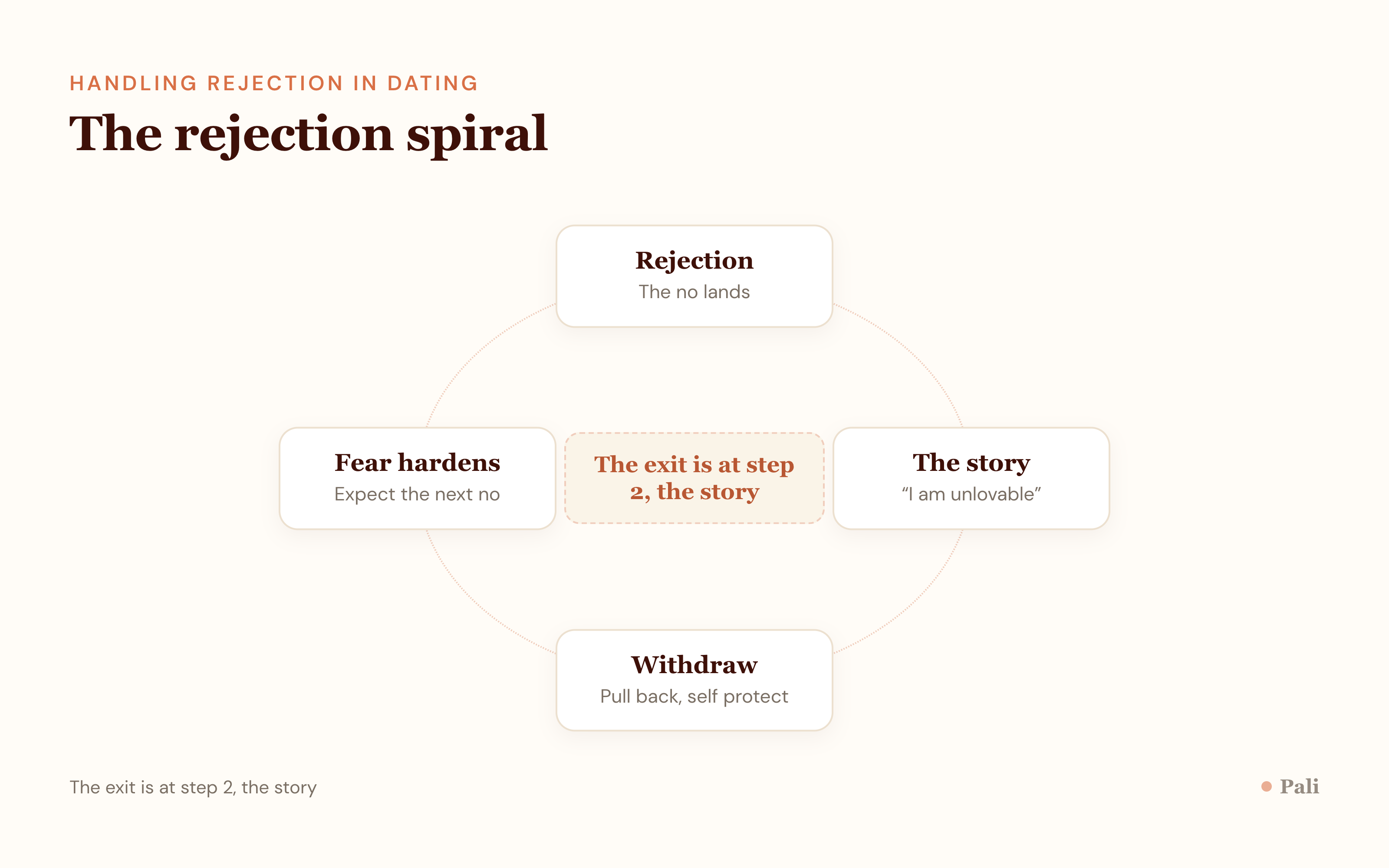
How do you handle rejection without spiraling?
The goal is not to stop feeling it. It is to stop the single event from becoming a story about your whole worth. A few practical moves:
- Name it plainly. “I feel rejected and it stings” settles the nervous system faster than pretending you are fine.
- Separate the fact from the meaning. The fact is one person opted out. The meaning your mind adds (“I am unlovable”) is a guess, not data.
- Wait before deciding what it means. Strong feelings are poor narrators. Give it a day.
- Do one ordinary, grounding thing. A walk, a friend, a meal. You are reminding your body that you are safe.
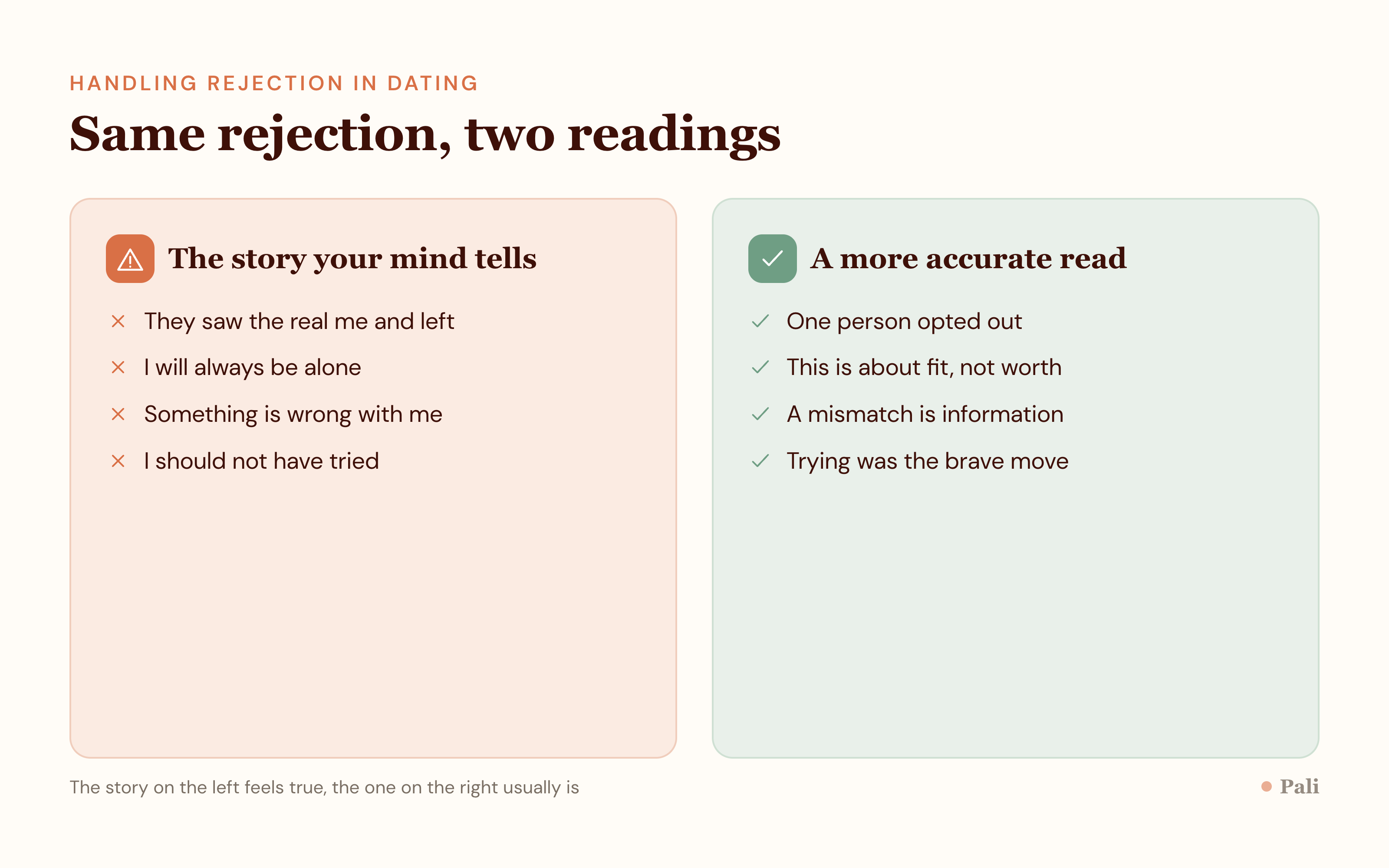
How can you stop taking rejection personally?
Mostly by remembering that early dating is a sorting process, not a referendum on you. A mismatch in timing, energy, or values is information about fit, not a verdict on your value. People who date with self respect tend to treat a “no” as redirection rather than rejection, which is the heart of dating with intention.
It also helps to keep your sense of self bigger than any one connection. When your life is full and your standards are clear, a single no loses its power to define your week. If rejection keeps knocking you off centre, that is worth gentle attention, and it is exactly the kind of pattern intentional dating is built to address.
Frequently asked questions
Why does dating rejection feel worse than other rejection? Dating exposes a tender hope, so the contrast between the wish and the no is sharper. The pain is real, but it tends to fade faster than the story your mind builds around it.
How long does it take to get over being rejected? Usually days, not weeks, for a single rejection. If it lingers far longer, it often points to an older wound the situation touched rather than the situation itself.
Is fear of rejection ruining my dating life? It can, if it makes you avoid risk or over please to keep people happy. The fix is not to feel braver first, but to take small, tolerable risks and let your confidence catch up.
Should I ask why someone rejected me? You can, kindly, but you may not get an honest or useful answer. Closure is something you give yourself more often than someone hands it to you.
Pali is designed for self-improvement and educational support. It is not therapy and is not a substitute for professional mental health care.