
Dating With Intention: A Guide to Conscious Dating
Conscious dating means dating with self-awareness instead of on autopilot. In practice it is three habits: knowing your own patterns and what you actually want, staying regulated enough to read a connection clearly rather than through anxiety, and choosing based on how someone makes you feel over time rather than how intensely they make you feel at the start. It is less about finding the right person quickly and more about becoming someone who can recognise and build a healthy connection.
If dating has started to feel like a cycle of hope, overthinking, and disappointment, you are not doing it wrong by feeling worn down. Dating asks a lot of the nervous system. The aim here is to make it feel less like a test and more like something you can do with your eyes open.
What is conscious dating?
Conscious dating is the practice of noticing what you bring to dating and choosing intentionally rather than reactively. Autopilot dating runs on old patterns: chasing the people who feel familiar even when familiar means unavailable, mistaking anxiety for chemistry, and shaping yourself around what you think someone wants.
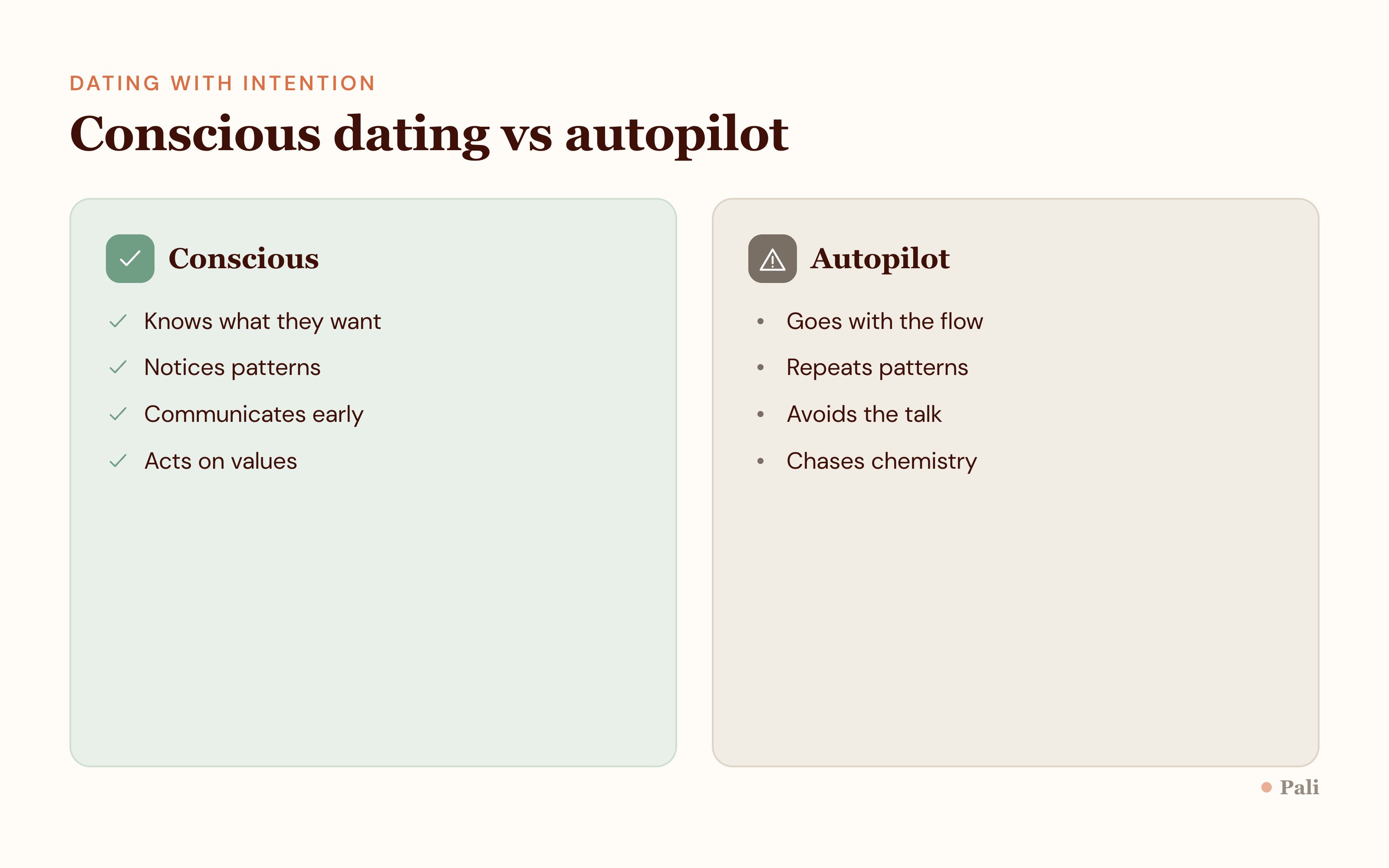
Dating consciously slows that down. It asks simple questions in real time. How do I feel after I see this person, not just during. Am I excited, or am I anxious. Am I being myself, or performing. Those questions are the whole skill.
How does your attachment style show up in dating?
Dating is where attachment patterns are loudest, because early dating is full of the uncertainty that activates them. A slow reply, an unclear plan, a quiet weekend, these small gaps are exactly where your style takes over.
Anxious patterns can turn a delayed text into hours of worry and make calm, available people feel boring. Avoidant patterns can make closeness feel like pressure, so interest cools as soon as things get real. Fearful-avoidant patterns can do both, pulling someone close and then needing to retreat. None of this means you cannot date well. It means the first relationship to understand is the one you have with uncertainty. (If this resonates, our guide to attachment styles goes deeper.)
How do you tell a red flag from a deal breaker?
These two get confused, and the difference matters.
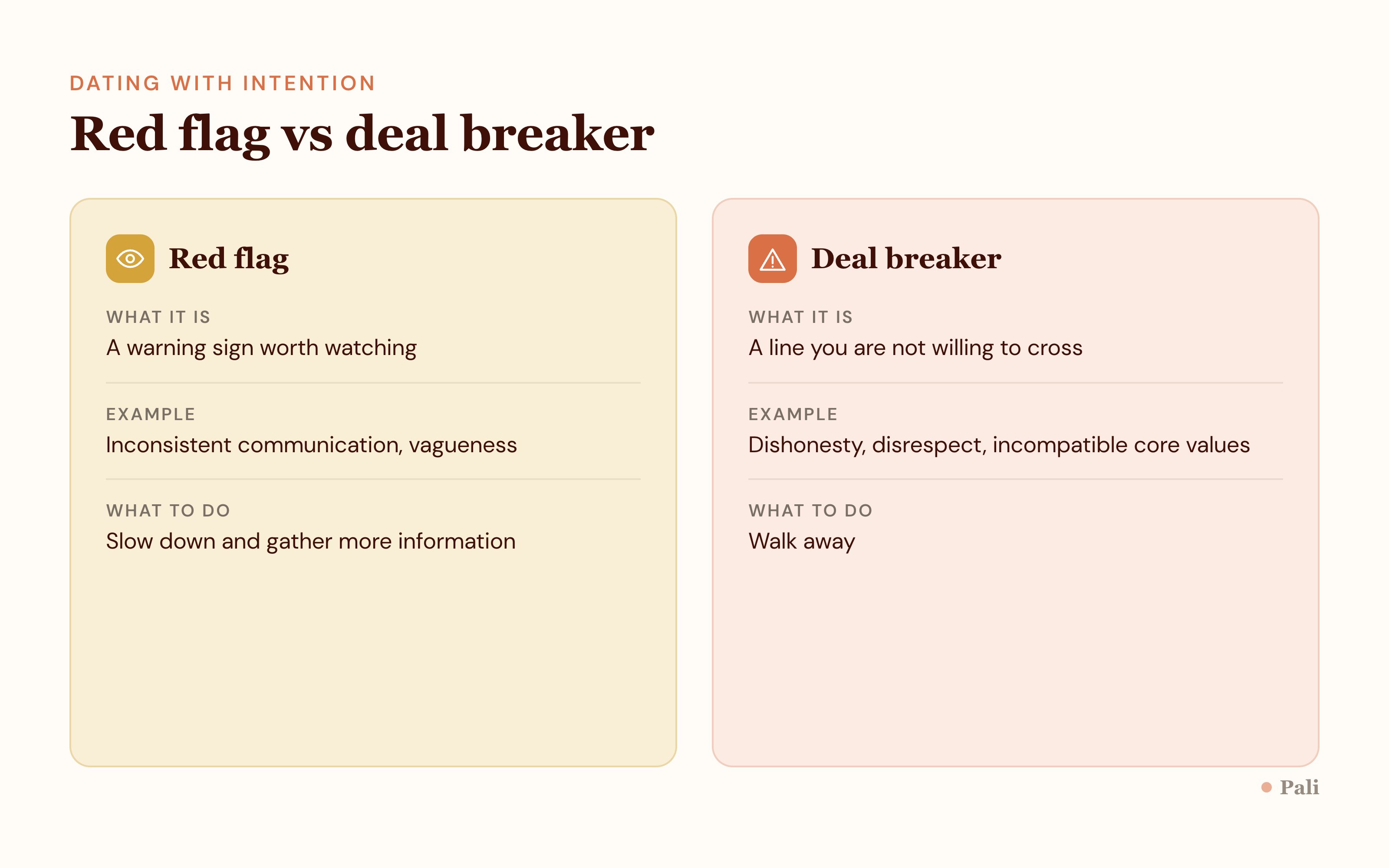
A red flag is information, not yet a verdict. The mistake in both directions is common: ignoring real red flags because the chemistry is strong, or treating every small imperfection as a deal breaker because closeness feels risky. Conscious dating sits in the middle, staying curious about red flags while holding firm on genuine deal breakers.
How do you date with less anxiety?
Dating anxiety is real, and a lot of it lives in the gap between messages, where the mind fills silence with stories. A few things help.
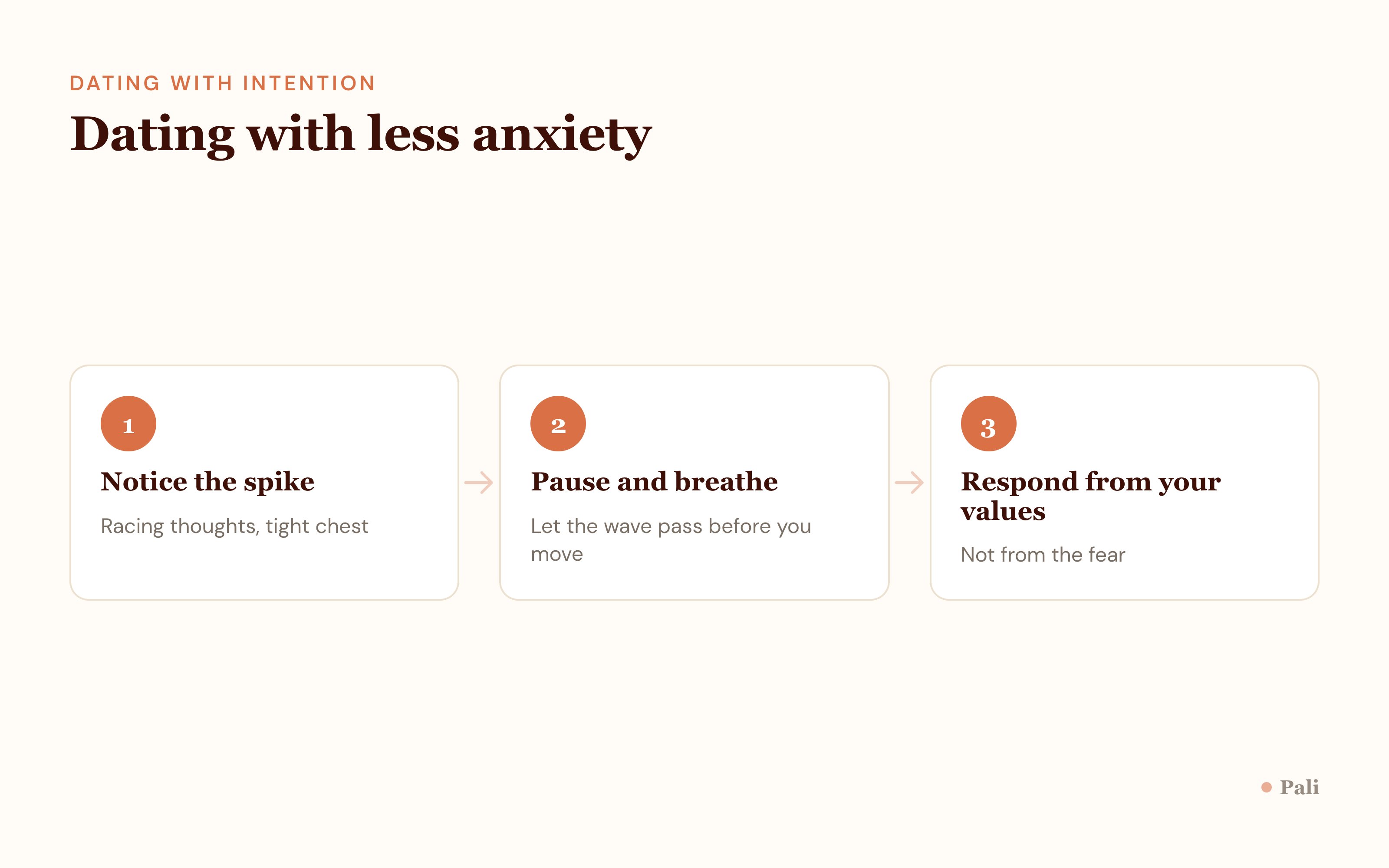
- Name the story. When you catch yourself spiralling over a text, notice that you are guessing, not knowing.
- Regulate before you respond. The urge to double-text or over-analyse fades when your nervous system settles. A short pause changes the message you send.
- Keep your life full. The more your sense of worth rests on a single connection, the louder the anxiety. A full life is the best anchor.
- Let pace be information. How someone responds to a slower, clearer pace tells you a lot about fit.
If you want structure, Pali’s Early Dating Psychology course works on patterns and pace, Date Smarter helps with red flags and compatibility, and the regulation tools help quiet the overthinking between dates.
What about rejection?
Rejection in dating is unavoidable, and it stings more when your sense of worth is riding on the outcome. A reframe that holds up: a no early on is usually about fit, not about your value. Dating is a filtering process working as intended, not a series of verdicts on whether you are enough. The goal is not to stop feeling rejection, it is to stop letting it rewrite the story you tell about yourself.
Frequently asked questions
What does dating with intention mean? It means dating with self-awareness and clear values, choosing based on how a connection feels over time rather than reacting to intensity or old patterns.
Why do I always fall for unavailable people? Often the people who feel most exciting are the ones who echo a familiar early pattern. The intensity can be attachment activation rather than compatibility. Noticing the pattern is the first step to choosing differently.
How do I stop overthinking texts when dating? Recognise that you are filling a silence with a guess, give your nervous system time to settle before replying, and keep your life full so a single thread carries less weight.
Is it a red flag or am I just anxious? Both can be true. A red flag is something the other person is actually doing, repeatedly. Anxiety is a feeling in you. Slowing down and gathering more information is how you tell them apart.
Where to go next
To go further, read: how to date with anxious attachment, dating red flags vs deal breakers, how to stop overthinking texts, and how to build dating confidence.
Pali is a psychology backed companion that helps you date with more clarity and less anxiety, with structured courses, journaling, and gentle AI support. You can start a free 7-day trial whenever you are ready.
Related reading
- Dating with Intention
- Modern Dating in 2026
- Are Dating Apps Ruining Relationships?
- The Psychology of Ghosting
Pali is designed for self-improvement and educational support. It is not therapy and is not a substitute for professional mental health care.